

Bangkok’s Little Arab Town: A cultural hub but an intellectual property minefield

1 / 4
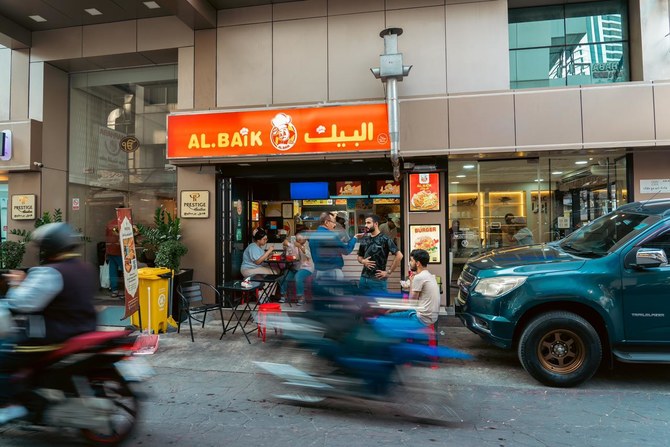
The Bangkok-located Al Baik restaurant, reportedly owned by a South Asian national, not only replicates the logo and visual identity of the Saudi chain, but also leverages its widespread popularity to draw in customers. (AN Photo)
2 / 4
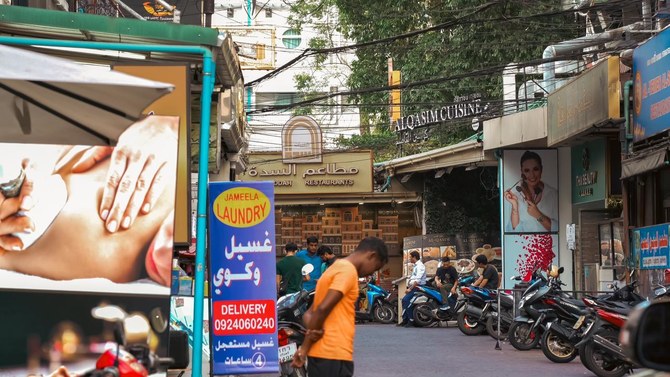
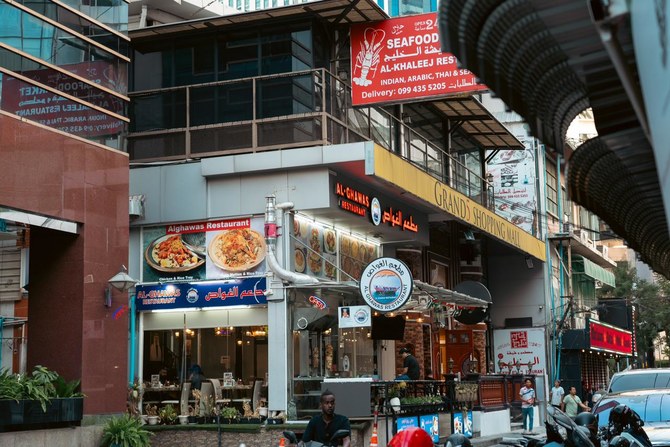
For many Arabs living in or visiting Bangkok, this area, locally known as Soi Arab, serves as a home away from home — a place where they can reconnect with their culture through food, language and community. (AN Photo)
3 / 4
For many Arabs living in or visiting Bangkok, this area, locally known as Soi Arab, serves as a home away from home — a place where they can reconnect with their culture through food, language and community. (AN Photo)
4 / 4
The Bangkok-located Al Baik restaurant, reportedly owned by a South Asian national, not only replicates the logo and visual identity of the Saudi chain, but also leverages its widespread popularity to draw in customers. (AN Photo)
Short Url
Updated 25 February 2024
Follow

Bangkok’s Little Arab Town: A cultural hub but an intellectual property minefield

  • For many Arabs living in or visiting Bangkok, the area, locally known as Soi Arab, serves as a home away from home

BANGKOK: In the bustling streets of Bangkok lies a vibrant enclave known as Little Arab Town, where the sights, sounds and flavors of the Arab world converge.

Nestled within this cultural hub are a plethora of restaurants offering authentic Arab cuisine, drawing in patrons from across the diaspora.

Arabic script adorns storefronts, and the air is filled with the tantalizing aromas of shawarma, falafel and freshly baked bread.

Amidst the hustle and bustle, one can hear the melodic cadence of Arabic conversations, creating an atmosphere reminiscent of the streets of Riyadh, Dubai or Cairo.

For many Arabs living in or visiting Bangkok, this area, locally known as Soi Arab, serves as a home away from home — a place where they can reconnect with their culture through food, language and community.

Hamad Al-Badr, a Qatari citizen who came to Bangkok with his Saudi wife, said he knew about the area from his friends and wanted to explore it.

“On my first day in this locale, I utilized Google to familiarize myself with the area before embarking on a tuk-tuk journey to reach my destination,” he told Arab News.

“The prevalence of Arabic speakers here proves advantageous, minimizing any potential language barriers.”

Saleh Al-Yafie, a Yemeni investor who owns restaurants in Indonesia, came to Bangkok with ambitions to grow his business. However, he was surprised by the “extremely high” rental prices for shops in the area.

“I’ve spoken to some of the owners of these shops around here, and they informed me that renting a 100 sq. meter shop could cost up to SR70,000 (over $18,600) per month,” he told Arab News.

However, amidst the charm of this cultural haven lurks a troubling issue. Some stores in the area have adopted the names and branding of renowned Arab restaurants and shops, such Al-Saddah restaurants and AlBaik, a Saudi fast-food chain.

The Bangkok-located Al.Baik restaurant, reportedly owned by a South Asian national, not only replicates the logo and visual identity of the Saudi chain, but also leverages its widespread popularity to draw in customers.

This practice not only raises questions of intellectual property rights, but also risks tarnishing the reputation of established brands.

“A perfume and oud store in the vicinity appears to emulate a renowned brand prevalent across the Arab world,” said Al-Badr.

“Notably, the Thai counterpart distinguishes itself by offering footwear alongside its selection of oud and perfumes.”

Al-Badr said he would not buy from these stores, preferring instead to get oud and perfumes from his home country’s original shops.

Visitors to Little Arab Town may unwittingly patronize these imitation stores, only to be disappointed by the lack of authenticity and quality they offer.

Arab tourists are divided on whether to dine in these imitation restaurants. Some prioritize the quality of the food above all else, while others prioritize respect for intellectual property.

Saudi tourist Yazeed Bamarouf told Arab News that “I don’t support those who mimic popular brands,” which is why he has never been to Al.Baik.

Omani tourist Wisam Al-Furqani said the allure of the AlBaik name drew him and his friends in.

“We soon realized it wasn’t the authentic restaurant,” he told Arab News. “The food was satisfactory, but it lacked the distinct flavor of the original restaurant. Additionally, the menu differed.”

Despite his disapproval of unauthorized imitation, Al-Furqani said he would not hesitate to revisit the restaurant as long as it served good food in a clean environment.

Emirati Saeed Al-Marri, who has been frequently visiting Thailand for nearly 10 years, told Arab News: “Certain Thai restaurants now provide Gulf cuisine … given the substantial number of Gulf tourists frequenting this locality.”

Regarding the imitation of brand names, he said when he encounters a branded restaurant, he assumes it is a branch of the original chain.

“People typically accept what seems to be true at face value without delving into the specifics. Ultimately, people seek excellent service regardless of the brand name,” he added.

“Individuals often adhere to established habits and regular patterns. For example, when I travel to a new country, I seek out familiar foods and locations.”


Refugee firefighters in Mauritania battle bushfires to give back to the community that took them in

Updated 2 sec ago
Follow

Refugee firefighters in Mauritania battle bushfires to give back to the community that took them in

MBERA: The men move in rhythm, swaying in line and beating the ground with spindly tree branches as the sun sets over the barren and hostile Mauritanian desert. The crack of the wood against dry grass lands in unison, a technique perfected by more than a decade of fighting bushfires.
There is no fire today but the men — volunteer firefighters backed by the UN refugee agency — keep on training.
In this region of West Africa, bushfires are deadly. They can break out in the blink of an eye and last for days. The impoverished, vast territory is shared by Mauritanians and more than 250,000 refugees from neighboring Mali, who rely on the scarce vegetation to feed their livestock.
For the refugee firefighters, battling the blazes is a way of giving back to the community that took them in when they fled violence and instability at home in Mali.
Newcomers with an old tradition
Hantam Ag Ahmedou was 11 years old when his family left Mali in 2012 to settle in the Mbera refugee camp in Mauritania, 48 kilometers (30 miles) from the Malian border. Like most refugees and locals, his family are herders and once in Mbera, they saw how quickly bushfires spread and how devastating they can be.
“We said to ourselves: There is this amazing generosity of the host community. These people share with us everything they have,” he told The Associated Press. “We needed to do something to lessen the burden.”
His father started organizing volunteer firefighters, at the time around 200 refugees. The Mauritanians had been fighting bushfires for decades, Ag Ahmedou said, but the Malian refugees brought know-how that gave them an advantage.
“You cannot stop bushfires with water,” Ag Ahmedou said. “That’s impossible, fires sometimes break out a hundred kilometers from the nearest water source.”
Instead they use tree branches, he said, to smother the fire.
“That’s the only way to do it,” he said.
The volunteer ‘brigade’
Since 2018, the firefighters have been under the patronage of the UNHCR. The European Union finances their training and equipment, as well as the clearing of firebreak strips to stop the fires from spreading. The volunteers today count over 360 refugees who work with the region’s authorities and firefighters.
When a bushfire breaks out and the alert comes in, the firefighters jump into their pickup trucks and drive out. Once at the site of a fire, a 20-member team spreads out and starts pounding the ground at the edge of the blaze with acacia branches — a rare tree that has a high resistance to heat.
Usually, three other teams stand by in case the first team needs replacing.
Ag Ahmedou started going out with the firefighters when he was 13, carrying water and food supplies for the men. He helped put out his first fire when he was 18, and has since beaten hundreds of blazes.
He knows how dangerous the task is but he doesn’t let the fear control him.
“Someone has to do it,” he said. “If the fire is not stopped, it can penetrate the refugee camp and the villages, kill animals, kill humans, and devastate the economy of the whole region.”
A climate-vulnerable nation
About 90 percent of Mauritania is covered by the Sahara Desert. Climate change has accelerated desertification and increased the pressure on natural resources, especially water, experts say. The United Nations says tensions between locals and refugees over grazing areas is a key threat to peace.
Tayyar Sukru Cansizoglu, the UNHCR chief in Mauritania, said that with the effects of climate change, even Mauritanians in the area cannot find enough grazing land for their own cows and goats — so a “single bushfire” becomes life-threatening for everyone.
When the first refugees arrived in 2012, authorities cleared a large chunk of land for the Mbera camp, which today has more than 150,000 Malian refugees. Another 150,000 live in villages scattered across the vast territory, sometimes outnumbering the locals 10 to one.
Chejna Abdallah, the mayor of the border town of Fassala, said because of “high pressure on natural resources, especially access to water,” tensions are rising between the locals and the Malians.
Giving back
Abderrahmane Maiga, a 52-year-old member of the “Mbera Fire Brigade,” as the firefighters call themselves, presses soil around a young seedling and carefully pours water at its base.
To make up for the vegetation losses, the firefighters have started setting up tree and plant nurseries across the desert — including acacias. This year, they also planted the first lemon and mango trees.
“It’s only right that we stand up to help people,” Maiga said.
He recalls one of the worst fires he faced in 2014, which dozens of men — both refugees and host community members — spent 48 hours battling. By the time it was over, some of the volunteers had collapsed from exhaustion.
Ag Ahmedou said he was aware of the tensions, especially as violence in Mali intensifies and going back is not an option for most of the refugees.
He said this was the life he was born into — a life in the desert, a life of food scarcity and “degraded land” — and that there is nowhere else for him to go. Fighting for survival is the only option.
“We cannot go to Europe and abandon our home,” he said. “So we have to resist. We have to fight.”