ISLAMABAD: A delegation of Saudi officials will arrive in Pakistan’s southern port city of Karachi on Feb. 26 to review direct immigration arrangements for Hajj pilgrims at the city’s Jinnah International Airport, according to a notification by Pakistan’s religion ministry this month.
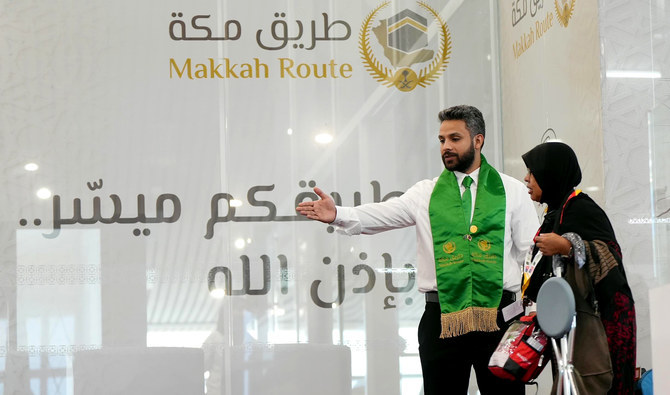
The Makkah Route Initiative is part of Saudi Arabia’s Guests of God Service Program, which King Salman bin Abdulaziz Al-Saud inaugurated in 2019 under the Kingdom’s Vision 2030 to diversify the economy. Under the scheme, Hajj pilgrims go through immigration facilities at their respective countries’ airports.
Pakistan’s religious affairs ministry said last year it planned to expand the Makkah Route Initiative to airports in cities other than Islamabad as well, notably Karachi.
“A Saudi delegation for upscaling of Route to Makkah project will be arriving on 26-02-2024 (Monday) at the Jinnah International Airport, Karachi, in order to have a survey for area to be allocated at the airport and to meet all relevant authorities at the airport,” a letter by the Ministry of Religious Affairs (MoRA) dated Feb. 14 said.
The notification said the delegation would meet officials of the Federal Investigation Agency (FIA) Pakistan Customs, Airport Security Force (ASF), Anti-Narcotics Force (ANF) and Immigration department in Karachi.
Saudi Arabia’s ambassador to Pakistan, Nawaf bin Said Al-Malki, will accompany the delegation during their visit to the airport, the notification said.
The Hajj is an annual Islamic pilgrimage that has been in practice for over 1,400 years. It is one of the five pillars of Islam, and requires every adult Muslim to undertake a journey to the holy Islamic sites in Makkah at least once in their lifetime (if they are financially and physically able). This year’s pilgrimage is expected to run from June 14 till June 19.
Saudi Arabia last year restored Pakistan’s pre-pandemic Hajj quota of 179,210 pilgrims and abolished the upper age limit of 65 years. More than 81,000 Pakistani pilgrims performed Hajj under the government scheme in 2023, while the rest used private tour operators.


![]()

Saudi officials to review Makkah Route Initiative arrangements at Karachi airport next week
Short Url
https://arab.news/63rns
Saudi officials to review Makkah Route Initiative arrangements at Karachi airport next week
- Pakistan’s religion ministry announced last year it would extend Makkah Route Initiative to cities other than Islamabad
- Saudi officials to arrive in Karachi on Feb. 26 to inspect Makkah Route Initiative arrangements, says aviation authority
Latest updates


© 2026 SAUDI RESEARCH & PUBLISHING COMPANY, All Rights Reserved And subject to Terms of Use Agreement.