


RIYADH: “The first casualty of war is the truth,” the old quote states, and even with the global digitization of conventional media, it still stands true to this day.
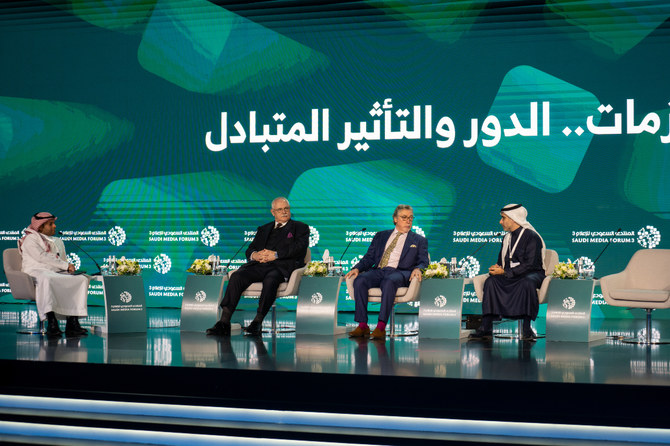
At the start of the third annual Saudi Media Forum in Riyadh on Tuesday, seasoned industry experts took the stage to discuss the role of the media during global crises.
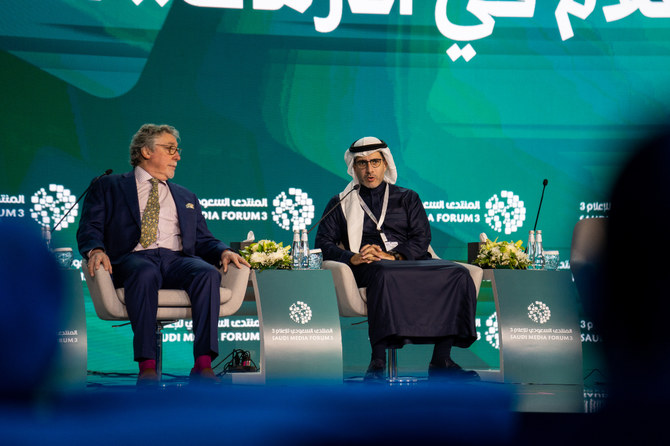
Arab News’ Editor-in-Chief Faisal J. Abbas referenced the famous words to emphasize the contradiction currently happening with the rise of fake or misleading news in the age of AI and rapid technological advancements. He joined British journalist Con Coughlin and former US intelligence analyst Norman T. Roule in a panel discussion titled “Media in Times of Crisis … Role and Mutual Influence.”
“We essentially made it a lot easier and quicker to spread, so if anything, media journalism couldn’t be any more important or in demand than it is today. We’ve seen it in Gaza, we’ve seen it during the pandemic, we’ve seen it in the Ukraine, and we’ll continue to see it,” Abbas said during the discussion.
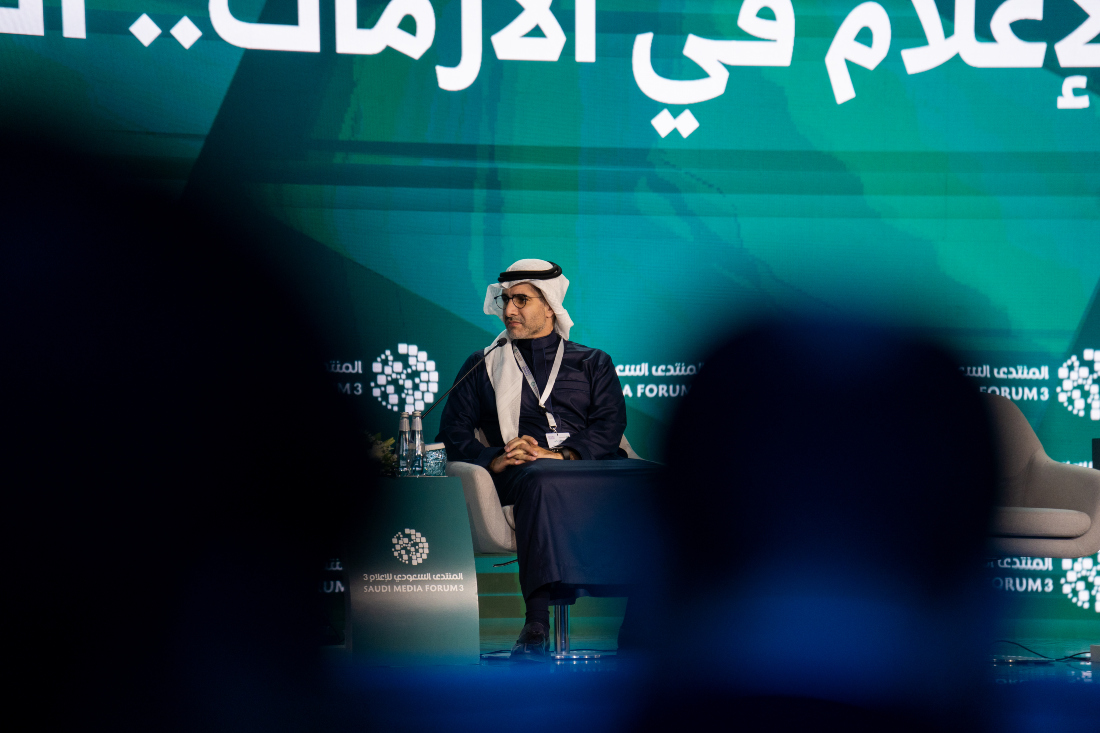
Arab News’ Editor-in-Chief Faisal J. Abbas emphasized the contradiction currently happening with the rise of fake news in the age of AI. (AN Photo: Abdulrhman Bin Shalhuob)
Initiatives including Saudipedia, a digital encyclopedia platform launched at the SMF’s accompanying FOMEX exhibition, aims to be the first source of Saudi Arabia’s narrative to the world, to counter misinformation.
While AI is still at a tricky unregulated phase, specialists in various industries have recognized its value in treading toward the future. In Saudi Arabia, the Saudi Authority for Data and Artificial Intelligence has made significant strides on this front including the inauguration of a center dedicated to the technology and the launch of an Arabic AI app.
The tool is especially essential to the media industry.
Abbas added: “People like to pin things on journalism and journalists, but without modern day tools, it’s really like going to war in the 21st century on a horse with a sword while your opponent is using drones.”
Roule chimed in by emphasizing the importance of authentic sources. As a former US official, he provided insight into how some publications in the West were targeting Middle Eastern countries. The most recent case that sparked controversy was an opinion piece written by former tennis stars Chris Evert and Martina Navratilova, published in the Washington Post, that urged the Women’s Tennis Association to stay out of Saudi Arabia due to the country’s alleged oppression of women.
“It’s absolutely an agenda,” he said. “You have publications that produce only opinion and they shape facts and put it into that and mask it as analysis. The crime is that these sometimes are very bold and respected institutions, and (because of that), people listen to them routinely and parrot what they say.”
This also proves true for the ongoing genocide of Palestinians in Gaza by Israeli forces. Part of the propaganda was influenced by the rise of AI-generated photographs and videos that have quickly spread among internet users.
While many have lost trust and faith in the media, it remains crucial for organizations to prioritize getting the facts right over ensuring news gets out quickly.
As a columnist for The Telegraph and Al Majalla newspaper, Coughlin believes it is important to only start forming opinions once the facts are fully revealed, giving the Russia-Ukraine war as a contemporary example.
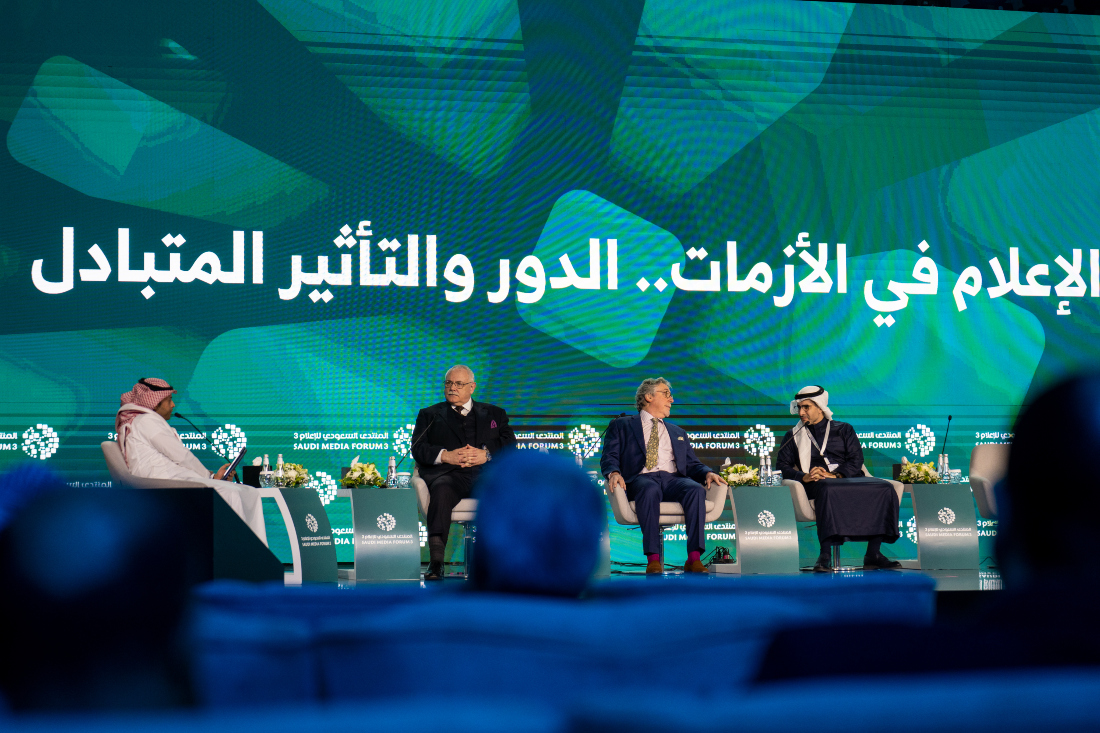
Seasoned industry experts took the stage to discuss the role of the media during global crises during the third Saudi Media Forum in Riyadh. (AN Photo: Abdulrhman Bin Shalhuob)
Coughlin explained: “With social media and the ability to manipulate news, let’s not forget that in modern warfare, cyber warfare is just as important today as having a tank or fighter jets. Winning the propaganda war in the early skirmishes is just as important as what’s happening on ground.
“What’s really important when you’re talking about media is to have a plurality of media. When you’re limited to just one or two outlets, the general public won’t get the full picture … but what’s really important is that those opinions are based on facts.”
In crisis, governments are required to simultaneously “hurry up and slow down,” Roule said. While policy makers are challenged to both restrain from speaking out prematurely while also saying enough for the story to develop, journalists have a similar responsibility to shape stories in an ethical manner.
Abbas said: “There’s always a margin where you can get it wrong, either you’ve been misinformed or conned. First, you need to approach it from a humble point of view … the difference between a professional and a nonprofessional is a professional will correct immediately when they’re wrong. Somebody who’s not might try to sweep it under the carpet or speak louder and try to spin it. We owe it to our readers to be as transparent as we can be.”




