Pakistan says Taliban deputy FM’s rejection of Durand Line ‘fanciful,’ can’t change facts

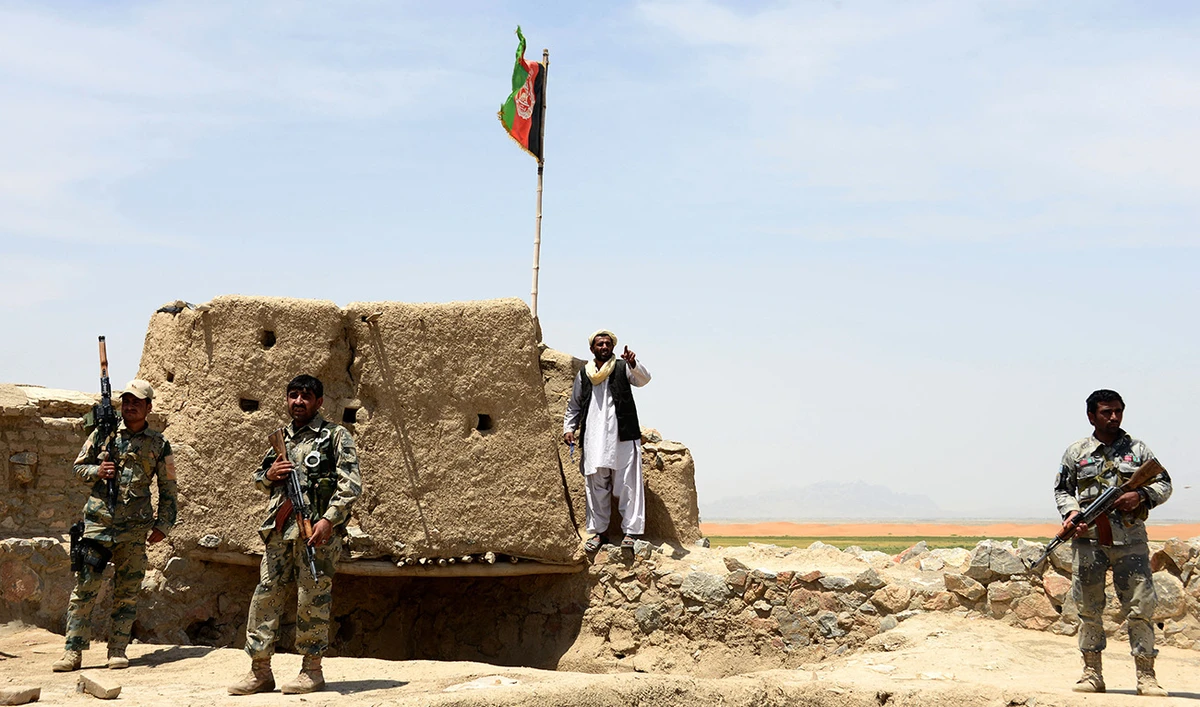
Afghan Border Police personnel keep watch near the Durand line at Spin Boldak, in southern Kandahar province on May 5, 2017. (AFP/File)
Short Url
Updated 17 February 2024
Follow

Pakistan says Taliban deputy FM’s rejection of Durand Line ‘fanciful,’ can’t change facts

  • The development comes amid already strained ties between the two neighbors over militant attacks in Pakistan, Islamabad’s expulsion of Afghans
  • Pakistan’s foreign ministry describes Taliban deputy FM’s comments as an attempt to divert attention from Islamabad’s security concerns

ISLAMABAD: Pakistan on Saturday clapped back at the Taliban deputy foreign minister’s rejection of 2,640-kilometer Durand Line as the border between Pakistan and Afghanistan, saying such “fanciful” claims could not change the geographical and historical facts.

Taliban Deputy FM Sher Mohammad Abbas Stanikzai said that Afghanistan would never recognize the Durand Line as its official border with Pakistan, Afghan news agency Khaama Press reported. The declaration was made during an event in Logar commemorating the 35th anniversary of the Soviet Union’s withdrawal from Afghanistan.

The Durand Line was established in 1893 through an agreement between Sir Mortimer Durand, a representative of British India, and Afghanistan’s emir, Abdur Rahman Khan, bifurcating tribal areas and dividing ethnic Pashtuns and Baloch people between Afghanistan and Pakistan.

From the time Pakistan gained its independence in 1947 till today, the line serves as a border between Afghanistan and Pakistan. While Pakistan says the Durand Line is the official border between the two states, Afghanistan has historically rejected the same.

In response to media queries about Stanikzai’s statement, Pakistan’s foreign ministry described the comments as “self-serving” and an attempt to divert attention from Islamabad’s security concerns.

“Any self-serving and fanciful claims regarding the legality and sanctity of the Pak-Afghan border cannot change the facts of geography, history and international law,” Mumtaz Zahra Baloch, a Pakistan foreign ministry spokeswoman, said in a statement.

“The Afghan side will be well advised to address Pakistan’s genuine security concerns than try to divert public attention by such unfortunate public pronouncements.”

The development comes amid already strained ties between Pakistan and Afghanistan for the last more than a year due to a surge in militant attacks, including suicide bombings, in Pakistan’s northwestern and southwestern parts that border Afghanistan.

The attacks prompted Islamabad last year to ordered all illegal immigrants, mostly Afghans, to leave Pakistan. More than half a million Afghans, some of whom had been living in Pakistan for decades, have since gone back or been expelled to the Taliban-led Afghanistan.

Pakistan’s Caretaker Prime Minister Anwaar-ul-Haq Kakar, however, said at the time his government was only against irregulated travel and Afghans with valid documents could travel to Pakistan.

In her statement on Saturday, Baloch said Pakistan was committed to facilitating fully regulated movement of people and goods across the Pakistan-Afghanistan border, based on norms of “interstate relations.”

“We will continue to take steps to this end,” Baloch added.

Traders estimate $18 million losses as rescue operations continue after Karachi mall inferno

Updated 5 sec ago
Follow

Traders estimate $18 million losses as rescue operations continue after Karachi mall inferno

  • DNA testing underway to identify victims still missing after blaze destroys 1,200 shops
  • Emergency services dispatched on Tuesday to another fire at Karachi’s New Vegetable Market

KARACHI/ISLAMABAD: Karachi’s business community on Tuesday estimated losses of about $18 million after a devastating fire tore through a major shopping plaza in the city, with rescue teams continuing search and recovery operations at the site amid fears that more victims may still be trapped under the debris.

The fire broke out late Saturday at Gul Plaza, a multi-story shopping complex in Karachi’s congested Saddar area, spreading rapidly through the building, which has over 1,200 shops, and trapping workers and shoppers inside. Recovery efforts have been slowed by severe structural damage and fears of collapse, officials said.

Dr. Summaiya Syed, Karachi’s chief police surgeon, said 20 deaths had been confirmed so far, with identification still underway for several bodies recovered from the site.

Karachi has a long history of deadly fires in commercial buildings, often blamed on overcrowding, aging infrastructure and weak enforcement of fire safety regulations in a city of more than 20 million people.

Atiq Mir, president of the Karachi Tajir Ittehad, which represents around 600,000 small traders across the city, said assessments by traders now put the financial damage from the Gul Plaza fire at nearly Rs5 billion ($18 million), far higher than initial estimates. 

“The plaza had at least 8000-10,000 laborers and then those affiliated to them. We can easily say nearly 10,000 families have been affected by this fire,” Mir told Arab News. 

He urged the government to announce a compensation grant of at least Rs5 billion ($18 million) and said the Karachi Chamber of Commerce and Industry would be the most appropriate body to oversee transparent distribution of relief funds.

On Monday, the provincial government of Sindh said it would provide Rs10 million ($36,000) in compensation to the family of each person killed in the Gul Plaza fire. 

Chief Minister Murad Ali Shah also announced the formation of a joint committee involving provincial officials and the Karachi Chamber of Commerce and Industry (KCCI) to assess losses and oversee rehabilitation of affected traders. He said authorities were exploring temporary arrangements to relocate 1,000 to 1,200 shops so businesses could resume operations as quickly as possible.

Citing past precedents such as the Bolton Market arson and the Cooperative Market fire, Shah said similar compensation and recovery mechanisms had previously helped traders rebuild their livelihoods and would guide the current response.

On Tuesday, Karachi Mayor Murtaza Wahab said heavy machinery had been deployed to clear debris and allow access to Gul Plaza’s basement, where search teams believe victims may still be trapped.

“Under all circumstances, the rescue operation must be completed and the search for victims further accelerated,” Wahab said during a visit to the site, according to a statement. 

“All departments of the Karachi Metropolitan Corporation will remain on alert until every missing person is traced and the operation is concluded.”

As rescue operations intensified at Gul Plaza, emergency services were dispatched to another fire at Karachi’s New Vegetable Market, officials said, underscoring persistent safety challenges.

Deputy Mayor Salman Abdullah Murad said fire brigade units and Rescue 1122 teams were immediately deployed and the blaze was brought under control.

“The fire is under control and there is no danger,” Murad said, adding that the affected area had been secured and cooling operations were underway.

Police officials said no casualties were reported in the vegetable market incident.