

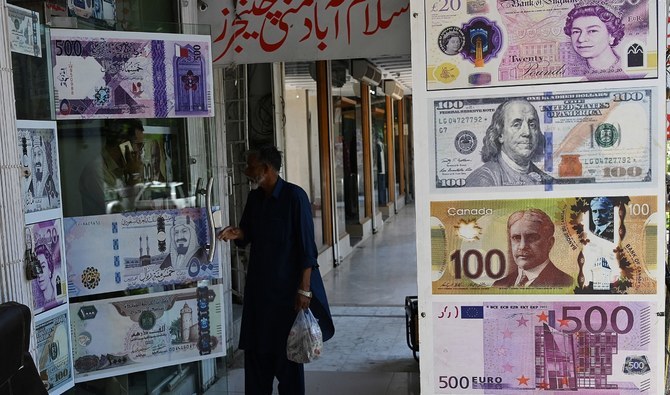
Saudi Riyal demand soars 30 percent in Pakistan ahead of Umrah, Hajj season

A man enters a foreign currency exchange shop in Islamabad on July 11, 2023. (AFP/File)
Short Url
Updated 14 February 2024
Follow

Saudi Riyal demand soars 30 percent in Pakistan ahead of Umrah, Hajj season

  • Currency dealers say the spike in demand is managed by adequate supply of the Saudi currency in market
  • Umrah operators say the availability of tickets to Saudi Arabia has become limited ahead of Ramadan

KARACHI: The demand for Saudi Riyal has surged by about 30 percent in the open market due to the seasonal impact of Umrah and Hajj, with currency dealers in Pakistan noting on Wednesday the spike in demand is being managed with sufficient supply of the foreign currency.

A large number of Muslims prefer to perform Umrah in Saudi Arabia during the Islamic fasting month of Ramadan to further deepen their spiritual experience, and the Saudi authorities have been facilitating pilgrims, leading to a massive growth of people flying into the kingdom from different parts of the world.

In January, Saudi Minister for Hajj Dr. Tawfiq Al-Rabiah said the number of Umrah pilgrims arriving in the country last year reached 13.6 million, reflecting a 58 percent increase since 2019.

Speaking to Arab News, Malik Bostan, chairman of the Exchange Companies Association of Pakistan (ECAP), mentioned that about 800,000 Pakistanis performed Umrah by the end of Ramadan in 2023, and the number is expected to increase this year.

“We have seen about a 30 percent surge in the demand for Saudi Riyal, mainly due to the aspiring Umrah pilgrims which indicates their number may increase this year,” he explained.

“The spike in demand also comes from those preparing for Hajj this year, as the exchange rate increased last year and many are buying Saudi Riyal in advance,” he added.

Wahab Siddiqui, a member of the executive committee of the Hajj Organizers Association of Pakistan (HOAP), concurred with Bostan, noting the reduced availability of tickets to Saudi Arabia due to the large number of aspiring pilgrims.

“Tickets are not available until March 2024, ahead of Ramadan, indicating that airlines are fully booked compared to last year,” he told Arab News.

The ECAP chairman revealed that the surge in demand for the Saudi Riyal was detected after the export of currency declined to about $20 million from approximately $30 million a month earlier.

“We export about $30 million worth of various foreign currencies to Dubai every month and import US dollars against it,” Bostan said, adding the share of Saudi Riyal in the export was usually about 60 percent.

He assured that the exchange rate would remain stable due to the adequate currency supply in the open market.

Pakistan’s currency dealers surrender US dollars bought from various commercial banks. In January this year, the dealers submitted about $300 million to the banks, according to the ECAP chairman.

“Due to the demand for Saudi Riyal, the volume of foreign currency exports is expected to remain between $12-20 million ahead of Ramadan and Hajj,” he added.

According to ECAP data, the current buying price of the Saudi Riyal in the open market is approximately Rs74.90.


Pakistan regulator amends law to facilitate capital raising by listed companies

Updated 19 January 2026
Follow

Pakistan regulator amends law to facilitate capital raising by listed companies

  • The amendments address challenges faced by listed companies when raising further capital from existing shareholders through a rights issue
  • Previously, listed companies were prohibited from announcing a rights issue if the company, officials or shareholders had any overdue amounts

KARACHI: The Securities and Exchange Commission of Pakistan (SECP) has notified amendments to the Companies (Further Issue of Shares) Regulations 2020 to facilitate capital raising by listed companies while maintaining adequate disclosure requirements for investors, it announced on Monday,

The amendments address challenges faced by listed companies when raising further capital from existing shareholders through a rights issue. Previously, listed companies were prohibited from announcing a rights issue if the company, its sponsors, promoters, substantial shareholders, or directors had any overdue amounts or defaults appearing in their Credit Information Bureau (CIB) report.

This restriction constrained financially stressed yet viable companies from raising capital, even in circumstances where existing shareholders were willing to support revival, restructuring, or continuation of operations, according to the SECP.

“Under the amended framework, the requirement for a clean CIB report will not apply if the relevant persons provide a No Objection Certificate (NOC) regarding the proposed rights issue from the concerned financial institution(s),” the regulator said.

The notification of the amendments follows a consultative process in which the SECP sought feedback from market stakeholders, including listed companies, issue consultants, professional bodies, industry associations, law firms, and capital market institutions.

The amendments are expected to enhance market confidence, improve access to capital for listed companies, and strengthen transparency within the rights issue framework, according to the SECP.

“To ensure transparency and protect investors’ interests, companies in such cases must make comprehensive disclosures in the rights offer document,” the regulator said.

“These disclosures must include details of any defaults or overdue amounts, ongoing recovery proceedings, and the status of any debt restructuring.”

The revised regulations strike an “appropriate balance” between facilitating corporate rehabilitation and enabling investors to make informed investment decisions, the SECP added.