

Klaija Festival sees desserts, handicrafts in the spotlight in Saudi Arabia’s Qassim

1 / 4
The 15th Klaija Festival is taking place at the King Khalid Cultural Center in Buraidah. (SPA)
2 / 4
The 15th Klaija Festival is taking place at the King Khalid Cultural Center in Buraidah. (SPA)
3 / 4
The 15th Klaija Festival is taking place at the King Khalid Cultural Center in Buraidah. (SPA)
4 / 4
The 15th Klaija Festival is taking place at the King Khalid Cultural Center in Buraidah. (SPA)
Short Url
Updated 13 February 2024
Follow

Klaija Festival sees desserts, handicrafts in the spotlight in Saudi Arabia’s Qassim

  • Popular klaija dessert is a hot seller at festival
  • Event extended to Feb. 27 by Qassim governor

RIYADH: The ongoing 15th Klaija Festival at the King Khalid Cultural Center in Buraidah has helped local producers sell their products and ensure the event’s success, the Saudi Press Agency reported on Tuesday.

Organized by the Qassim Chamber of Commerce, there are participants from the Gulf countries, and include 217 families and 20 craftsmen specializing in handicrafts.

More than 700 young men and women from various organizations are supporting the festival’s programs, SPA reported.

In response to the increased demand and attendance, Qassim Gov. Prince Faisal bin Mishaal has extended the festival by 10 days until Feb. 27. He had earlier toured the festival with several officials.

Umm Youssef, a local producer, said she has been gratified by the increased attendance, which has allowed her to sell more of her products, including the klaija dessert.

Expert klaija crafter, Umm Khaled, said the festival was an opportunity to showcase her skills. She said her daily sales exceeds SR1,000 ($266).

The klaija dessert is one of the leading products of the region, and has helped to create jobs.

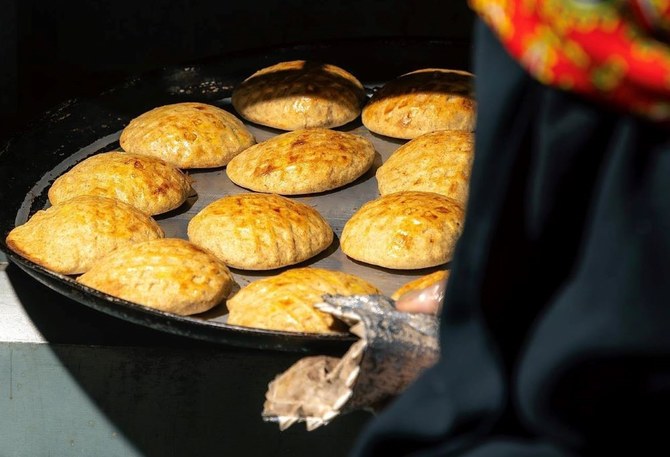
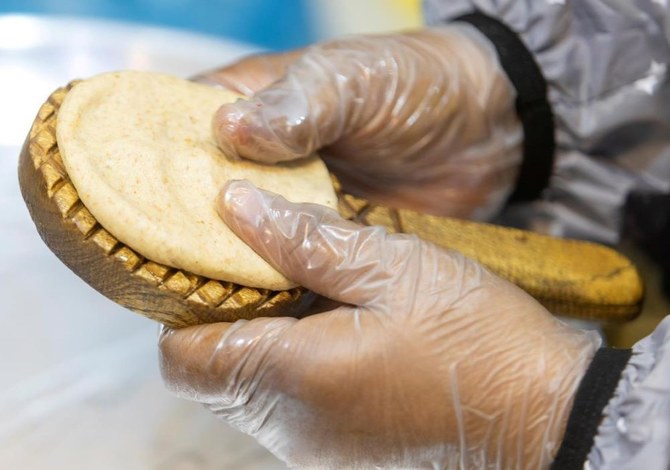
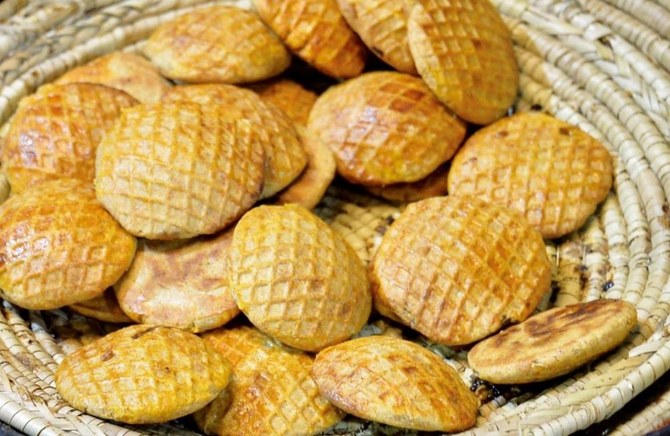
Klaija’s ingredients include wheat flour, sugar, lemon, cardamom, cinnamon, ginger and molasses. The dough is stuffed with some of the ingredients and baked to a crisp.

For more than 45 years, Umm Ahmed has been baking Klaija and is a regular at the festival. She said she makes over SR800 a day from her product.

Specially designated pavilions at the festival showcase a variety of klaija, traditional foods, sweets, and diverse handicrafts.

Several officials thanked Prince Faisal for his ongoing support of the Klaija Festival, including Mohammed Al-Hanaya, the secretary of the Qassim Chamber of Commerce, and Mayada Badr, CEO of the Culinary Arts Commission.

Badr emphasized the commission’s dedication to supporting the klaija industry, which is on the list of the National and Regional Dishes Narratives initiative, which seeks to celebrate Saudi Arabia’s cuisine.


Hafez Galley’s exhibition pays tribute to two Egyptian artists who shaped a visual era

Both artists emerged in an era when newspapers and magazines played a central role in shaping Egypt’s visual culture. (Supplied)
Updated 17 January 2026
Follow

Hafez Galley’s exhibition pays tribute to two Egyptian artists who shaped a visual era

  • Artworks by Attyat Sayed and El Dessouki Fahmi will be on display until Feb. 28

JEDDAH: Hafez Gallery in Jeddah has opened an exhibition showcasing the works of influential Egyptian artists Attyat Sayed and El Dessouki Fahmi. The exhibition runs until Feb. 28.

Kenza Zouari, international art fairs manager at the gallery, said the exhibition offers important context for Saudi audiences who are becoming increasingly engaged with Arab art histories.

Artworks by Attyat Sayed and El Dessouki Fahmi will be on display at Hafez Gallery until Feb. 28. (Supplied)

“Attyat Sayed and El Dessouki Fahmi’s decades-long practice in Cairo established foundational models for how artists across the region approach archives, press, and ultimately collective memory,” Zouari told Arab News. 

Both artists emerged in an era when newspapers and magazines played a central role in shaping Egypt’s visual culture. Their early work in press illustration “demanded speed, clarity, the ability to distill complex realities into a single, charged image,” the gallery’s website states.

Seeing the works of both artists side-by-side is breathtaking. It’s fascinating to witness how press illustration shaped such profound and lasting artistic voices.

Lina Al-Mutairi, Local art enthusias

Heba El-Moaz, director of artist liaison at Hafez Gallery, said that this is the second time that the exhibition — a posthumous tribute to the artists —has been shown, following its debut in Cairo.

“By placing their works side by side, it highlights how press illustration, often considered ephemeral, became a formative ground for artistic depth, narrative power, and lasting influence, while revealing two distinct yet deeply interconnected artistic paths within modern Egyptian visual culture,” she told Arab News. 

Artworks by Attyat Sayed and El Dessouki Fahmi will be on display at Hafez Gallery until Feb. 28. (Supplied)

Sayed’s work evolved from black-and-white illustration into “layered, dynamic compositions that translate lived emotion into physical gesture, echoing an ongoing negotiation between the inner world and its outward form,” the website states. Viewed together, the works of Sayed and Fahmi “reveal two distinct yet deeply interconnected artistic paths that contributed significantly to modern Egyptian visual culture.”

The exhibition “invites visitors into a compelling dialogue between instinct and intellect, emotion and structure, spontaneity and reflection; highlighting how artistic rigor, cultural memory, and sustained creative exploration were transformed into enduring visual languages that continue to resonate beyond their time,” the gallery states.

Lina Al-Mutairi, a Jeddah-based art enthusiast, said: “Seeing the works of both artists side-by-side is breathtaking. It’s fascinating to witness how press illustration shaped such profound and lasting artistic voices. The exhibition really brings their vision and influence to life.”