


‘Jeddah Go Outdoors’ offers hiking trips to experience Saudi Arabia’s natural splendor

1 / 7
Jeddah Go Outdoors makes hiking and other outdoor activities more accessible and organized for both locals and tourists, while also providing opportunity to explore Saudi Arabia’s diverse nature. (Supplied)
2 / 7
Jeddah Go Outdoors makes hiking and other outdoor activities more accessible and organized for both locals and tourists, while also providing opportunity to explore Saudi Arabia’s diverse nature. (Supplied)
3 / 7
Jeddah Go Outdoors makes hiking and other outdoor activities more accessible and organized for both locals and tourists, while also providing opportunity to explore Saudi Arabia’s diverse nature. (Supplied)
4 / 7
Jeddah Go Outdoors makes hiking and other outdoor activities more accessible and organized for both locals and tourists, while also providing opportunity to explore Saudi Arabia’s diverse nature. (Supplied)
5 / 7
Jeddah Go Outdoors makes hiking and other outdoor activities more accessible and organized for both locals and tourists, while also providing opportunity to explore Saudi Arabia’s diverse nature. (Supplied)
6 / 7
Jeddah Go Outdoors makes hiking and other outdoor activities more accessible and organized for both locals and tourists, while also providing opportunity to explore Saudi Arabia’s diverse nature. (Supplied)
7 / 7
Jeddah Go Outdoors makes hiking and other outdoor activities more accessible and organized for both locals and tourists, while also providing opportunity to explore Saudi Arabia’s diverse nature. (Supplied)
Short Url
Updated 12 February 2024
Follow

‘Jeddah Go Outdoors’ offers hiking trips to experience Saudi Arabia’s natural splendor

  • Founded by hiking enthusiasts, Jeddah Go Outdoors gives chance to explore Kingdom’s natural beauty

JEDDAH: The urge to explore and reconnect with nature is at the heart of Jeddah Go Outdoors, a Saudi organization unlocking adventures in the Kingdom.

Founded by Ahmed Shatta, Maher Indijani, and Mohammed Jafrawi, Jeddah Go Outdoors regularly organizes trips inspired by their own passion for hiking.



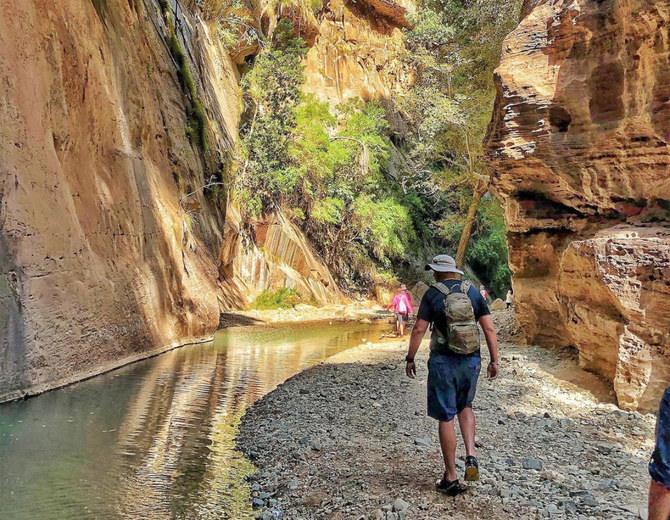
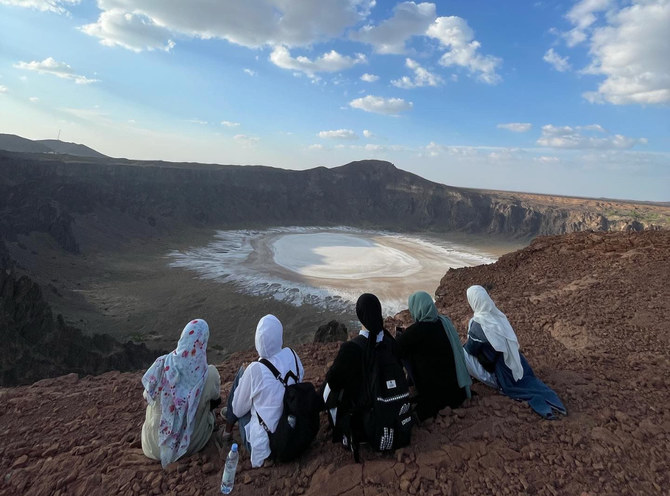
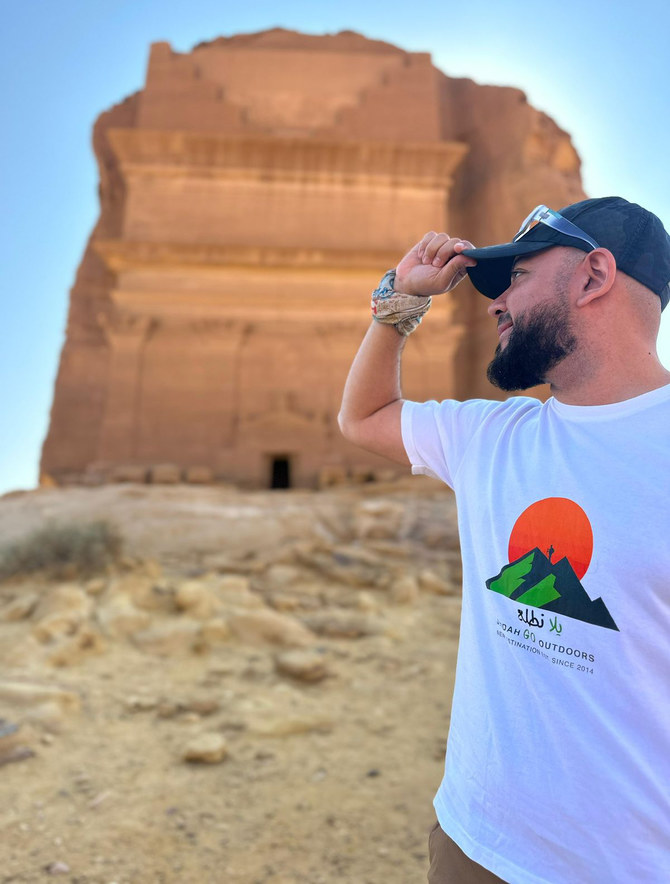
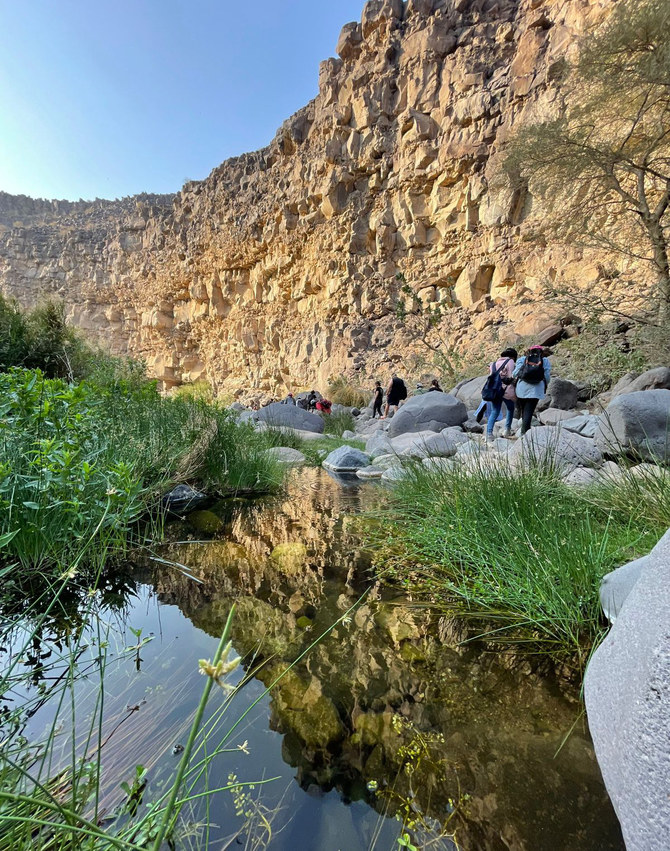
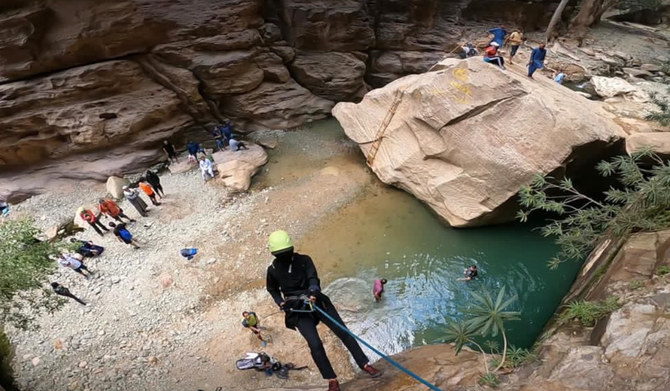
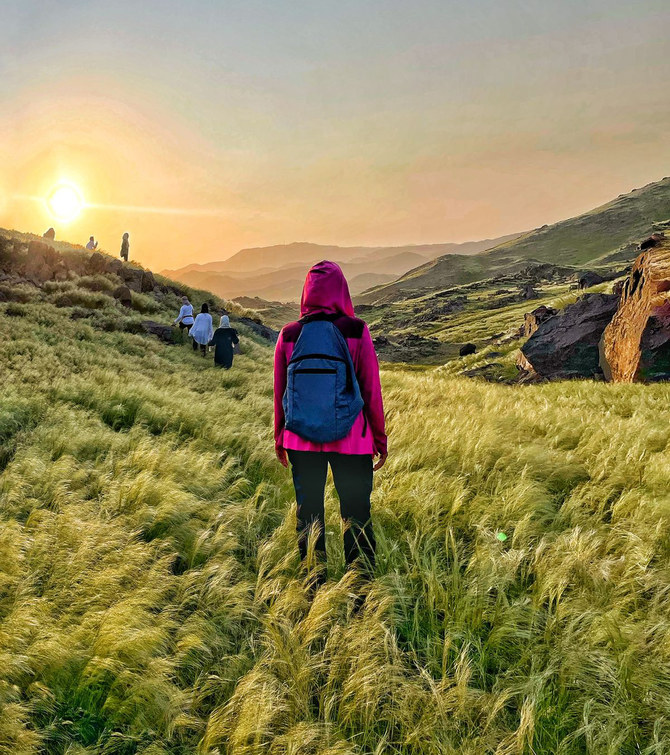
Jeddah Go Outdoors makes hiking and other outdoor activities more accessible and organized for both locals and tourists, while also providing opportunity to explore Saudi Arabia’s diverse nature. (Supplied)

Shatta fell in love with walking and spending time in nature with his friends and fellow students while he was studying in the US. He then wanted to put his newfound hiking skills into practice when he returned to Saudi Arabia.

HIGHLIGHTS

• Founded by Ahmed Shatta, Maher Indijani, and Mohammed Jafrawi, Jeddah Go Outdoors regularly organizes trips inspired by their own passion for hiking.

• As experienced hikers, their forays outside the Kingdom are learning experiences that they use to their advantage.

• With a workforce composed entirely of women, Jeddah Go Outdoors has also been able to cater to women who desire privacy during these adventures.

In Jeddah, Shatta began hiking with his friends in 2014. At the time, hiking was not particularly common, and the only people who joined him on these expeditions were foreigners. Now, Shatta and his friends are making the activity more accessible and organized for locals and tourists, and creating opportunities to appreciate the wonders of the Kingdom’s diverse landscape.



Jeddah Go Outdoors makes hiking and other outdoor activities more accessible and organized for both locals and tourists, while also providing opportunity to explore Saudi Arabia’s diverse nature. (Supplied)

“The idea to start a tour group and get people out of their houses to explore the countryside came about because I felt that everyone should be able to observe and appreciate the beauty and wealth of our nature between mountains, lands, and weather,” Shatta told Arab News.

With the inception of that idea, along with Jafrawi and Indijani, Shatta created the tourism foundation that is now approved and licensed by the Ministry of Tourism.
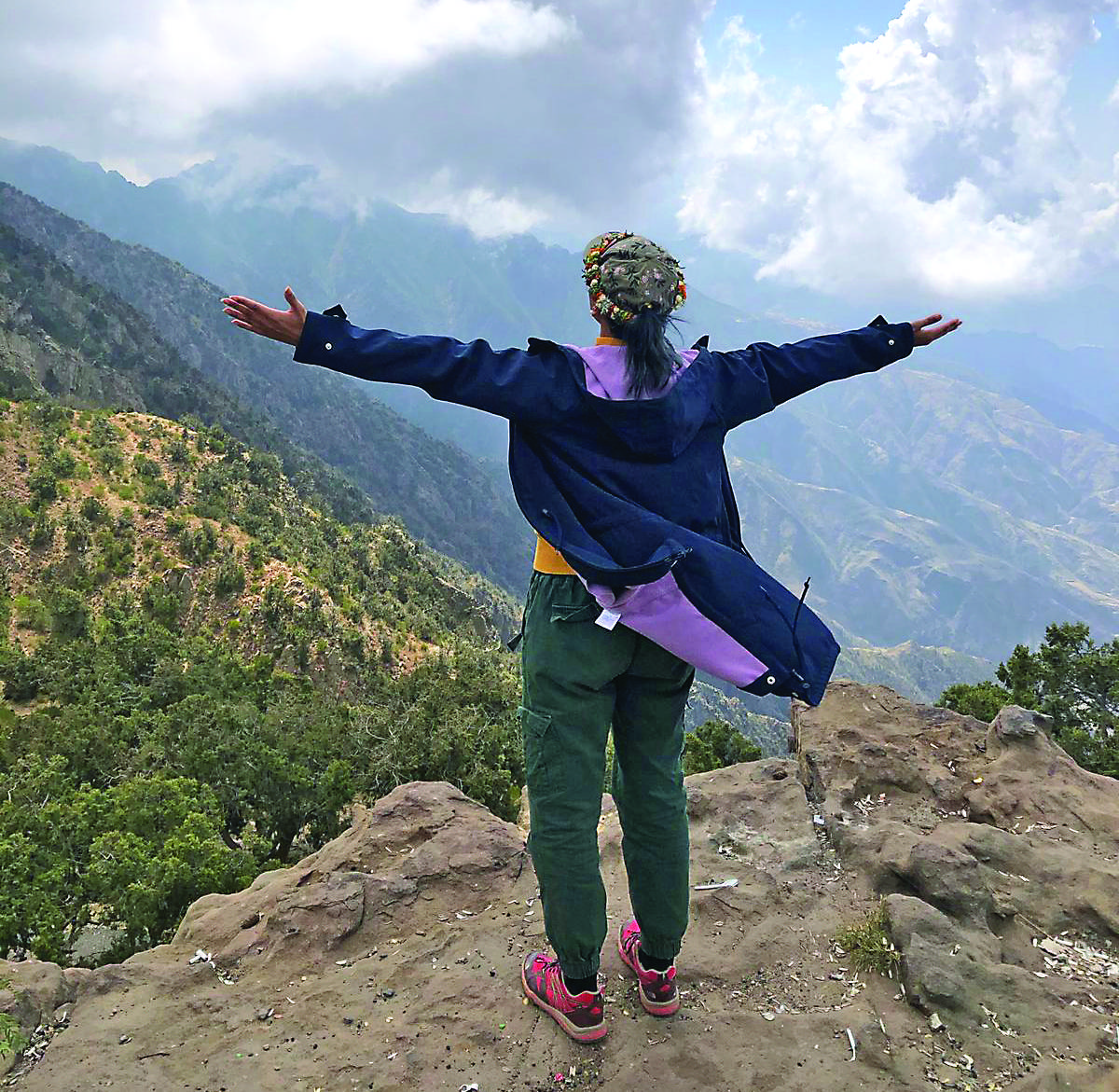


Jeddah Go Outdoors makes hiking and other outdoor activities more accessible and organized for both locals and tourists, while also providing opportunity to explore Saudi Arabia’s diverse nature. (Supplied)

They started by traveling domestically throughout the Kingdom, and later expanded to international trips to explore places like Georgia, Oman, Bosnia and Herzegovina, and more.

As experienced hikers, their forays outside the Kingdom are learning experiences that they use to their advantage. “Our overseas travels have given us a wealth of knowledge from our hiking experiences outside of the Kingdom. For instance, while in Oman, we discovered they had a 20 km walking tour. We learned how to do it and used it to organize and prepare an adventure here on our visits,” he said.
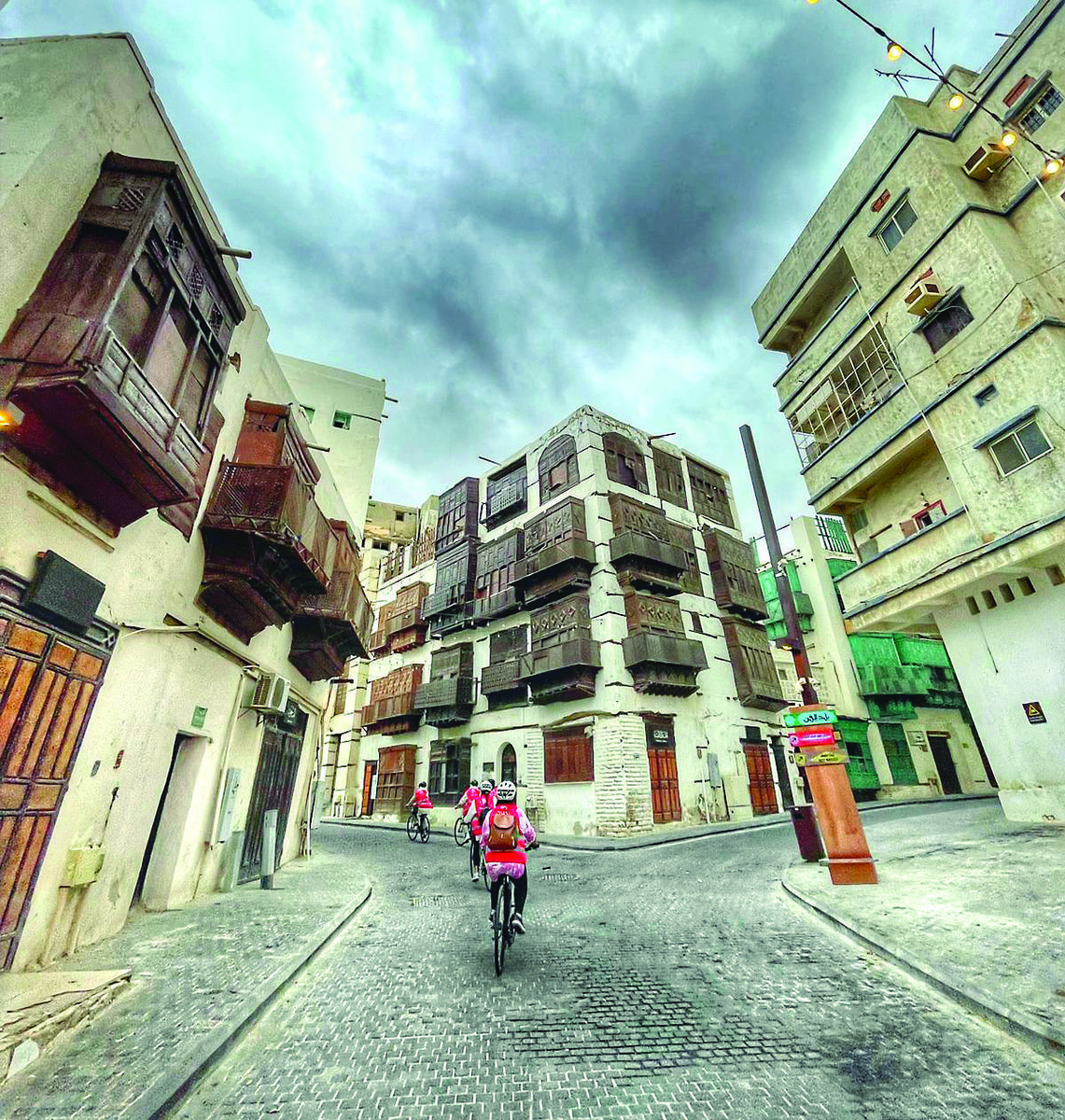


Jeddah Go Outdoors makes hiking and other outdoor activities more accessible and organized for both locals and tourists, while also providing opportunity to explore Saudi Arabia’s diverse nature. (Supplied)

Their trips are not limited to hiking as they also organize zipline adventures and biking trips: “What sets us apart are our affordable rates and our array of packages, which include hiking meditation, challenging hiking, and even a fantastic bike ride in Jeddah’s Al-Balad area, where we all ride our bikes and take in the breathtaking views of the UNESCO World Heritage Site,” Shatta added.

People should venture outside of their comfort zone and explore that nature, rather than being enmeshed in mundane occupations and everyday responsibilities.

Ahmed Shatta, Jeddah Go Outdoors co-founder

Shatta and his companions take trips frequently and have added a lot of exciting elements to the experiences, like Egyptian Night, Levant Night, Kuwaiti Night, and more.

His purpose is to link humans with the natural world around them, and thus far they have served over 70,000 people.
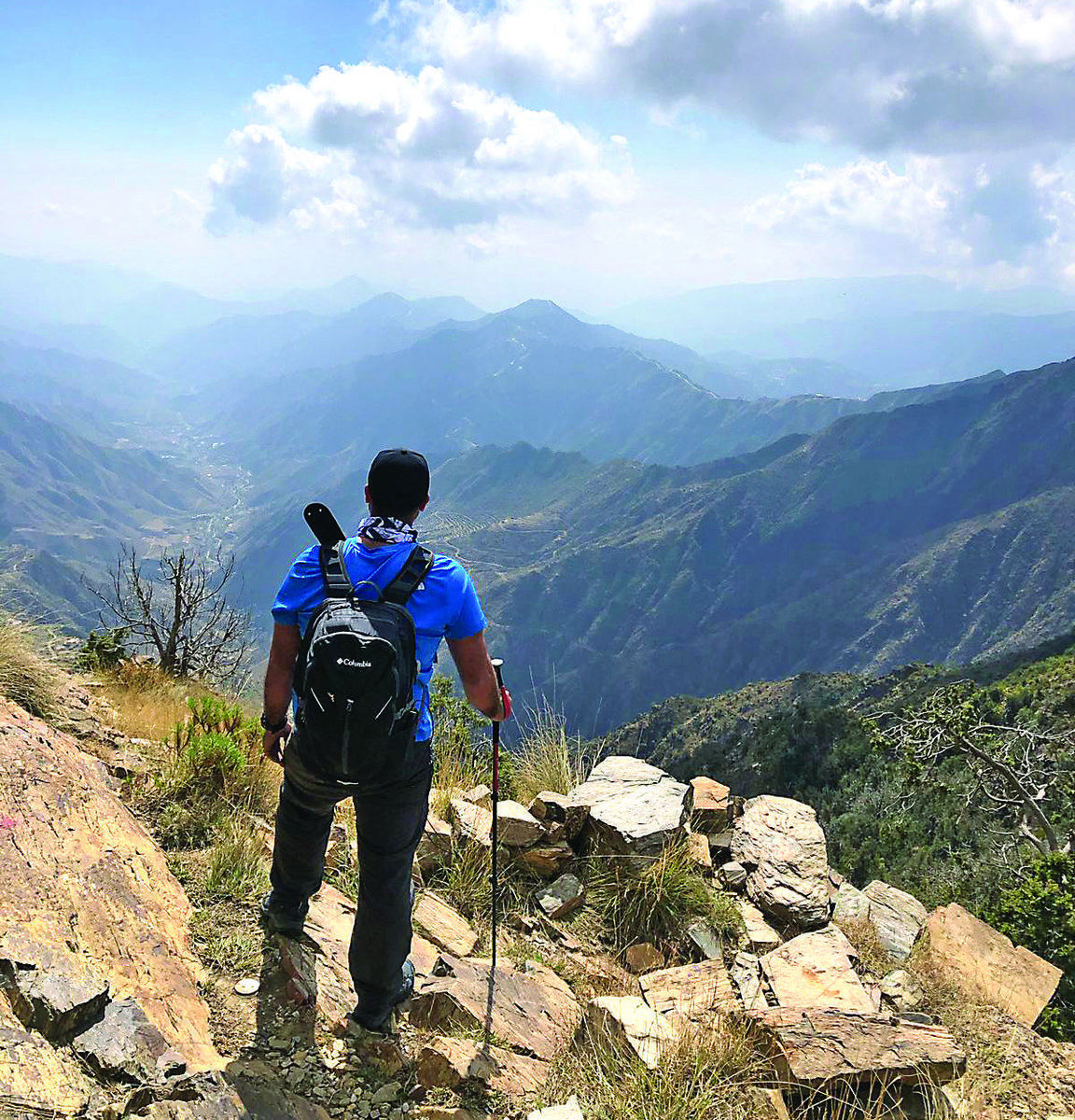


Jeddah Go Outdoors makes hiking and other outdoor activities more accessible and organized for both locals and tourists, while also providing opportunity to explore Saudi Arabia’s diverse nature. (Supplied)

“We fulfilled several government contracts, such as the one from the Saudi Climbing and Hiking Federation to map out a path through Al-Baha. We created the route after winning the bid,” he said.

With a workforce composed entirely of women, Jeddah Go Outdoors has also been able to cater to women who desire privacy during these adventures.
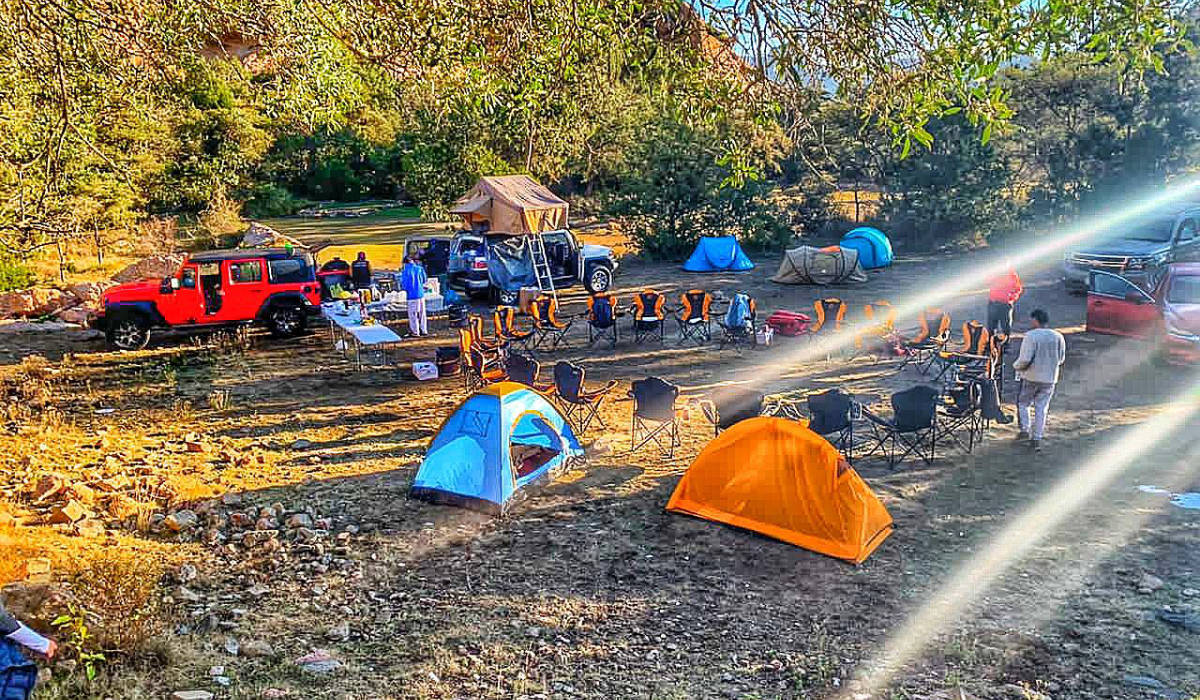


Jeddah Go Outdoors makes hiking and other outdoor activities more accessible and organized for both locals and tourists, while also providing opportunity to explore Saudi Arabia’s diverse nature. (Supplied)

Being an IT specialist, Shatta was also able to develop the website with a simple booking system. He is currently working on a platform that unites all travel agencies in the Kingdom and their operating systems, enabling them to showcase their deals and tickets for their experiences: “Since we have a large client database, we have decided to assist other Saudi tourism businesses in joining this platform so they can advertise their services there and generate income.”

His job necessitates him spending a lot of time in front of a computer, much like most people these days working corporate jobs.

“People should venture outside of their comfort zone and explore that nature, rather than being enmeshed in mundane occupations and everyday responsibilities,” he says.


2025 Year in Review: A defining time for Saudi Arabia on the international stage

Updated 6 sec ago
Follow

2025 Year in Review: A defining time for Saudi Arabia on the international stage

  • Multilateral push reshaped global diplomacy as world leaders turned to it for breakthrough mediation
  • A year of summits and strategic realignments elevated the Kingdom’s profile in resolving crises from Sudan to Syria

LONDON: America, Syria, Ukraine, Gaza, China, Lebanon, Sudan — 2025 was the year that Saudi Arabian diplomacy, already a potent regional force, came of age on the world stage.

“This year’s big story when it comes to Saudi Arabia’s diplomatic stand is the transition from bringing its status as a regional power broker to the multilateral scale,” said Kelly Petillo, program manager for the Middle East and North Africa at the European Council on Foreign Relations.

She pointed to two diplomatic initiatives in particular, “whose reach and impact span way beyond the region and mark Saudi Arabia’s entry in the list of multilateral power brokers.”

At the UN General Assembly in September, the vast majority of delegates voted in favor of a resolution tabled jointly by France and Saudi Arabia. 

US President Donald Trump and Saudi Crown Prince and Prime Minister Mohammed bin Salman pose for a picture at the White House in Washington, DC, US, November 18, 2025. (Reuters)

While condemning the Oct. 7, 2023, attack on Israel, and demanding that Hamas must free all hostages, the resolution called for “collective action to end the war in Gaza, to achieve a just, peaceful and lasting settlement of the Israeli-Palestinian conflict based on the effective implementation of the Two-State solution.”

The text was adopted by 142 votes to 10 against — including Israel and the US — and with 12 abstentions.

The other diplomatic initiative driven by the Kingdom at the General Assembly was the formation of the Global Alliance for the Implementation of the Two-State Solution, at a meeting presided over by Saudi Foreign Minister Prince Faisal bin Farhan Al-Saud and attended by the representatives of 90 states. The alliance held its first meeting in Riyadh at the end of October.

The new year had barely started when Saudi Arabia’s 2025 diplomatic offensive got under way, with the gathering of ministers from 17 countries at a special conference in Riyadh on Jan. 12 to discuss how to speed aid to the new government in Syria. 

Syria's newly appointed president for a transitional phase Ahmed Al-Sharaa meets Saudi Crown Prince, Mohammed bin Salam, in Riyadh, Saudi Arabia, February 2, 2025. (Reuters)

Exactly three weeks later, on Feb. 2, Syria’s new president, Ahmad Al-Sharaa, accompanied by foreign minister Asaad Al-Shaiban, made his first official trip abroad, flying to Riyadh to meet Crown Prince Mohammed bin Salman. 

“Of course, Riyadh is not alone in mediation efforts in the region,” said Petillo. “Qatar, for instance, also plays a role. But it could be argued that Saudi Arabia is now seen as the primary regional power by international actors such as the US and by local governments such as the authority in Syria.”

February saw two more high-profile demonstrations of Saudi Arabia’s determination to assert its leadership in pursuit of both regional stabilization and global realignment. On Feb. 18, Riyadh hosted a ministerial-level meeting between Russia and the US.

Three days later leaders from Egypt, Jordan and the Gulf states met in Saudi Arabia to counter a reconstruction plan for the Gaza Strip mooted by US President Donald Trump. 

Ukrainian President Volodymyr Zelenskiy meets Saudi Crown Prince, Mohammed bin Salman, during his visit to Jeddah, Saudi Arabia, March 10, 2025. (Reuters)

“Saudi diplomacy in 2025 effectively cast Riyadh as a central convener, leveraging major summits and renewed regional engagement to anchor itself in key mediation efforts,” said Sanam Vakil, director of the Middle East North Africa Program at the Royal Institute of International Affairs.

“Its multi-aligned outreach to the US, China, Russia and Europe broadened strategic room for maneuver, even as it underscored the inherent challenges of balancing rival great-power agendas. 

FASTFACTS:

• A Saudi-French Gaza resolution passed 142-10 at the UN, despite opposition from the US and Israel.

• Saudi Arabia launched a 90-nation alliance to advance a two-state solution.

• Leaders from Libya, Syria and Ukraine all made key visits to Saudi Arabia in 2025.

“Re-engagement in Syria showcased Riyadh's influence with President Trump and sustained convening on Palestine at the UN also demonstrated Saudi influence.”

The proof of that influence has been the steady stream of world leaders travelling to Riyadh in the course of the year. 

US President Donald Trump welcomes Saudi Crown Prince Mohammed bin Salman during an arrival ceremony on the South Lawn of the White House in Washington, DC, US, November 18, 2025. (Reuters)

On March 4, new Lebanese President Joseph Aoun’s first official foreign visit was to Riyadh, for a meeting with the crown prince. Just six days later, as Saudi Arabia assumed the role of mediator between Russia and Ukraine, beleaguered Ukrainian President Volodymyr Zelensky flew to Jeddah to meet with the Saudi crown prince.

Underscoring Saudi Arabia’s determination to tread its own pragmatic path through the complexities of international relations, at the beginning of December Riyadh hosted the Saudi-Russian Investment Forum, on the sidelines of which the two countries signed a mutual visa-free agreement.

At times, it seemed that Saudi diplomacy, often represented in person by the crown prince, was active in almost every global arena. On Dec. 4, for example, the final communique issued at the close of the 46th GCC summit in Bahrain singled out Crown Prince Mohammed bin Salman for his efforts to end the war in Sudan.

“Saudi Arabia has positioned itself as a diplomatic alternative to key intermediaries and regional rivals such as Qatar, particularly in the context of wars in Sudan, Gaza and even Ukraine,” said Caroline Rose, director of Military and National Security Priorities at the New Lines Institute. 

(L to R) US Middle East envoy Steve Witkoff, Secretary of State Marco Rubio, National Security Advisor Mike Waltz, Saudi Arabia's Foreign Minister Prince Faisal bin Farhan Al-Saud, National Security Advisor Mosaad bin Mohammad Al-Aiban, the Russian president's foreign policy advisor Yuri Ushakov, and Russia's Foreign Minister Sergei Lavrov attend a meeting together at Riyadh's Diriyah Palace on February 18, 2025. (AFP)

“Saudi Arabia has also sought to deepen its partnership with the US, positioning itself as a candidate America can rely upon to uphold security commitments as Washington seeks to diversify its relationships in the region beyond Israel.”

Three events in particular underscored Riyadh’s arrival as an international diplomatic heavyweight.

On Oct. 28 Chinese Vice President Han Zheng arrived in Riyadh for a five-day visit, during which he addressed the ninth Future Investment Initiative conference and held talks with Crown Prince Mohammed bin Salman at the Royal Court in Al-Yamamah Palace in Riyadh.

China, said the vice president in a communique, “stands ready to work with Saudi Arabia to implement the important consensus reached by their leaders, enhance high-level exchanges, expand practical cooperation in various fields, and increase people-to-people and cultural exchanges, in order to lift the China-Saudi Arabia comprehensive strategic partnership to higher levels.” 

Lebanese President Joseph Aoun shakes hands with Saudi Crown Prince Mohammed bin Salman during his visit to Riyadh, Saudi Arabia, March 3, 2025. (Reuters)

China, he added, was also willing “to enhance coordination with Saudi Arabia on multilateral platforms such as the United Nations and the G20, advance global governance in a more just and reasonable direction, and promote the building of a community with a shared future for humanity.”

The following month, the patient diplomatic groundwork laid by Saudi Arabia aimed at seeing the post-Assad-era Syria brought back into the international fold was rewarded spectacularly when Syrian President Al-Sharaa was welcomed by President Trump at the White House on Nov. 10.

The historic meeting — the first at the White House between leaders of the two countries since 1946 — culminated with President Trump announcing that sanctions on Syria would be lifted.

Eight days later, on Nov. 18, Crown Prince Mohammed bin Salman also visited President Trump in the White House. They had met in Riyadh in May, when Trump chose Saudi Arabia as the destination for the first international trip of his second term as president, and Saudi Arabia pledged $600 billion of investments in the US. 

A Syrian flag is displayed outside the White House following the meeting of US President Donald Trump and Syrian President Ahmed Al-Sharaa in the Oval Office of the White House in Washington, DC, US, November 10, 2025. (Reuters)

In November the two men signed a series of agreements, including a historic Strategic Defense Agreement (SDA). As Vakil wrote in an analysis for Chatham House, “the Kingdom today is wealthier, more confident, and more diplomatically assertive than at any point in its modern history.”

President Trump’s visit to the Kingdom in May had shown that “he and (Crown Prince) Mohammed bin Salman share a regional vision that champions the possibility of ‘commerce over chaos’ and technological investment over ideological confrontation.”

But, she added, Saudi Arabia’s diplomatic pragmatism did not extend to normalizing relations with Israel — a big goal of the Trump administration — if that meant compromising over Gaza: “The Kingdom has stated clearly and repeatedly that it will not sign any agreement with Israel without real movement toward a two-state solution.”

Saudi Arabia, said Sir John Jenkins, former British ambassador to Saudi Arabia, Iraq and Syria, “has become a much more nimble and effective player in regional diplomacy over the past five years.  The foreign minister is active, engaged and very well informed.” 

Foreign ministers and delegates pose for a family photo after their meeting on Syria, following the recent ousting of President Bashar Al-Assad, in Riyadh, Saudi Arabia, January 12, 2025. (Reuters)

The Kingdom’s diplomats face a challenging year ahead, nevertheless. “The difficulty — as always — is deciding where to put most effort,” said Sir John.

“Gaza has been the biggest issue.  To do more than simply achieve a ceasefire — which will eventually collapse without progress on the underlying problems — we are going to need sustained US engagement and Israeli willingness to cooperate in serious negotiations towards Palestinian self-governance.

“That is a long way off, frankly.  So, the key test will be how much regional actors — above all the Kingdom of Saudi Arabia — can craft imaginative policy proposals as we move forward.”