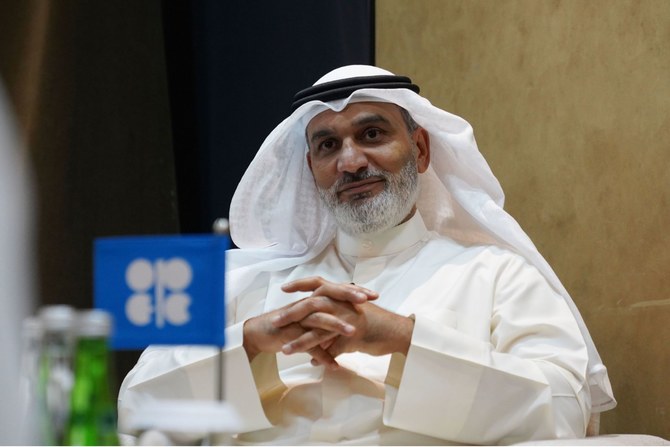

RIYADH: The Organization of the Petroleum Exporting Countries is in talks with several countries interested in joining the wider alliance known as OPEC+, its secretary-general said on Monday.
The development follows the recent inclusion of Brazil in the alliance. OPEC chief Haitham Al-Ghais told the Emirates News Agency that the names of the interested countries would be disclosed once consultations were finalized.
He said: “By facilitating dialogue and joint efforts in areas like technology, the charter of Cooperation aims to stabilize oil markets and benefit all industry stakeholders, including oil-producing and consuming nations.”
Al-Ghais further elaborated that the charter serves as a platform for facilitating discussions and sharing perspectives on the conditions and trends in the global oil and energy markets.
The ultimate objective is to contribute to securing energy supplies and ensuring long-term stability to the advantage of producers, consumers, investors, and the global economy, according to the secretary-general.
Regarding potential adjustments to oil production among OPEC member states, Al-Ghais noted that the continued achievements of the Declaration of Cooperation have spurred participating countries to further enhance their efforts to uphold market stability.
He highlighted the recent agreement among OPEC+ members to extend voluntary oil production cuts until the end of 2024.
Member countries, including Saudi Arabia, Russia, Iraq and the UAE as well as Kuwait, Kazakhstan, Algeria and Oman have announced additional voluntary production cuts effective until the end of March this year, aimed at providing additional support to global oil markets and ensuring stability.
Al-Ghais also underscored the Joint Ministerial Monitoring Committee’s acknowledgment, during its February meeting, of the compliance of both OPEC and non-OPEC member countries with the crude production quotas outlined in the DoC.
Addressing the UAE’ role in supporting OPEC’s efforts to achieve price stability, he commended the UAE’s support since becoming a member of the organization, emphasizing its role as a responsible and reliable producer and exporter of oil, which contributes positively to the stability of global crude markets and, consequently, the growth of the global economy.
Regarding the impact of geopolitical conditions on the global energy landscape in 2024, Al-Ghais affirmed that OPEC remains committed to its vital role by intensifying efforts and cooperation among member states to support market stability and provide reliable oil supplies despite prevailing geopolitical tensions worldwide.
Referring to the OPEC January 2024 report, the secretary-general highlighting that the demand forecast for 2024 remains unchanged at 2.2 million barrels per day, with growth expected in both OECD and non-OECD regions.
In the first quarter of 2024, oil demand is projected to increase by 2 million barrels per day year on year, with total world oil demand anticipated to reach 104.4 million bpd for the year, driven by robust air travel demand and healthy road mobility, according to the report.