

Pakistan federal cabinet approves increase in prices of over 140 life-saving medicines

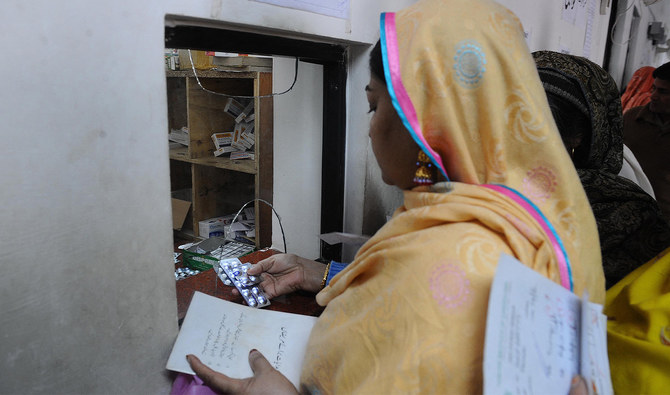
Pakistani heart patients and their family members queue for their prescription medication from a pharmacy at the Punjab Institute of Cardiology in Lahore on January 24, 2012. (AFP/File)
Short Url
Updated 02 February 2024
Follow

Pakistan federal cabinet approves increase in prices of over 140 life-saving medicines

  • Development comes after a year-long tussle between government, drug-makers over prices of medicines
  • Last year, drug manufacturers even stopped supply citing rising cost of production and dollar-rupee parity

ISLAMABAD: The federal cabinet has approved an increase in prices of more than 140 life-saving medicines, Pakistani state media reported on Thursday.

The development comes after more than a year-long tussle between the government and drug manufacturers over the prices of essential medicines.

The decision to increase the prices was made at a meeting of the federal cabinet presided over by Prime Minister Anwaar-ul-Haq Kakar in Islamabad, the state-run Radio Pakistan broadcaster reported.

“On recommendation of the Ministry of National Health, the Federal Cabinet approved increase in the prices of 146 essential life-saving medicines,” the report read.

It said the decision was taken while keeping in view the “rising prices of raw materials in global market.”

Last year, pharmaceutical firms and importers had stopped supply of medicines due to the outgoing government’s inaction on price adjustment according to the rising inflation and dollar-rupee disparity.

The move led to shortage of critical medicines, including oncology products, plasma-derived products, vaccines, recombinant biologicals, equine serum products, cardiac enzymes and specialized hormones, insulin, and mostly importantly the general anesthesia used in operation theaters, in Pakistani health facilities, doctors and pharmacists said at the time.

Speaking at the cabinet meeting, PM Kakar said his government was taking every possible step for the provision of medicines at suitable prices, according to the report.

“The government is devising such policies which would not only benefit the common man, but the pharmaceutical industry as well,” he was quoted as saying.

The prime minister asked authorities to speed up action against hoarding and smuggling of medicines.


Pakistan, Algeria discuss investment cooperation in energy, mining, digital sectors

Updated 5 sec ago
Follow

Pakistan, Algeria discuss investment cooperation in energy, mining, digital sectors

  • MoU planned between Algerian investment agency and Pakistan’s SIFC
  • Talks also cover digital governance and smart agriculture collaboration

ISLAMABAD: Pakistan and Algeria have agreed to pursue closer investment cooperation in energy, mining and digital development, Pakistan’s Special Investment Facilitation Council (SIFC) said on Friday, as Islamabad steps up efforts to attract foreign capital and expand international collaborations.

The SIFC is a hybrid civil-military body formed in 2023 to fast-track decisions related to international investment in sectors including tourism, livestock, agriculture and mines and minerals. It has been central to Pakistan’s efforts to attract foreign investment and streamline regulatory approvals amid recurring balance-of-payments pressures.

Federal Secretary SIFC Jamil Qureshi said in a social media post that he met Algeria’s Ambassador to Pakistan, Dr. Brahim Romani, and discussed signing a memorandum of understanding to strengthen institutional collaboration between the Algerian Investment Promotion Agency and the SIFC.

“Both countries share strong potential to expand cooperation in strategic sectors such as energy, mining, digital transformation, and industrial development,” he said.

“Algeria’s experience in leveraging natural resources through institutions like Sonatrach, developing large-scale mining projects, and promoting industrial localization through partnerships with global firms such as Stellantis offers valuable lessons for Pakistan as we advance priority initiatives including Reko Diq, renewable energy expansion, and EV manufacturing,” he continued.

Qureshi said the two sides also explored collaboration in digital governance and smart agriculture, similar to Algeria’s satellite-driven agricultural and climate monitoring initiatives.

Islamabad has in recent months intensified outreach to Middle Eastern, Central Asian and African partners as it seeks long-term investment rather than short-term financial support.

Pakistan’s economy has stabilized under an International Monetary Fund program, with the government actively seeking foreign investment and collaborations to boost growth, improve exports and ease pressure on foreign exchange reserves.

“We look forward to translating this shared vision into concrete projects that generate jobs, enhance exports, and strengthen Pakistan–Algeria economic partnership,” Qureshi added.

Qureshi did not provide a timeline for signing the proposed memorandum of understanding.