

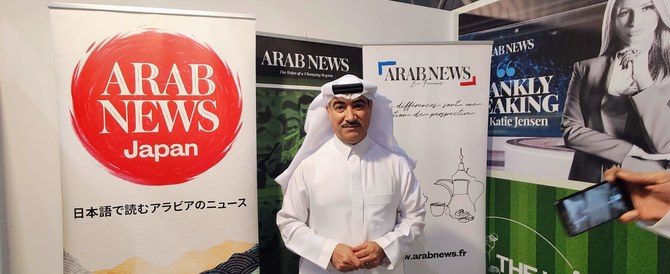

RIYADH: Recent adjustments to Saudi Arabia’s investment framework have spurred domestic business growth, drawing increased interest from global speculators, according to a top official.
Speaking to Arab News, ASFAR CEO Fahad bin Mushayt said that many regulations have recently changed, and more are yet to come, including the facilitation of visa issuance, be it for business, religious, or tourist purposes.
He highlighted the Kingdom’s pivotal role in creating a conducive environment for local and international investors. This encompasses regulatory reforms, business facilitation, establishment support, and fostering partnerships between private and public sectors.
“This also includes all kinds of support, subsidies, or incentives that have recently been announced for local and international investments. Many incentives are coming from the Ministry of Tourism and the Ministry of Investment to incentivize and turn Saudi Arabia into an investment hub,” said the CEO of the firm at the Saudi Tourism Forum in Riyadh.
He revealed that the Ministry of Tourism has just announced 100,000 scholarships in tourism and hospitality, saying: “There are a lot of students returning to the Kingdom after benefiting from the King Abdullah Scholarship Program. So, the industry is ready, and there is much more to do.”
Mushayt highlighted a current challenge in infrastructure development, particularly in promising destinations. He stressed that ASFAR, also known as also known as Saudi Tourism Investment Co. and an affiliate of the Saudi Public Investment Fund, is specifically mandated to support the tourism ecosystem in those areas.
“So, we’re focusing on tier two cities in Saudi Arabia, a country as big as a continent that has beautiful destinations nationwide, more than 20 destinations that we are targeting. So, in each destination, we are there to create that destination to be a tourist destination to attract local and global tourists,” he said.
Mushayt emphasized their commitment to Vision 2030 and the tourism ecosystem, aligning with Crown Prince Mohammed bin Salman’s goal of attracting 150 million visitors by 2030. He expressed confidence in their significant role in achieving this ambitious target.
“The other target that the country has set as part of Vision 2030 is to drive the contribution of tourism to the gross domestic product from 3 percent to 10 percent by 2030.”
He stated that ASFAR is set to play a major role in contributing to both targets. Additionally, the Kingdom aims to increase the growth of the real estate sector from 3 percent to 8 percent by 2030, as a growth rate.
“Therefore, ASFAR is going to play a major role in driving the tourism in Saudi Arabia,” Mushayt added.
When asked about their investment criteria, Mushayt explained that they function within the framework of the tourism ecosystem, collaborating with entities such as the Ministry of Tourism, the Saudi Tourism Authority, and the Tourism Development Fund, as well as the Quality of Life Program, and the Ministry of Investment.
“We coordinate all together to make sure that we have the same goals and what type of tourism we want to build in Saudi Arabia that makes it unique and different from any other country in the world,” he said.
The CEO emphasized that part of their mandate involves empowering the private sector, stating, “We want to contribute to local development investment.” He added that they also partner with foreign direct investments and may collaborate with both.
Mushayt underscored their selection of partners based not solely on financial aspects or equity contributions, but rather on expertise in the tourism ecosystem, whether from a local or international perspective.
Concerning land acquisition, he explained their collaboration with local municipalities to identify suitable plots in diverse destinations. They then partner with municipalities or landlords to secure a 50-year lease, enabling the construction of assets or the development of various destinations in these cities.


