

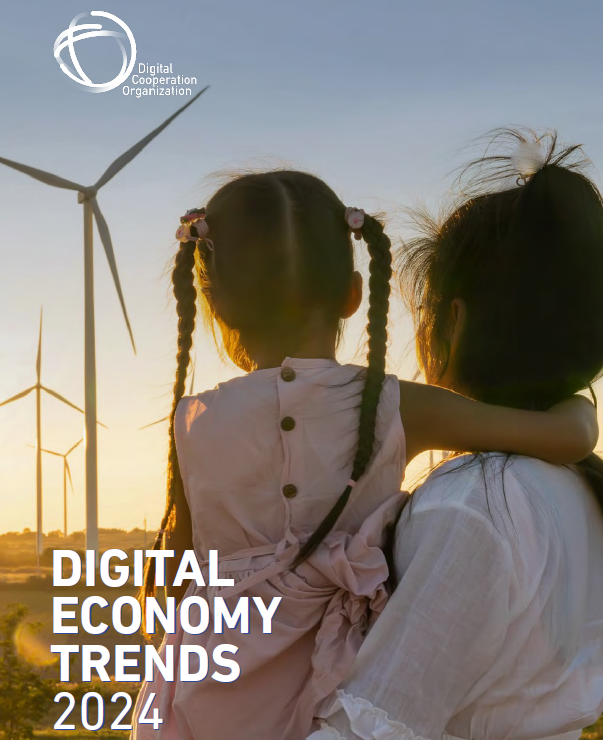

RIYADH: The Digital Cooperation Organization has launched its inaugural Digital Economy Trends 2024 report, which aims to provide an outlook on future developments and the enabling factors supporting them.
The report includes recommendations to enable decision-makers to identify key digital growth opportunities and gain perspective on sustainable emerging technologies and their applications, the organization said on Tuesday.
The DCO, a global multilateral organization committed to enabling digital prosperity for all by accelerating the inclusive growth of the digital economy, said the report was based on a modern methodology that focused on primary and secondary research to collect and analyze trends, and provided strategic recommendations based on future visions.
The report identified six trend themes that will influence the digital economy this year and act as pivotal factors shaping the evolution and transformation of the digital landscape, including artificial intelligence, trust economy, digital reality, cybersecurity, smart ecosystems and the green economy.
The DCO’s Secretary-General Deemah Al-Yahya said: “The DCO Digital Economy Trends 2024 report offers our unique viewpoint on the digital economy, formulating a ‘how to’ guide for six of the most important digital economy trends.
“The report covers implications and recommended actions for stakeholders across the global digital economy ecosystem, ensuring there is something valuable for everyone who aspires to contribute to the growth of an inclusive and sustainable digital economy.”
Each trend theme is expected to have a social and economic impact that contributes to digital transformation in the coming decade through their respective digital economy trends. For example, the report shows that AI is projected to become a $207 billion market by 2030 as both public and private sectors look to optimize operations and boost efficiency.
Green technology is expected to witness a similar boom, with its market size forecast to reach $83 billion by 2032, contributing significantly to the green economy’s progress. The digital reality market is predicted to reach $1.35 billion by 2030.
The report provides recommendations to different stakeholders for each of the six trends, in areas such as directing ways to implement digital technologies; targeting global priorities; applying appropriate governance to adopt each trend; and redefining the priorities of the private sector to contribute to the growth of the global digital economy.
Regarding AI, the report recommends that the public sector creates controlled testing environments with flexible AI regulatory frameworks to foster innovation responsibly; collaborates with the private sector to prioritize investments in AI digital skills and infrastructure; and establishes transparency and accountability measures.
The private sector is advised to engage with regulators to keep AI regulatory frameworks aligned with innovation and business needs; promote a culture of AI cooperation through joint research consortia and shared service platforms; and prioritize the implementation of AI cybersecurity, data privacy, and sustainability measures.
The report also recommends intergovernmental and international organizations strengthen global collaboration around AI governance, and encourage academics, industry leaders, and nongovernmental organizations to join international forums to build partnerships and work on unified standards for AI.
The report serves as a valuable source of information for stakeholders in the private, public, and civil sectors, providing actionable insights and data-driven analysis on the key digital trends for 2024.


