

Riyadh fuels 13% surge in spending, with hospitality, food as main drivers

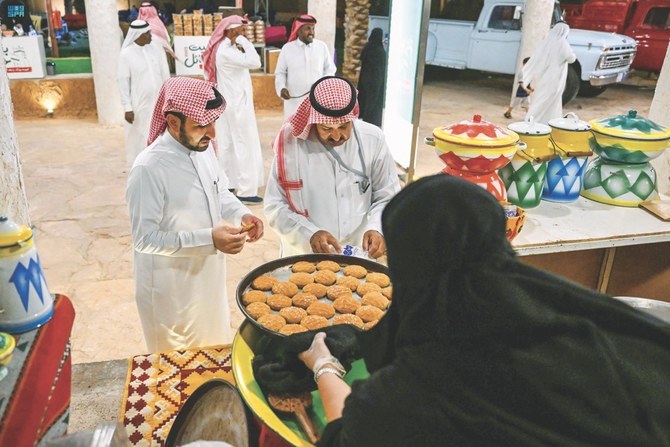
The sectors benefiting the most from Saudi spending through POS transactions were restaurants and cafes, and food and beverages, which both contributed around 15 percent to the overall total. (SPA)
Short Url
Updated 12 January 2024
Follow

Riyadh fuels 13% surge in spending, with hospitality, food as main drivers

  • Point of sale transactions constituted 80 percent of the total, amounting to SR52.37 billion

RIYADH:Cafe and restaurant visits by Saudis helped fuel a 13.35 percent annual spending increase across the Kingdom in November, according to. the central bank.

Data released by the institution, also known as SAMA, showed the total of transactions in the penultimate month of 2023 came in at SR65.85 billion ($17.56 billion) — up from the SR58.1 billion registered in November 2022.
Point of sale transactions constituted 80 percent of the total, amounting to SR52.37 billion, with e-commerce experiencing the most significant growth.
Online payments, specifically using Mada cards, reached SR13.48 billion, reflecting a notable 20 percent increase during this period.
The sectors benefiting the most from Saudi spending through POS transactions were restaurants and cafes, and food and beverages, which both contributed around 15 percent to the overall total.
Spending for restaurants and cafes totaled SR7.87 billion, while food and beverages transactions came in at SR8.06 billion.
Riyadh stood out as the city where a significant portion of this spending occurred.
Spending on miscellaneous goods and services, including personal care and supplies, maintenance and cleanings contributed 12 percent to the total totaling SR6.07 billion.
The education sector experienced the highest growth in POS spending, surging by 62.37 percent during this period and reaching SR740 million. This includes diverse transactions, including tuition fees, educational materials, or other related services.
As per a 2021 national payment study released by the Saudi central bank, the saying “Cash is no longer King” holds true, as it is not the preferred method of payment for consumers.
The statistics for ATMs in November underscore this shift. Despite the issuance of over 5.25 million cards, cash withdrawals using both banks and Mada cards increased by only 0.96 percent over the period, reaching SR45.6 billion.
Spending on public utilities using POS transactions ranked second, experiencing a 42.23 percent growth and reaching a total of SR523.8 million.
This suggests a transition to electronic and convenient payment methods for essential services in Saudi Arabia, potentially signaling an enhanced focus on digitalization, convenience, and efficiency in financial transactions.
Survey results from a SAMA study in 2021 confirm that government agencies almost all completely shifted to cashless methods across the spending categories.
Another sector that witnessed increased growth in POS spending was recreation and culture, growing by 23 percent during this period to reach SR1.35 billion. This typically includes spending related to entertainment, leisure activities and participation in cultural events.
The entertainment sector stands out as a testament to the profound transformation of Saudi Arabia over the past six years.
According to the International Trade Administration report from January this year, the General Entertainment Authority issued a total of 11,400 licenses and permits for the entertainment sector, attracting over 120 million attendees by the end of 2022.
Furthermore, the industry created over 100,000 job opportunities, with more than 1,000 companies actively operating within this sector, as highlighted in the report.
In this context, spending on hotels experienced significant growth, increasing by nearly 19 percent during this period and reaching SR1.37 billion.
Riyadh accounted for 34 percent of these transactions, with POS sales totaling SR17.66 billion. This constitutes 17 percent rise and reflects the highest growth rate among  Saudi Arabia’s major cities.
As per Saudi Invest, the national investment promotion platform of Saudi Arabia, the Riyadh region, recognized as the economic powerhouse of the country and a prominent hub in the Middle East, is undergoing substantial transformation and experiencing industry growth.
Government initiatives, such as the national regional headquarter program, have attracted premier multinational organizations, positioning Riyadh as a leading global destination.
The region’s competitive investment environment is synonymous with prosperity and an enhanced quality of life.
Notably, large-scale initiatives focused on healthcare, life sciences, and collaboration with international academic institutions are further improving services and fostering development in the region.


Saudi Aramco achieves significant progress in its gas production plan

Updated 26 February 2026
Follow

Saudi Aramco achieves significant progress in its gas production plan

RIYADH: Saudi Aramco has announced the achievement of significant progress in its plan to expand gas production, with the start of production at the Jafurah field, the largest unconventional gas field in the Middle East, and the commencement of operational activities at the Tanajib Gas Plant, one of the largest gas plants in the world.

The oil giant aims to increase its sales gas production capacity by approximately 80 percent by 2030 compared to 2021 production levels, reaching nearly 6 million barrels of oil equivalent per day from total gas and associated liquids production, according to the Saudi Press Agency.

This is expected to generate additional operating cash flows ranging between $12 billion and $15 billion in 2030, subject to future demand for sales gas and liquids prices.

President and CEO of Saudi Aramco, Amin Al-Nasser, said: “We are proud to commence production at the Jafurah field and begin operations at the Tanajib Gas Plant. These are major achievements for Saudi Aramco and the future of energy in the Kingdom. Our ambitious gas program is expected to become a key source of profitability.”

He affirmed that these mega-projects contribute to meeting the growing domestic demand for gas, supporting industrialization and development in several key sectors, in addition to producing significant quantities of high-value liquids.

Al-Nasser expressed his gratitude for the support, trust, and attention that Saudi Aramco receives from the Custodian of the Two Holy Mosques, King Salman bin Abdulaziz Al Saud, and His Royal Highness Prince Mohammed bin Salman bin Abdulaziz Al Saud, crown prince and prime minister, noting that this has had the most profound impact on the company’s achievements and distinguished projects that serve the Kingdom’s Vision 2030.

The gas extracted from the Jafurah field is expected to support the Kingdom’s growth targets in key sectors such as energy, artificial intelligence, major industries, and petrochemicals, potentially providing a major boost to the Kingdom’s economy and strengthening its position among the world’s top ten gas producers.

Saudi Aramco began first producing unconventional shale gas from the Jafurah field in December 2025, with technology playing a pivotal role in unlocking the potential of the Jafurah field and establishing it as a global benchmark for unconventional gas development. 

Since its inception, the project has leveraged technology to help reduce drilling and stimulation costs and enhance well productivity, contributing to its strong economic prospects.

The Jafurah area covers 17,000 sq. km and is estimated to contain 229 trillion standard cubic feet of raw gas and 75 billion barrels of condensates. The Jafurah field project aims to produce 2 billion standard cubic feet per day of sales gas, 420 million standard cubic feet per day of ethane, and approximately 630,00 barrels per day of gas liquids and condensates by 2030.

The Tanajib Gas Plant is a key pillar in Aramco’s strategy to increase gas processing capacities and diversify its energy product portfolio, helping to foster long-term economic growth. 

Operations began in December 2025, and its raw gas processing capacity is expected to reach 2.6 billion standard cubic feet per day in 2026. The start of operations at the Tanajib Plant coincided with the commencement of production from the Marjan field expansion and development program. 

The plant is distinguished by its digital integration, enhanced operational efficiency, capability to execute complex projects, and optimal use of resources. It processes raw gas associated with crude oil production from the offshore Marjan and Zuluf fields.

Aramco’s gas expansion is expected to create thousands of direct and indirect job opportunities, generating significant added value and strengthening its position as a reliable energy provider. 

It also helps meet the growing demand for natural gas and enhances its supply to national industries. 

The expansion strategy supports efforts aimed at achieving the optimal energy mix for local electricity generation, advancing the Kingdom’s liquid fuel displacement program, which will have a positive environmental impact, supporting the Kingdom’s ambition to achieve net-zero emissions by 2060, enhancing energy security, and contributing to building a more diversified national economy.