GENEVA: The World Health Organization said on Thursday that northern Gaza has been left without a functional hospital due to a lack of fuel, staff and supplies.
Only nine out of 36 health facilities were partially functional in the whole of Gaza, according to the WHO. All these facilities are concentrated in the enclave’s south.
“There are actually no functional hospitals left in the north,” Richard Peeperkorn, WHO representative in Gaza, told reporters via video link from Jerusalem.
“Al-Ahli (Hospital) was the last one but it is now minimally functional: still treating patients but not admitting new ones.”
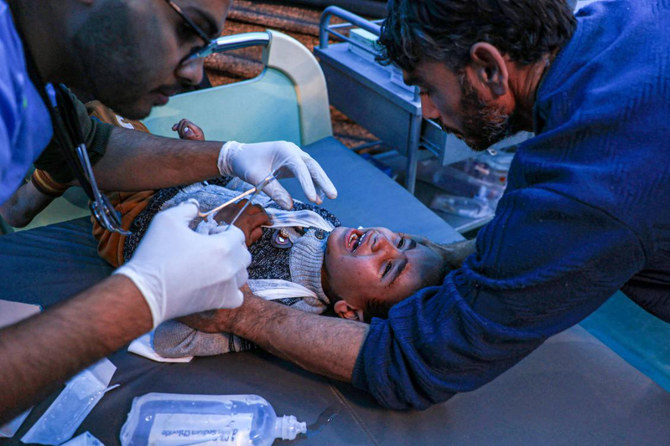
Describing it as a “shell of a hospital,” Peeperkorn said Al-Ahli resembled a hospice providing very limited care. About 10 staff, all junior doctors and nurses, continue to provide basic first aid, pain management and wound care with scant resources, he said.
“Until two days ago, it was the only hospital where injured people could get surgery in northern Gaza and that was overwhelmed with patients needing emergency care,” he said.
“There are no operating theaters anymore due to the lack of fuel, power, medical supplies and health workers, including surgeons and other specialists.”
The bodies of victims from recent Israeli attacks were lined up in the hospital’s courtyard because they could not be given safe and dignified burials, he said.
In addition to Al-Ahli Hospital, northern Gaza had only three other minimally functioning health facilities: Al-Shifa, Al Awda and Al Sahaba hospitals, which Peeperkorn said were sheltering thousands of displaced people.
Some patients at Al-Ahli had been waiting for surgeries for weeks or if they had been operated on, they faced the risk of a post-operation infection due to lack of antibiotics and other drugs, he added.
“All these patients cannot move and need to be transferred urgently to have a chance to survive,” he said, reiterating the WHO’s call for a humanitarian ceasefire.
“This is needed now to reinforce and restock remaining health facilities, deliver medical services needed by thousands of injured people and those needing other essential care, and, above all, to stop the bloodshed and death.”


![]()

Northern Gaza no longer has a functional hospital, WHO says
Short Url
https://arab.news/wpfrr
Northern Gaza no longer has a functional hospital, WHO says
- Nine health facilities partially functional in Gaza
- WHO: Bodies lined up in courtyard of Al-Ahli Hospital


Latest updates


Recommended


© 2026 SAUDI RESEARCH & PUBLISHING COMPANY, All Rights Reserved And subject to Terms of Use Agreement.