

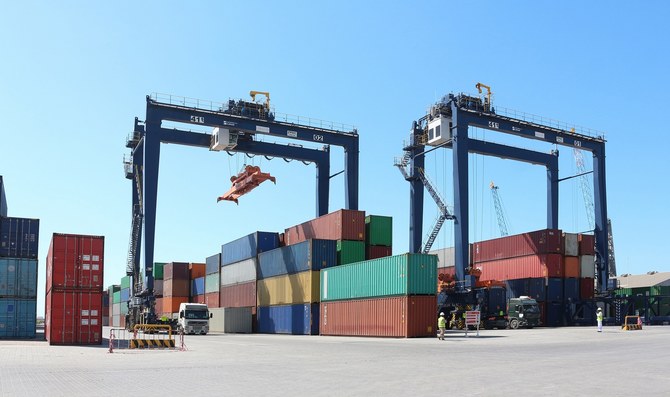

RIYADH: The total trade volume between Ajman, one of the seven emirates in the UAE, and Qatar surged by 68 percent to 521 million dirhams ($141.86 million) until the third quarter of 2023, compared to the same period in the previous year.
The rise was driven by Ajman’s exports of ships, boats, iron and steel products, and mineral oils to Qatar, a press statement said.
The trade volume between Ajman and Qatar was 310 million dirhams in the first nine months of 2022.
Mohamed Ali Al-Janahi, executive director of the Member Support Services Sector at the Ajman Chamber of Commerce and Industry, said that the volume of non-oil trade exchange between Ajman and Qatar reached 31 billion dirhams in 2022, compared to 14 billion dirhams in 2021, representing a growth rate of 124 percent.
He also praised the deep-rooted bilateral relations between the UAE and Qatar. Furthermore, Al-Janahi highlighted their shared cultural and social heritage, and the extent to which these strong ties reflect on the economic cooperation and the volume of trade and investment exchange between the two nations.
Earlier this month, Al-Janahi said that Ajman is keen on developing its trade with Bahrain and attracting Bahraini investors.
In a press statement, he said that non-oil trade between Ajman and Bahrain reached 25.7 billion dirhams in 2022, compared to 23.7 billion dirhams in the previous year. Without specifying the exact figure, Al-Janahi revealed that Ajman’s exports to Bahrain increased by 27 percent until the third quarter of this year compared to the same period in 2022.
“The economic relations between the UAE and Bahrain are witnessing annual growth that reflects the depth of the fraternal relations between the two countries,” he said.
Al-Janahi added that Ajman is keen on providing an attractive investment environment for Bahraini business owners, noting an 8 percent growth in the Ajman Chamber’s membership from Bahraini business owners until the third quarter of this year.
He also praised the continuous annual increase in the value of investments in both the UAE and Bahrain, especially in light of the diverse available opportunities.



