US senator questions Zuckerberg over alleged Meta censorship of pro-Palestinian content

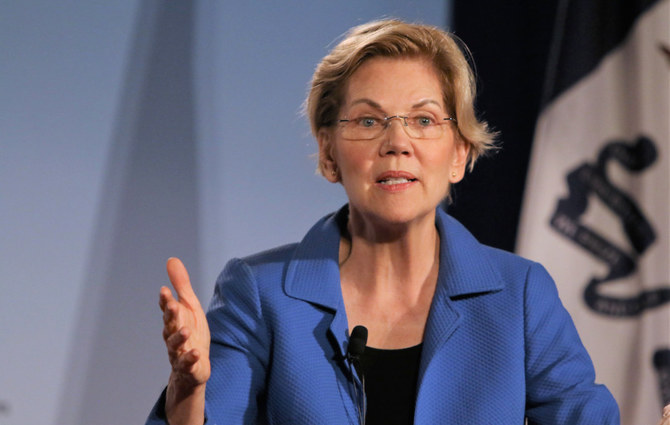
Senator Elizabeth Warren. (Shutterstock photo)
Short Url
Updated 15 December 2023
Follow

US senator questions Zuckerberg over alleged Meta censorship of pro-Palestinian content

  • Letter from Elizabeth Warren seeks details of content moderation methods employed by Meta platforms
  • Since Oct. 7, Meta’s Instagram has faced accusations of censoring, shadow banning, or account suspension of posts on Palestine conflict

LONDON: US Senator Elizabeth Warren has sought clarification from Mark Zuckerberg on allegations that Meta is censoring pro-Palestine content across its platforms.

In a letter co-signed by more than 90 human rights and civil rights organizations, Warren referred to media reports and concerns about Meta’s handling of Palestine-related material in October.

She wrote that that “amid the horrific Hamas terrorist attacks in Israel … it is more important than ever that social media platforms do not censor truthful and legitimate content.”

Warren also highlighted the need for social media platforms at times when online communities play a pivotal role in sharing information about regional developments.

The letter underscored concerns over Meta’s actions, including censorship, removal, and mistranslation of content.

Citing an October report from the Wall Street Journal, the letter revealed that Meta had implemented a “temporary risk response measure,” resulting in an increased frequency of flagging posts related to Palestine.

Unlike Meta’s usual practice of suppressing content when there is an 80 percent certainty that it is inflammatory, the threshold was lowered to 25 percent in the weeks following the Oct. 7 Hamas attacks.

Many users experienced Instagram restrictions or deleted posts about Palestine without clear explanation, and some faced complete account suspensions, which Meta attributed to glitches in its systems.

Warren’s letter sought details on Meta’s content moderation methods, and requested examples over the past five years where the company altered the content moderation threshold for a specific country, along with the corresponding count of posts removed.

The senator expressed concern, saying that “reports of Meta’s suppression of Palestinian voices raise serious questions about Meta’s content moderation practices and anti-discrimination protections.”

She added: “Social media users deserve to know when and why their accounts and posts are restricted, particularly on the largest platforms where vital information-sharing occurs.”

Since the Oct. 7 attack, Meta’s Instagram has faced multiple accusations of censorship, shadow banning, or account suspension due to users posting pro-Palestinian content.


Egyptian host Ramez Galal under heat following a lawsuit for his Ramadan prank show

Updated 24 February 2026
Follow

Egyptian host Ramez Galal under heat following a lawsuit for his Ramadan prank show

DUBAI: Egyptian actor and host Ramez Galal is under fire following a lawsuit by Egyptian actress Asmaa Galal after her appearance on his Ramadan prank show “Ramez Level the Monster.”

Ramez, known for his prank programs, returned to the screen this year for the latest edition of his show, but Asmaa took legal action against him once the episode was aired, claiming that his commentary constituted mockery and bullying.

She claims Ramez opened the episode segment by making disparaging remarks about her appearance, criticizing her choice of tight leggings, commenting on her body, and questioning whether her features were natural.

According to a statement from her lawyers’ office, the actress agreed to appear on the show on the understanding that it followed the usual prank format, without being informed of any added voice-overs or edited commentary in post-production.

However, the episode included phrases and remarks that the statement said amounted to personal insults and bodily mockery, with no relevance to the prank itself.

Her legal team emphasized that while satire and entertainment are protected forms of expression, they do not justify defamation or personal humiliation, particularly when targeting someone’s dignity or physical appearance.

The statement also noted that she initially chose to remain silent out of respect for Ramadan, but ultimately decided to respond, stressing that personal dignity remains a red line regardless of the entertainment context.

The episode has caused a significant backlash, with the National Council for Women in Egypt rejecting the treatment of women in such shows, affirming that personal dignity is a “red line.”

Ramez’s show has attracted controversy for years with accusations of torture, alleged harassment and physical contact.