

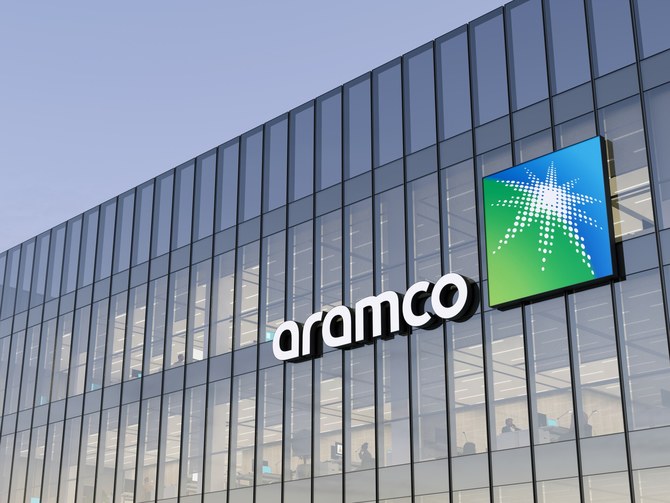
Aramco turns to AI, big data to maximize profit, says top executive

Aramco aims to make investments that better reflect the company’s sprawling footprint and to respond to market changes faster. Aramco also has asset-specific reviews underway to boost returns.
Short Url
Updated 14 December 2023
Follow

Aramco turns to AI, big data to maximize profit, says top executive

DUBAI: Saudi oil giant Aramco is boosting its big data and artificial intelligence unit that links up its assets to help maximize profit, assisting on decisions from trading to acquisitions, a senior executive told Reuters.

“We have 70 people working on this, we’re still adding more,” Yasser Mufti, Aramco’s executive vice president for products and customers, said.

Aramco aims to make investments that better reflect the company’s sprawling footprint and to respond to market changes faster. Aramco also has asset-specific reviews underway to boost returns.

Aramco is continuing to explore potential deals such as the purchase this week of a stake in retail business Gas & Oil Pakistan, as well as refineries in Asia, Mufti said.

Aramco is in talks to buy a stake in Shandong Yulong Petrochemical, following a string of investments in Chinese refineries, bought a stake in liquefied natural gas company MidOcean Energy — part of a bigger push into gas — and listed shares of its base oil unit Luberef, with other share sales also reportedly planned.

More sophisticated commercial models like the Global Optimizer can translate to $1.5-$2 per barrel of additional earnings before interest and taxes compared to more traditional models, according to Oliver Wyman, which advised on the project.

“We built up a lot of capacity to optimize, to trade, to deal with risk, to deal with uncertainty,” Mufti said, adding high-quality assets and a commercial mindset could “push these numbers to be on the high side if not higher than that range.”

Analysts forecast $121.9 billion in net profit for Aramco in 2023, according to LSEG data, down from $161.1 billion last year. Brent crude, trading at about $74.85 on Thursday, has averaged $82.33 a barrel in the year to date from a roughly $99 average last year.

“As we book returns from this and put money in the bank, it creates a baseline and then that becomes expected ... the challenge is, how can we sustain the highest possible recurring EBIT,” Mufti said.

“A handful of refineries” are likely contributing their full potential of additional earnings through the Global Optimizer, while others still have more potential, he said.

Along with higher shareholder returns, the profit boost will also benefit Aramco’s joint venture partners, Mufti said.

Aramco’s scale, “M&A activity and its growth in fields such as retail, mean that optimizing its system is particularly compelling in terms of assessing and capturing opportunities and creating value,” said Nadim Haddad, Oliver Wyman partner and head of oil and gas for India, the Middle East and Africa.


Saudi consumer inflation eases to 1.8% in January: GASTAT 

Updated 4 sec ago
Follow

Saudi consumer inflation eases to 1.8% in January: GASTAT 

RIYADH: Saudi Arabia’s inflation softened to 1.8 percent in January, signaling contained price pressures even as housing rents remained the main driver of consumer costs, official data showed.  

According to the General Authority for Statistics, average prices for housing, water, electricity, gas and other fuels rose 4.2 percent in January, reflecting a 5.2 percent increase in actual residential rents. 

Saudi Arabia’s inflation trajectory broadly aligns with projections by the International Monetary Fund, which said in October the Kingdom is expected to maintain an annual inflation rate of about 2 percent in 2026. 

In its latest report, GASTAT stated: “The Consumer Price Index in Saudi Arabia recorded an annual increase of 1.8 percent in January 2026, compared to the same month of the previous year.”   

It added: “This increase was mainly driven by a rise in housing, water, electricity, gas, and other fuel prices by 4.2 percent, transport prices by 1.5 percent and restaurant and accommodation services prices by 1 percent.”  

According to the report, expenses for personal care, social protection and miscellaneous goods and services increased 7.9 percent year on year in January, while insurance and financial services costs rose 3.3 percent. 

Prices for recreation, sport and culture increased 2.3 percent, driven by a 3.7 percent rise in package holiday expenses. Education service prices rose 1.6 percent, reflecting higher secondary education costs. 

Food and beverage prices increased 0.2 percent year on year. 

Conversely, prices for furnishings, household equipment and routine household maintenance fell 0.3 percent in January, while healthcare expenses declined 0.1 percent over the same period. 

On a month-on-month basis, Saudi Arabia’s CPI rose 0.2 percent in January from December. 

Housing, water, electricity, gas and other fuels increased 0.5 percent month on month, again driven by higher residential rents. Transport prices rose 0.2 percent, while restaurant and accommodation services gained 1 percent. 

Food and beverage prices fell 0.6 percent during the month, and information and communication costs slipped 0.1 percent. Education, healthcare, furnishings and tobacco prices were largely unchanged. 

Wholesale Price Index 

In a separate report, GASTAT said Saudi Arabia’s Wholesale Price Index rose 2.9 percent in January compared with the same month in 2025. 

The increase was attributed to higher prices for other transportable goods — excluding metal products, machinery and equipment — which climbed 4.9 percent, as well as agricultural and fishery products, which rose 4.2 percent. 

Metal products, machinery and equipment prices increased 1.2 percent year on year in January, while food products, beverages, tobacco and textiles rose 0.3 percent. Ores and mineral prices declined 0.1 percent. 

Compared with December, the Kingdom’s WPI increased 1.5 percent, driven by a 3.4 percent rise in other transportable goods excluding metal products, machinery and equipment. 

On a month-on-month basis, agricultural and fishery product prices increased 0.5 percent, while food products, beverages, tobacco and textiles posted a modest 0.2 percent gain. 

Average prices 

In another report, GASTAT highlighted notable changes in average prices of goods and services across Saudi Arabia in January. 

Local watermelon recorded the largest month-on-month increase at 7.5 percent, followed by local black eggplants at 6.5 percent, local okra at 6.3 percent and Indian pomegranates at 6.1 percent. 

Conversely, several items posted sharp price declines. 

Abu Sorra Egyptian oranges recorded the steepest fall at 28.2 percent, followed by Pakistani mandarins at 21.3 percent and green beans at 12.3 percent.