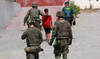
ISLAMABAD: The suicide bomber who rammed his car into a police station’s main gate and killed 23 officers in Pakistan’s northwest used 120 kilograms (about 264 pounds) of explosives, authorities said Wednesday.
The attack on Tuesday — one of the deadliest in months — also wounded 32 officers.
Inayat Ullah, head of the bomb disposal unit, told The Associated Press the explosives were fitted in the suicide attacker’s vehicle.
The assault — which also included five other militants opening fire before officers gunned them down — targeted Daraban police station in the city of Dera Ismail Khan, in Khyber Pakhtunkhwa province, which borders Afghanistan and is a former stronghold of the Pakistani Taliban, or TTP.
The militant Tehreek-e-Jihad Pakistan group — believed to be an offshoot of the TTP — claimed responsibility for the attack.
The UN Security Council issued a statement Wednesday that “condemned in the strongest terms the heinous and cowardly terrorist attack on Pakistan’s security forces’ post.” Council members urged all countries to cooperate with Pakistan’s government and hold the perpetrators, organizers, financiers and sponsors accountable.
A large number of security forces from across Pakistan were recently deployed at the station for intelligence operations against militants in the area in coordination with the local police, authorities said.
In a statement, the military said Wednesday it held an overnight funeral for those killed, attended by senior army officials.
The attack came when the country’s powerful army chief, Gen. Asim Munir was on an official visit to the United States. He assumed his position in Nov. 2022, days after the TTP ended its cease-fire with Pakistan’s government. Since then, the militant group has stepped up its attacks targeting security forces. The deadliest was in January when 101 people were killed, mostly police officers, after a suicide bomber disguised as a policeman attacked a mosque in the northwestern city of Peshawar.
Authorities said they have increased their intelligence-based operations, killing more than 500 militants since 2022.
Tuesday’s attack has further strained relations between Pakistan and neighboring Afghanistan’s Taliban-led administration. Pakistan has previously accused the Taliban of hosting leaders of the TTP across the shared border from where they launched their attacks.
In a statement, Pakistan’s Foreign Ministry said it summoned a Taliban-appointed representative from Kabul to protest the latest assault. It demanded Afghanistan “fully investigate and take stern action against perpetrators” of the attack and also “publicly condemn the terrorist incident at the highest level.”
In Kabul, the Taliban government spokesman Zabihullah Mujahid condemned the attack on Wednesday, promising an investigation. But he said things happening in Pakistan shouldn’t be always linked to his country, adding that Islamabad should pay closer attention to security matters because the attack happened hundreds of kilometers from the border.
Mujahid added they do not allow anyone to use their territory to carry out attacks against Pakistan or any other country.
The attack drew condemnation from US Secretary of State Antony Blinken who tweeted: “We stand with the people of Pakistan in ensuring perpetrators are brought to justice and offer our deep condolences to the families of the victims.”
Nasser Kanaani, the spokesperson for the Iranian Foreign Ministry, also denounced the attacks and extended “sympathies to the families of the victims,” on X, formerly known as Twitter.