

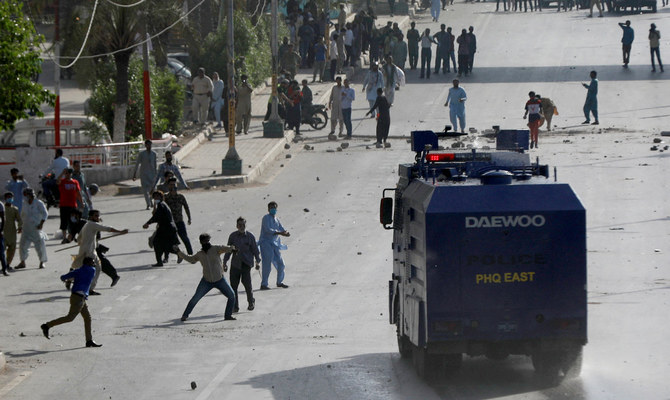

ISLAMABAD: The Supreme Court on Wednesday suspended its own order from October that had declared null and void the trial by military courts of civilians arrested in the wake of nationwide protests on May 9, allowing the army to resume hearing cases of 103 civilians.
A five-member bench of the Supreme Court had on Oct. 23 heard about a dozen petitions challenging the trials of civilians in military courts and declared them unconstitutional, a relief for dozens under arrest for ransacking military installations during protests in May after the brief arrest of former Prime Minister Imran Khan.
The Pakistan government and army subsequently said those who had damaged army properties would be tried in military courts, an announcement that unleashed widespread criticism from within Pakistan and rights organizations globally because of the courts’ secretive nature and existence alongside a functioning civilian legal system.
An intra-court appeal was filed against the Oct. 23 ruling by the caretaker federal government, the ministries of defense and interior, and the interim governments in the provinces of Punjab, Khyber Pakhtunkhwa and Balochistan.
“103 people have been in custody for seven months, it would be appropriate to complete their trial,” Defense Ministry’s lawyer Khawaja Haris said during arguments.
The court subsequently ruled that military courts could resume trials of 103 civilians and adjourned the hearing until the third week of January. Pakistan’s Army Act of 1952 established military courts primarily to try members of the military or enemies of the state. Civilians can only be tried under a federal government order.
Civilians accused of offenses such as waging war against the armed forces or law enforcement agencies, or attacking military installations or inciting mutiny, can be tried at military courts.
Military courts operate under a separate system from the civilian legal system and are run by military officers. The judges are also military personnel and cases are tried at military installations.
Trials are closed to outsiders, and no media presence is allowed.
Anyone tried under the Army Act has the right to defend themselves and a counsel of their choice.
There is no right to appeal but individuals can challenge the question of jurisdiction in high courts and the Supreme Court.


