Saudi authority showcases AI advancement at Singapore conference

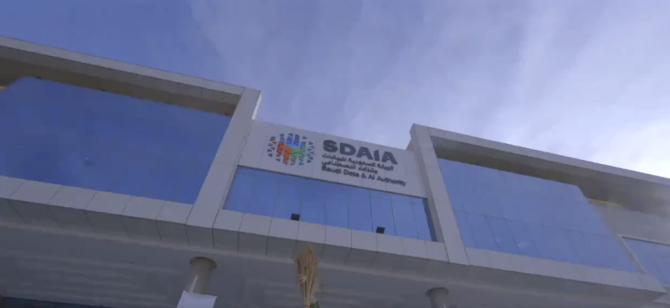
The Saudi Data and AI Authority participated in the 2023 Conference on Empirical Methods in Natural Language Processing in Singapore, highlighting its groundbreaking advancements in large-language-model development. (X/@SDAIA_SA)
Short Url
Updated 09 December 2023
Follow

Saudi authority showcases AI advancement at Singapore conference

  • Areeb Al-Owisheq, the AI adviser representing the authority, took part in a workshop titled “Arabic Language Models: Challenges and Opportunities”

RIYADH: The Saudi Data and AI Authority participated in the 2023 Conference on Empirical Methods in Natural Language Processing in Singapore, highlighting its groundbreaking advancements in large-language-model development.

Areeb Al-Owisheq, the AI adviser representing the authority, took part in a workshop titled “Arabic Language Models: Challenges and Opportunities” during the five-day conference, which runs until Dec. 10.

She showcased the authority’s ambitious initiatives, including the construction of expansive language models, the curation of extensive Arabic datasets, and the development of linguistic models tailored for the Arabic language.

Al-Owisheq underscored the pivotal role of safety considerations in the development of these AI models and noted that “large language models are sophisticated deep-learning constructs trained on vast datasets. Natural Language Processing, a pivotal aspect of artificial intelligence, empowers computers to comprehend, generate, and process human language, allowing effective querying of data using natural language text or speech.”

SDAIA’s participation in the conference reflects its commitment to showcasing Saudi Arabia’s advancements in data and artificial intelligence. The authority aims to position itself as a global leader in these cutting-edge technologies.

These efforts align with SDAIA’S initiatives to transfer, localize, and generate knowledge in the field of artificial intelligence, and to integrate it into the Kingdom’s digital transformation endeavors outlined in Saudi Vision 2030.

SDAIA also unveiled the Sawtak (Your Voice) system during the event. Sawtak employs generative AI techniques to convert speech into text, and, the authority says, “boasts unparalleled precision in recognizing various local dialects and surpassing existing applications in the market.”


Saudi defense chief rallies international support amid escalating Iranian strikes

Updated 12 March 2026
Follow

Saudi defense chief rallies international support amid escalating Iranian strikes

  • Iran unleashes wave of drone strikes on Kingdom’s Eastern Province
  • Missiles fired at Prince Sultan Air Base intercepted, destroyed

RIYADH: Saudi Defense Minister Prince Khalid bin Salman held separate phone calls with his Turkish, Romanian, and South Korean counterparts as Iranian attacks on Gulf facilities continued on Thursday.

Iran escalated strikes on its Gulf neighbors in retaliation for ongoing US-Israeli attacks on Iranian territory. 

After a brief pause Wednesday, drone attacks on Saudi Arabia resumed at 9 p.m., targeting the Eastern Province and the Shaybah oil field in the Empty Quarter. All the drones were stopped, the Saudi Ministry of Defense confirmed.

Missiles aimed at Prince Sultan Air Base in Al-Kharj were also intercepted and shot down, the ministry added.

In his call with Turkish Defense Minister Yasar Guler, Prince Khalid reaffirmed commitment to joint security measures and condemned Iranian aggression. 

His conversation with Romanian counterpart Radu Miruta covered regional threats to global stability. 

A call with South Korea’s Ahn Gyu-back similarly focused on condemning Iran’s actions and reviewing the broader regional picture.

The crisis traces back to February 28, when US and Israeli forces struck Iran. Tehran has since targeted Gulf states and US-Israeli assets across the region.

Iran has also declared a blockade on energy shipments through the Strait of Hormuz — a critical chokepoint for global oil and gas flows — sending commodity prices surging.