

New KAPSARC-led analysis shows Saudi methane emissions 73% lower than IEA estimates

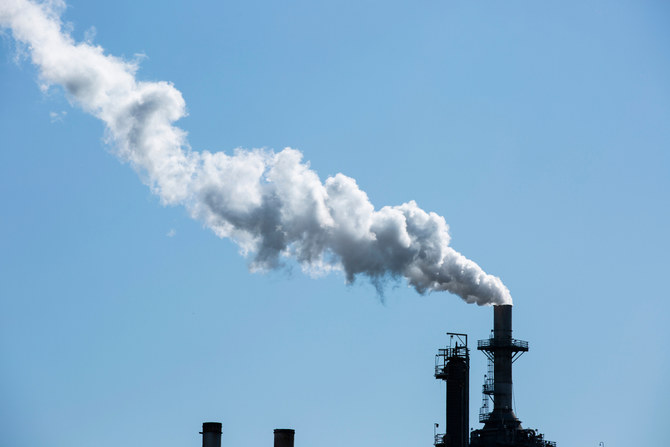
KAPSARC worked with global environmental intelligence company Kayrros. Shutterstock.
Short Url
Updated 08 December 2023
Follow

New KAPSARC-led analysis shows Saudi methane emissions 73% lower than IEA estimates

RIYADH: Saudi Arabia has the second-lowest methane intensity in oil and gas production when compared to other crude-producing countries, according to new research by the King Abdullah Petroleum Studies and Research Center.

Working in collaboration with global environmental intelligence company Kayrros, KAPSARC used satellite technology to analyze emissions from 2016 to 2022.

The findings show that the Kingdom’s oil and gas sector was responsible for approximately 780 kilotons of methane in 2022, second only to Norway.

The emission estimates developed by are around 73 percent lower than those reported by the International Energy Agency and the Emissions Database for Global Atmospheric Research for the same year.

Fahad Alajlan, president of KAPSARC, said: “This stark difference underscores the groundbreaking nature of our findings, challenging existing norms and emphasizing the importance of our innovative approach in redefining our understanding of emissions in Saudi Arabia.”

The project estimates that methane emissions from the Kingdom’s oil and gas industry constitute only one-third of total releases, aligning with the most recent national greenhouse gas inventory submitted by the Saudi Clean Development Mechanism Designated National Authority in 2022.

Antoine Rostand, co-founder and president at Kayrros, said: “Producers should strive to emulate the Saudi model, introducing strong methane regulations to limit emissions of this potent greenhouse gas and using independent, verifiable, and reliable data to guide action.

“We’re pleased to be working with KAPSARC to advance the collective understanding of methane emissions and to be involved in this first-of-its kind practice.”

KAPSARC and Kayrros will present the project at the UN climate change conference in Dubai on Dec. 10, 2023, during a side-event session titled “Satellite Technology for Measuring and Tracking GHG Emissions.”


UAE non-oil business growth at 1-year high in February: PMI report

Updated 6 sec ago
Follow

UAE non-oil business growth at 1-year high in February: PMI report

RIYADH: The growth of the non-oil private sector in the UAE ticked up to a 12-month high in February, driven by rapid increases in business activity and new work orders, an economic tracker showed.

In its latest Purchasing Managers’ Index report, S&P Global revealed that the UAE’s PMI rose to 55 in February from 54.9 in January.

Any PMI reading above 50 indicates expansion, while a reading below 50 reflects contraction.

The upturn of the non-oil private sector in the UAE aligns with the broader trend observed in the Gulf Cooperation Council region, where countries, including Saudi Arabia, are pursuing economic diversification efforts to reduce reliance on crude revenues.

In January, the Kingdom’s PMI stood at 56.3, the highest in the region, while Kuwait recorded a reading of 54.5.

“The UAE PMI signalled the strongest growth in non-oil business conditions for a year in February, with output increasing rapidly in response to strong inflows of new work. So far, the data points to an encouraging picture for the domestic economy in the first quarter of this year,” said David Owen, senior economist at S&P Global Market Intelligence.

According to the report, stronger output among non-oil sectors was driven by higher demand, successful contract wins, and growth in key sectors including construction, real estate, logistics, and technology.

Additional factors that contributed to this growth include rising tourist arrivals, the expansion of e-commerce channels, and growing demand for AI-related products.

While international orders also contributed to the expansion of the non-oil sector, the increase in export sales remained modest, suggesting that sales growth was mainly driven by domestic demand.

The analysis highlighted that employment numbers rose modestly in February, marking the largest uplift since last November.

UAE non-oil businesses successfully increased their inventories of purchased inputs for the second month running, supported by another rapid improvement in supplier delivery times.

Regarding the future outlook, non-oil firms in the UAE expressed optimism, although the level of confidence declined from the recent high in January.

“The outlook is positive, as demand has continued to pressure business capacity, suggesting additional expansions in output and employment may be necessary,” added Owen.

In the same report, S&P Global revealed that Dubai’s PMI slipped to 54.6 in February from 55.9 observed in January.

Rates of output and new order growth lost momentum, but remained sharp overall, with firms highlighting increased opportunities and new projects.

The release highlighted that demand was also lifted by various factors, including marketing activities, AI adoption, population growth and increased tourism.