CAIRO: A senior Hamas official accused Israeli forces on Friday of carrying out a “heinous crime against innocent civilians” after images of Palestinian men stripped to their underwear in Gaza circulated on social media.
Izzat El-Reshiq, who is in exile abroad, urged international human rights organizations to intervene to show what happened to the men and help secure their release.
The International Committee of the Red Cross (ICRC) said it was concerned by the images and that all detainees must be treated with humanity and dignity in accordance with international humanitarian law.
Israeli TV showed footage on Thursday, which Reuters could not independently verify, of what it said were captured Hamas fighters, stripped to their underwear with heads bowed sitting in a Gaza City street.
“We are talking about individuals who are apprehended in Jabalia and Shejaiya (in Gaza city), Hamas strongholds and centers of gravity,” Israeli government spokesperson Eylon Levy told a regular briefing in response to a question about the images.
“We are talking about military-age men who were discovered in areas that civilians were supposed to have evacuated weeks ago.”
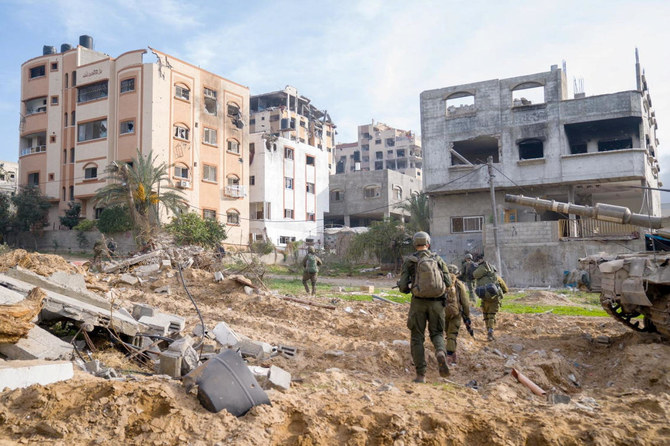
The Israeli military has been advising civilians to leave areas in Gaza where it plans to operate after launching its campaign to eliminate Hamas in the Palestinian enclave following the Islamist militant group’s Oct. 7 killing spree in Israel.
One photo showed more than 20 men kneeling on the pavement or in the street, with Israeli soldiers looking on and dozens of shoes and sandals abandoned in the road. A similar number of men, also semi-naked, were crammed into the back of a truck nearby.
Some Palestinians said they recognized relatives in the images circulating on social media and denied they had any links to Hamas or any other group.
Reshiq said the men had been captured at a school in Gaza that was being used as a shelter after weeks of Israeli bombardments that have displaced many Gazans.
APPEAL TO HUMAN RIGHTS GROUPS
Hamas held Israeli forces responsible for the lives and safety of the detained men, Reshiq added.
“And we urge human rights organizations to immediately intervene to expose this heinous crime against innocent civilians taking refuge in a school, that had turned into a shelter because of Zionist aggression and massacres, and to put pressure by all means to secure their release.”
The London-based Arabic language news outlet Al-Araby Al-Jadeed said one of the men detained was its correspondent Diaa Kahlout. “Al-Araby Al-Jadeed strongly condemns the humiliating arrest of colleague Diaa Al-Kahlout and other civilians,” it said, urging the international community and rights groups to denounce the arrest of journalists.
The Committee to Protect Journalists also called for his release.
Some Palestinians identified the place where the men were captured as the northeastern town of Beit Lahia, an area that Israel had warned civilians to leave and has been encircled and besieged by Israeli tanks for weeks.
Hani Almadhoun, a Palestinian American based in Virginia, said he saw relatives in one image and told Reuters they were “innocent civilians with no links to Hamas or any other faction.”
“We strongly emphasize the importance of treating all those detained with humanity and dignity, in accordance with international humanitarian law,” Jessica Moussan, ICRC Media Relations Adviser, Middle East, said in a statement.
Husam Zomlot, head of the Palestinian Mission in London, said on X the images evoked “some of humanity’s darkest passages of history.”
Prominent Palestinian politician Hanan Ashrawi said on X the incident was “blatant attempt at the humiliation & degradation of Palestinian men, abducted from their family homes, stripped & displayed like war trophies.”


![]()

Hamas condemns Israel over images showing semi-naked Palestinian prisoners
Short Url
https://arab.news/m236b
Hamas condemns Israel over images showing semi-naked Palestinian prisoners
- ICRC concerned by the images and that all detainees must be treated with humanity and dignity in accordance with international humanitarian law


Latest updates


Recommended


© 2026 SAUDI RESEARCH & PUBLISHING COMPANY, All Rights Reserved And subject to Terms of Use Agreement.