- Reports suggested Sirajuddin Haqqani was issued Pakistani passport which he used to travel abroad, particularly to Qatar
- Foreign office spokesperson acknowledges Pakistan has received ‘updated list’ of Afghans who are to be repatriated to US
ISLAMABAD: Pakistan’s foreign office on Thursday exercised caution in its response to media reports about Afghanistan interim interior minister Sirajuddin Haqqani’s use of the Pakistani passport for international travel in the past.
Haqqani was issued a Pakistani passport for five years which he used to travel abroad, particularly to Qatar for negotiations with the United States (US) for the Doha Agreement that resulted in the US exit from Afghanistan, Pakistan’s The News and Jang newspapers reported.
The reports, citing interior ministry officials, said these passports were issued from different cities of Pakistan’s Khyber Pakhtunkhwa, Balochistan, and Sindh provinces, and Pakistani authorities had arrested two officials in connection with issuance of passport to Haqqani, one of whom had retired from service.
Asked about these reports, Mumtaz Zahra Baloch, a spokesperson for the Pakistani foreign office, said she did not have “facts” to respond to the query.
“I have just seen the report in the Jang. I do not have the facts to respond to your question,” she said at a weekly press briefing. “Maybe I will be able to comment on some other occasion when I have more information.”
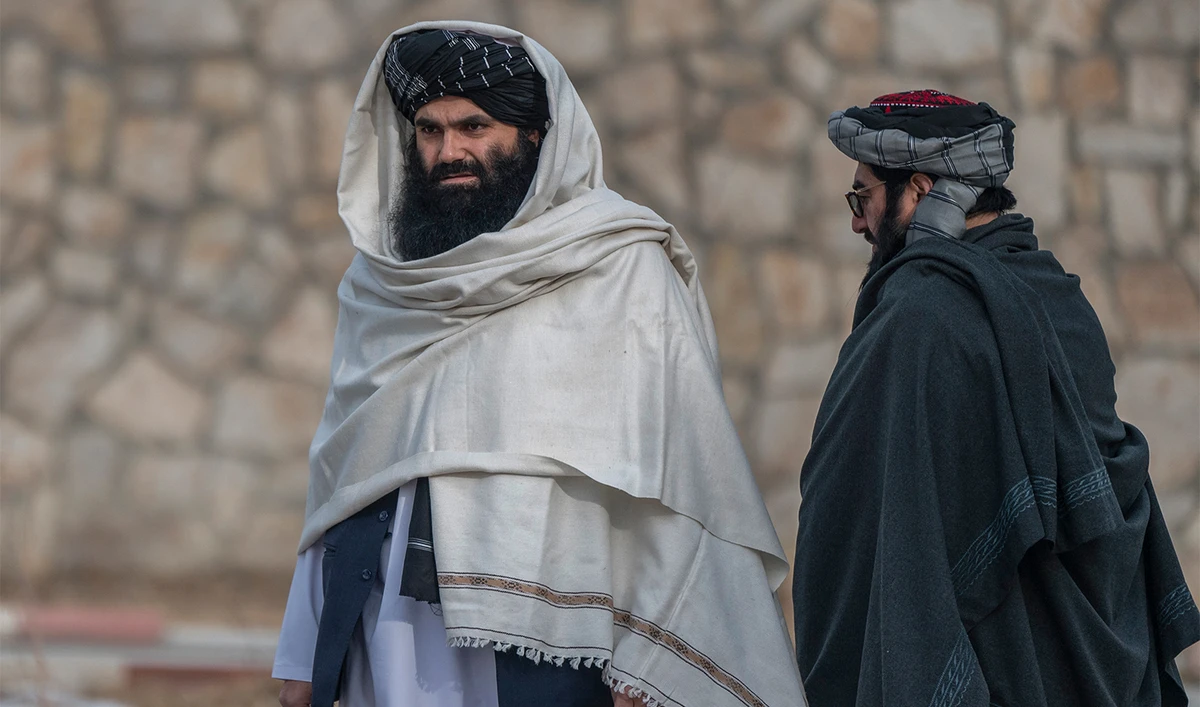
The name of Sirajuddin Haqqani, Afghanistan’s acting interior minister and the Taliban’s second-in-command, started echoing around the world in 2008 as a young commander of the most-feared Haqqani Network that was executing a series of deadly attacks on US-allied forces in Afghanistan.
The powerful Taliban commander made the headlines in March 2022 after he revealed his face in a rare public appearance in Kabul. He was attending the graduation ceremony of the first batch of police recruits at the National Defense Police Academy in Kabul since the Taliban took over the reins of Afghanistan in August 2021.
The reports about his travel on Pakistani passport come at a time of a series of visits to Pakistan by senior US officials, including Assistant Secretary for Population, Refugees, and Migration Julieta Valls Noyes, Special Representative on Afghanistan Thomas West, and Principal Deputy Assistant Secretary Elizabeth Horst.
These visits are part of ongoing dialogue with the US on a range of issues, including the situation in Afghanistan, according to the Pakistani foreign office.
The US has in the past accused Pakistan of backing the Afghan Taliban and not supporting Washington’s decades-long military campaign in Afghanistan the way the US wanted it to.
The allegations, denied by Islamabad, particularly soured ties between the two countries in 2021, following the hasty US exit from Afghanistan.
’Updated list’ of Afghan nationals to be repatriated to US
During the briefing, the foreign office spokesperson said Pakistan had received an “updated list” of Afghan nationals from the US and Islamabad was in touch with the US embassy for their repatriation to America.
“The meetings which are taking place today and have taken place in recent days are related to, yes, Afghanistan and Afghanistan related matters. There are some other bilateral aspects which may come up under discussion in coming days,” she said.
“With respect to the list that you have referred to, we have received an updated list from the US side and we are in contact with the American Embassy in developing the mechanics for the early repatriation of individuals on those lists to the United States.”
Pakistan has previously chosen to ignore individual calls from Western nations for the repatriation of Afghan nationals. This is the first time Islamabad has acknowledged having received a list of Afghans from a foreign country.
“We have already said that it is important that the process of verification and issuance of visas should be expedited and we hope that this process will be completed at the earliest,” Baloch said.
The development comes months after Islamabad asked all undocumented foreigners, mostly Afghans, to leave the country by Nov. 1, accusing that some of these Afghans had been involved in militant attacks and other offenses in Pakistan. Since the expiry of Nov. 1 deadline, Pakistan has launched a crackdown on all illegal foreigners and has been deporting them to their home countries.
Hundreds of thousands of Afghans have since left the South Asian country as Islamabad brushed aside calls from the United Nations (UN), Western embassies and rights groups to halt the deportations.