

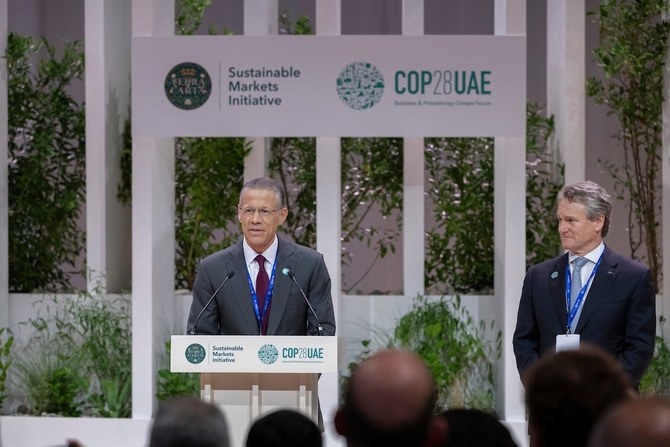
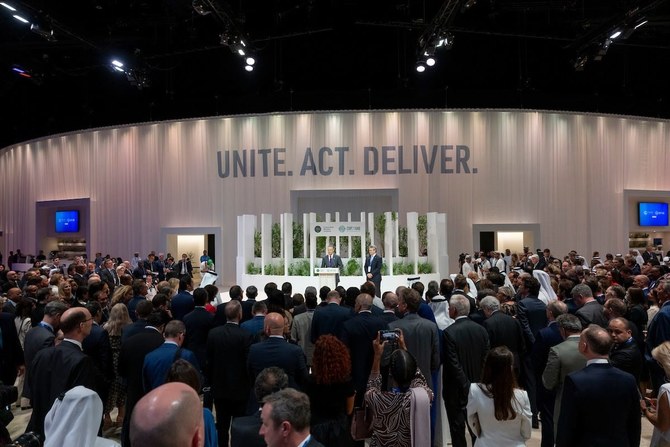

For the first time at the UN Framework Convention on Climate Change’s Conference of the Parties (COP), the COP28 Presidency of the UAE has launched the inaugural COP28 Business and Philanthropy Climate Forum, convening more than 1,000 CEOs and philanthropists from over 80 countries. The forum is being held alongside the World Climate Action Summit.
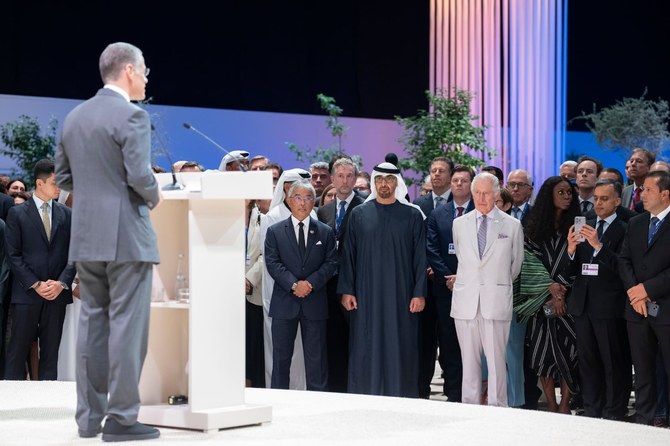
Hosted by the COP28 Presidency and the Sustainable Markets Initiative, the forum launched today with a high-level reception in the presence of Sheikh Mohamed bin Zayed Al-Nahyan, president of the UAE, and King Charles III.
The forum represents a paradigm shift in the COP process. With its strengths in low-carbon solutions and innovation, delivery and global networks, the private sector has — and continues — to invest trillions of dollars into the transition. With the objective of moving beyond commitments, the COP28 Business and Philanthropy Climate Forum will showcase global industry-by-industry delivery together with opportunities to accelerate, replicate, and scale, particularly in the Global South.
Private sector actors will join heads of state and government to focus on showcasing private sector progress and joint delivery.
Dr. Sultan Al-Jabar, COP28 president, said: “For the first time at a UNFCCC COP, and in line with the vision of the UAE, the global private sector has a seat at the table on the first day of COP28. No single party has all the solutions, and COP28 must bridge the trust gap between North and South, East, and West, and build a platform for action through partnership. This is what the Business and Philanthropy Climate Forum represents.”
Badr Jafar, chair of the forum and COP28 special representative for business and philanthropy, said: “There is no time to waste, and no need to wait. The Business and Philanthropy Climate Forum showcases over 20 major actions that CEOs and philanthropists can take now demonstrating accessible ways for private sector leaders to move beyond pledges and declarations and into action and implementation in ways that are suited to their capabilities and competencies.”
Jennifer Jordan-Saifi, CEO of the Sustainable Markets Initiative, said: “Building on the vision of our founder, King Charles III, and the momentum of the Sustainable Markets Initiative’s CEO summits at COP26 and COP27, the COP28 Business and Philanthropy Climate Forum’s purpose statement amplifies calls from the private sector to be at the table for all future UNFCCC COPs. It is time for a whole new model — one focused on real-world delivery and accelerated results.”
The Sustainable Markets Initiative is the strategic partner for the inaugural forum. Other forum delivery partners include the International Finance Corporation, the Organization for Economic Co-operation and Development, World Economic Forum, Asian Development Bank, Africa Finance Corporation, Bill and Melinda Gates Foundation, Inter-American Development Bank Group, World Business Council for Sustainable Development, and XPRIZE.
Other organizations participating in the Nov. 30 reception and also at the COP28 Business and Philanthropy Climate Forum include: UNFCCC, Food and Agriculture Organization, International Telecommunication Union, World Health Organization, International Civil Aviation Organization, UN Office of Outer Space Affairs, Asian Infrastructure Investment Bank, Caribbean Development Bank, African Development Bank, Islamic Development Bank, International Monetary Fund, and World Trade Organization.
The UN Council for Trade and Development estimated that $4 trillion is required annually to meet climate and biodiversity targets. To deliver, the COP28 Business and Philanthropy Climate Forum commits to:
- Supporting an annual Business and Philanthropy Climate Forum alongside the world leaders’ summit at every UNFCCC COP until at least 2030. This forum will serve as the foundation for the private sector to: enhance alignment of industry, finance and country roadmaps; conduct an annual industry-by-industry assessment on progress; and, raise the bar on ambitions, including alignment with science-based targets.
- Engaging in private sector diplomacy and the creation of innovative private sector mechanisms to support cross-border transition efforts, including blended finance and trade instruments.
- Demonstrating the moral courage required as decision-makers to boldly lead the transition to a sustainable, just, and prosperous future.
- Adopting an authentic sustainable orientation, embedding sustainability in business models, decisions, and actions.
- Investing in sustainability-aligned research, development, commercialization, technology, and innovation alongside youth and supporting the green, sustainably focused jobs of the future.
- Aligning country, industry, and financial roadmaps. Moving together, create efficiencies and economies of scale that will enable collective progress and accelerate sustainable transitions.
- Showcasing game-changing entrepreneurs, technologies and solutions that are emerging around the world. At the same time, remove barriers that are impeding progress in deployment and scale-up of these technologies.
- Bringing sustainable markets from niche to norm by reimagining mandates, project pipelines, financial structuring, and models of return. In this way entirely new sustainable industries, products, services, and supply chains can be created, while in parallel helping to transition and transform existing systems to a more sustainable trajectory.
- Building conservation and nature-based solutions into the asset base, supply chains, and disclosures.
- Addressing market challenges and helping reorient economic subsidies, financial incentives, and regulations in support of global climate, biodiversity, and UN SDG targets across all industries.
- Adopting common standards, metrics, working definitions and traceability within, and wherever possible, across industries.


