

PIF’s Lifera, Centogene aim to deliver world-class multiomic testing in Kingdom

1 / 3
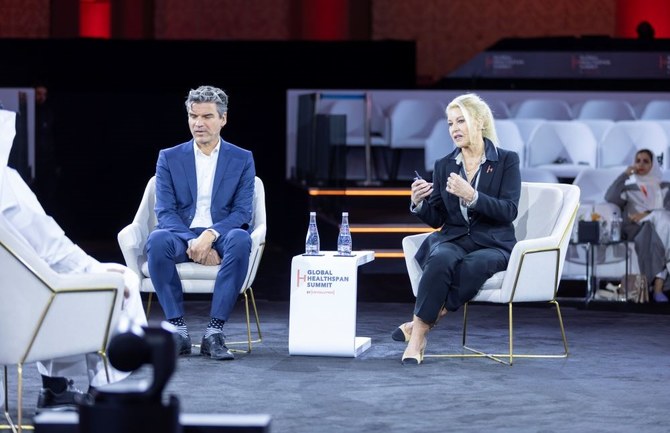
The panel discussed the new era of diagnosing patients, understanding diseases, and accelerating precision medicine. (Supplied)
2 / 3
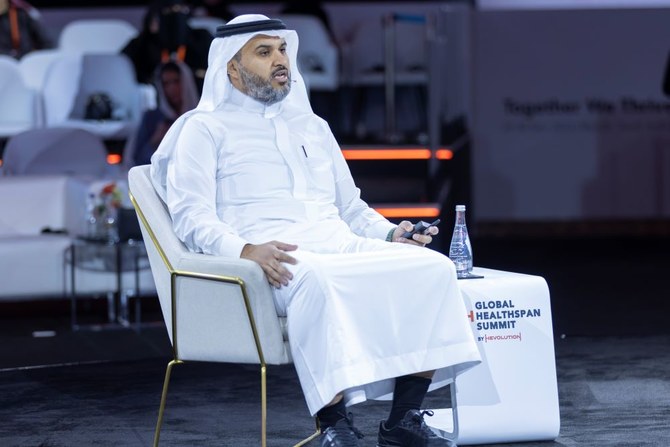
The Kingdom can potentially be a center of excellence and a real hallmark providing the best practice globally, explained Kim Stratton. (Supplied)
3 / 3
The strategic collaboration between Lifera and Contengene will provide Saudis with training opportunities. (Supplied)
Short Url
Updated 30 November 2023
Follow

PIF’s Lifera, Centogene aim to deliver world-class multiomic testing in Kingdom

  • Strategic cooperation between Lifera and Centogene set to increase local and regional access to world-class multiomic testing in the Kingdom and the Gulf region
  • CEO of Centogene Kim Stratton: The vision is to have end-to-end diagnostics here in Riyadh and we will be the wet lab, setting up the wet lab, the wet lab capabilities

RIYADH: Centogene, a life science partner for data-driven answers in rare and neurodegenerative diseases based in Germany, and Lifera, a biopharmaceutical company owned by the Public Investment Fund, have announced Lifera Omics, their new joint venture.

Chairman of Lifera Ibrahim Al-Juffali, joined Kim Stratton, CEO of Centogene, and Peter Bauer, its chief medical and genomic officer, on the second day of the Global Healthspan Summit in Riyadh to discuss a new era of diagnosing patients, understanding diseases, and accelerating precision medicine.

Strategic cooperation between Lifera and Centogene was announced in June this year and is set to increase local and regional access to world-class multiomic testing in the Kingdom and the Gulf region.

Stratton said: “The vision is to have end-to-end diagnostics here in Riyadh and we will be the wet lab, setting up the wet lab, the wet lab capabilities. So that’s everything from sample entry to increasingly doing the diagnostic.”

Lifera Omics will look to transform the lives of people in the Gulf region by offering cutting-edge genomic and multiomic testing services to patients, health systems, biopharma companies, and research institutes.

Lifera Omics works by merging information from phenomics, genomics, transcriptomics, epigenomics, proteomics, and metabolomics to deliver a comprehensive clinical picture.

Bauer said: “It is a product from the patient back to the patient.”

The collaboration between Lifera and Centogene will also provide Saudis with training opportunities, while helping to nurture local and international talents.

Al-Juffali said: “We are going to have a team that is composed of local and international talents, and potentially be able to attract local talent, taking into consideration the diverse capacity of university research centers and educational institutions here that will be able to educate people interested in the field.”

Training will include opportunities for Saudis to travel to Germany.

Stratton said: “(This will) immerse (them) in the way we do (things). It is the incentive to help train them and then (they can) be taken back to Saudi so that they can train others.”

Lifera aims to create partnerships with leading local and international companies while attracting targeted investments to boost local capacity and drive domestic manufacturing in the sector.

Stratton said: “We should be able to attract pharma partners to come here to the region, and if you are developing a product for certain high-risk diseases here, we should be able to attract the clinical development of those products here.”

Investment aims at manufacturing lifesaving and essential pharma products, including insulins, vaccines, plasma therapeutics, monoclonal antibodies, cell and gene therapies, and innovative small molecules.


Saudi, UN officials discuss trade and AI in Austria

Updated 19 December 2025
Follow

Saudi, UN officials discuss trade and AI in Austria

  • Talks on ways to boost economic transformation in global system
  • Commerce Minister Majid Al-Qasabi highlights rules-based trade

RIYADH: Saudi Arabia and UN officials held discussions in Vienna, Austria, on Dec. 18 and 19, on international trade rules and artificial intelligence.

Participants at the meeting included representatives of the Kingdom’s National Competitiveness Center and the UN Commission on International Trade Law, or UNCITRAL, the Saudi Press Agency reported.

The workshop was a part of the NCC’s efforts to contribute to the development of legislative and regulatory frameworks for trade, keeping pace with global digital transformations, and enhancing the competitiveness of the national economy.

The Kingdom’s delegation was led by Commerce Minister Majid Al-Qasabi, who is the chairman of the NCC. Also present were Iman bint Habas Al-Mutairi, CEO of the NCC, 39 government officials, and Anna Jobin-Bret, secretary of UNCITRAL.

In his opening speech, Al-Qasabi spoke about the connection between technology and consumer behavior and its impact on the future of global trade.

The workshop included seven specialized sessions, which addressed AI in international trade, focusing on how it can improve the efficiency of supply chains, logistics operations, and e-commerce.

In a session, “Digital Platforms for Cross-Border Trade,” panelists addressed the legal and regulatory frameworks for using digital platforms.

Other sessions reviewed UNCITRAL’s perspective on the UN@80 initiative. Jobin-Bret spoke about the commission’s efforts and role in the world body’s reform process.

The workshop concluded with a session addressing preparations for joining the new Convention on Commercial Registers, emphasizing the importance of UNCITRAL’s efforts to ensure reliable digital trade.