


GAZA STRIP, Palestinian Territories: A truce between Israel and Hamas will continue, both sides said Thursday, moments before the deal was due to expire, though details of any official agreement remained unclear.
Minutes before the halt in fighting was due to expire at 0500GMT, Israel’s military said the “operational pause” would be extended, without specifying for how long.
“In light of the mediators’ efforts to continue the process of releasing the hostages and subject to the terms of the framework, the operational pause will continue,” it said.
Hamas meanwhile said there was an agreement to “extend the truce for a seventh day,” without further details.
Qatar, which has led the truce negotiations, confirmed the pause had been extended until Friday.
There had been pressure to extend the pause to allow more hostage releases and additional aid into devastated Gaza, with US Secretary of State Antony Blinken arriving in Israel for talks Wednesday night.
The truce has brought a temporary halt to fighting that began on October 7 when Hamas militants poured over the border into Israel, killing 1,200 people, mostly civilians, and kidnapping about 240, according to Israeli authorities.
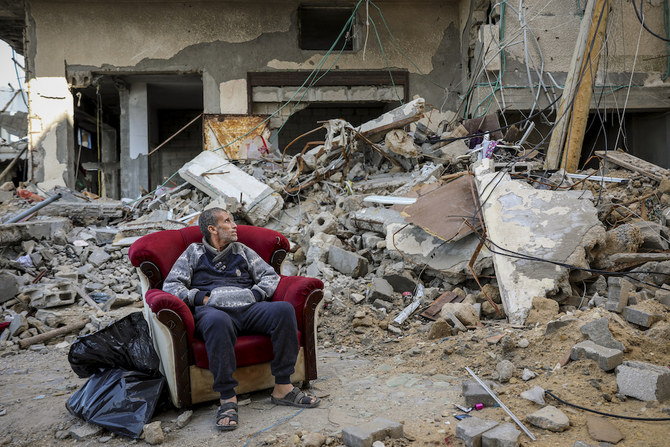
Israel’s subsequent air and ground campaign in Gaza has killed nearly 15,000 people, also mostly civilians, according to Hamas officials, and reduced large parts of the north of the territory to rubble.
The truce agreement allows for extensions if Hamas can release another 10 hostages a day, and a source close to the group said Wednesday that it was willing to prolong the pause by four days.
But with just an hour to go before the truce was due to expire, Hamas said its offer to free another seven hostages, and hand over the bodies of another three it said were killed in Israeli bombardment, had been refused.
Both sides had earlier said they were ready to return to fighting, with Hamas’s armed wing warning its fighters to “maintain high military readiness... in anticipation of a resumption of combat if it is not renewed,” according to a message posted on its Telegram channel.
IDF spokesman Doron Spielman said troops would “move into operational mode very quickly and continue with our targets in Gaza,” if the truce expired.
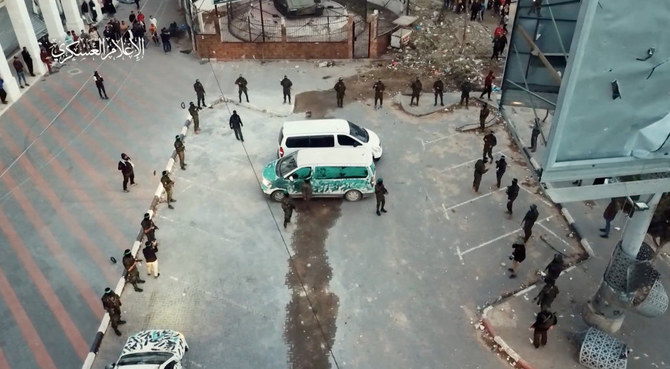
Overnight, 10 more Israeli hostages were freed under the terms of the deal, with another four Thai hostages and two Israeli-Russian women released outside the framework of the arrangement.
Video released by Hamas showed masked gunmen handing hostages to the International Committee of the Red Cross.
Among those freed was Liat Beinin, who also holds American citizenship, and works as a guide at Israel’s Holocaust museum Yad Vashem.
US President Joe Biden said he was “deeply gratified” by the release.
“This deal has delivered meaningful results,” he said of the truce.
Shortly after the hostages arrived in Israel, the country’s prison service said 30 Palestinian prisoners had been released, including well-known activist Ahed Tamimi.
Since the truce began on November 24, 70 Israeli hostages have been freed in return for 210 Palestinian prisoners.
Around 30 foreigners, most of them Thais living in Israel, have been freed outside the terms of the deal.
Israel has made clear it sees the truce as a temporary halt intended to free hostages, but there are growing calls for a more sustained pause in fighting.
UN Secretary-General Antonio Guterres demanded a “true humanitarian cease-fire,” warning Gazans are “in the midst of an epic humanitarian catastrophe.”
And China, whose top diplomat Wang Yi was in New York for Security Council talks on the violence, urged an immediate “sustained humanitarian truce,” in a position paper released Thursday.
The hostage releases have brought joy tinged with agony, with families anxiously waiting each night to learn if their loved ones will be freed, and learning harrowing details from those who return.
Four-year-old Abigail was captured after crawling out from under the body of her father, killed by militants, covered in his blood, her great aunt Liz Hirsh Naftali said.
“It’s a miracle,” she said of the little girl’s survival and release.
However Israel’s army also said Wednesday it was investigating a claim by Hamas’s armed wing that a 10-month-old baby hostage, his four-year-old brother and their mother had all been killed in an Israeli bombing in Gaza.
Israel pounded the Gaza Strip relentlessly before the truce, forcing an estimated 1.7 million people to leave their homes and limiting the entry of food, water, medicine and fuel.
Conditions in the territory remain “catastrophic,” according to the World Food Programme, and the population faces a “high risk of famine.
Israeli forces targeted several hospitals in northern Gaza during the fighting, accusing Hamas of using them for military purposes.
The spokesman for the Hamas-run territory’s health ministry, Ashraf Al-Qudra, told AFP Wednesday that doctors found five premature babies dead in Gaza City’s Al-Nasr hospital, which medical staff had been forced to abandon.
The truce has allowed those displaced to return to their homes, but for many there is little left.
“I discovered that my house had been completely destroyed — 27 years of my life to build it and everything is gone,” said Taghrid Al-Najjar, 46, after returning to her home in southeastern Gaza.
The violence in Gaza has also raised tensions in the West Bank, where nearly 240 Palestinians have been killed by either Israeli soldiers or settlers since October 7, according to the Palestinian health ministry.
An eight-year-old boy and a teenager were the latest deaths in the occupied territory, with Israel saying it “responded with live fire... and hits were identified” after suspects hurled explosive devices toward troops.


