


AL-MUKALLA: Yemen’s internationally recognized government has requested the US and international community to label the Houthis as terrorists for jeopardizing shipping in the Red Sea and Gulf of Aden.
During a meeting with foreign diplomats in Riyadh on Sunday, Yemen Interior Minister Maj. Gen. Ibrahim Haidan said America should reinstate the Houthi militia as a terrorist organization not only for threatening maritime traffic off Yemeni shores, but also for killing Yemeni children, abusing human rights, and acting as a proxy group for Iran.
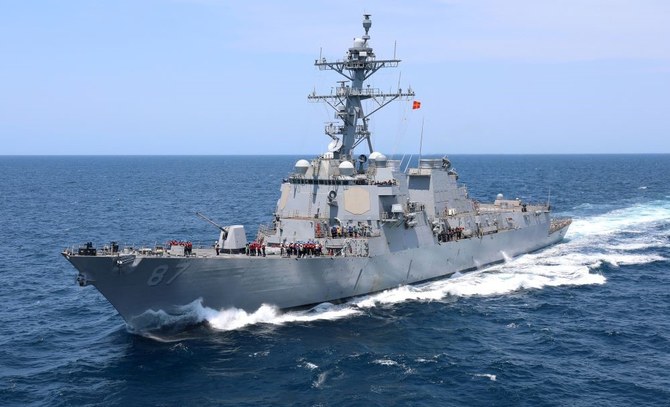
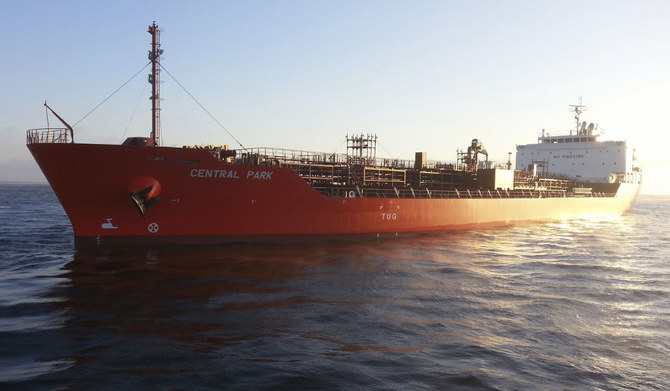
The plea came as the US Central Command said on Monday that the Houthis had launched two ballistic missiles at American destroyer USS Mason soon after it had intervened to prevent the attempted hijacking of Israeli-linked tanker Central Park in the Gulf of Aden.
The missiles fell short of their target.
In 2016, the same naval ship was targeted by Houthi missiles in the Red Sea.
On Nov. 19, the Houthis seized the vehicle carrier Galaxy Leader in the Red Sea and pledged to capture and launch missile and drone strikes on Israeli-owned or controlled ships in revenge for Israel’s military operations in Gaza.
The Yemeni government said that the latest Houthi attacks on vessels in the Red Sea had bolstered its long-standing requests for the group to be blacklisted.
Faisal Al-Majidi, undersecretary at the Yemeni Ministry of Justice, told Arab News that the Houthis had been eligible for categorization for years, ever since they began planting thousands of landmines around the country, laying siege to cities, recruiting minors, blowing up opponents’ homes, and kidnapping people.
The Houthi missile strike on Aden International Airport in December 2020, that targeted an aircraft carrying Yemeni government ministers, was “enough to classify them as a terrorist organization not only by the United States of America but also by international institutions such as the United Nations, and the whole globe,” Al-Majidi said.
Last week, White House national security spokesman, John Kirby, said that the US considered reclassifying the Houthis as terrorists after the Galaxy Leader incident.
The Yemeni government said the classification would prevent Houthi officials from traveling around the world, put a squeeze on their financial resources, and hamper their aims to gain international legitimacy.
“The world would recognize that the Yemeni government is fighting a terrorist organization,” he added.
But critics claim that designating the group as terrorists would force the Houthis to reject peace talks and would impede the delivery of humanitarian aid and supplies to more than 70 percent of Yemen’s people who live in Houthi-controlled regions.
The same humanitarian concerns, raised by international aid groups, prompted US President Joe Biden’s administration to delist the Houthis as a terrorist organization in early 2021.


