In major discovery, excavators unearth Kushan era coins at UNESCO world heritage site in Pakistan

Employees of the Sindh government work at the historic site of Mohenjo Daro in Larkana, Pakistan on November 17, 2023. (Photo courtesy: Supplied/Shaikh Javed Ali Sindhi)
Short Url
Updated 18 November 2023
Follow

In major discovery, excavators unearth Kushan era coins at UNESCO world heritage site in Pakistan

  • The discovery was made during a preservation effort after torrential rains damaged Mohenjo-daro last year
  • Officials say the coins will contribute to a deeper understanding of the Kushan era within the Indus Valley

KARACHI: Authorities in Pakistan said on Saturday they had discovered hundreds of coins at a United Nations Educational, Scientific and Cultural Organization (UNESCO) world heritage site in the southern Sindh province, dating back to the Kushan era in the Indus Valley.

Mohenjo-daro, flourished around 2,500 BCE, stands as the largest settlement of the ancient Indus Valley civilization. It rivalled contemporaneous cities in ancient Egypt and Mesopotamia, boasting a peak population of 40,000 before its abandonment around 1,900 BCE. The ancient city was designated a UNESCO world heritage site in 1980.

Situated on the banks of the Indus River in Pakistan’s Larkana district, the sprawling city covers over 620 acres of land. The first excavation on the site was conducted in 1921-22 and archaeologists such as R. D. Banerji, John Marshall and Ernest Mackay unearthed a total of 4,348 coins from 1922 to 1931, which were subsequently transferred to different museums in united India.

A preservation effort led by Sindh archaeology department recently led to the discovery of hundreds of coins dating back to the Kushan era.

“A team formed under the direction of DG Archaeology Sindh Mansoor Ahmed Kanasro and supervised by director Mohenjo-daro Syed Shakir Ali Shah recently discovered hundreds of coins in a terracotta bowl from Room no 29-A on Divinity Street during preservation efforts,” Shaikh Javed Ali Sindhi, a research scholar who was part of the excavation team, told Arab News.
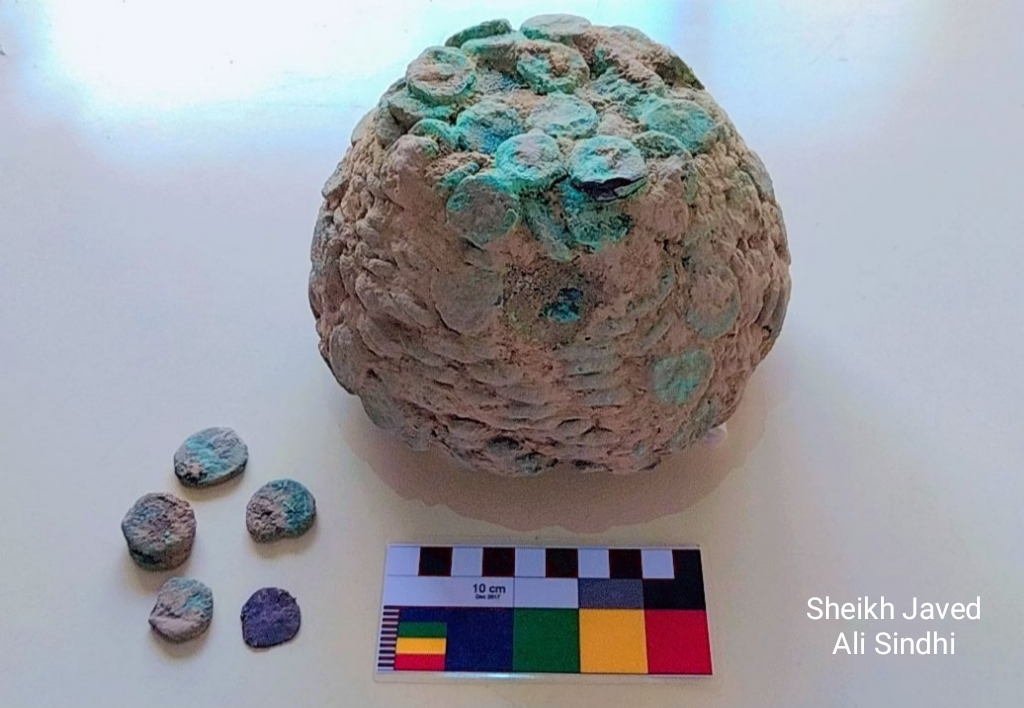


This photo shows coins dating back to the Kushan era of the Indus Valley civilization discovered at the historic site of Mohenjo Daro in Larkana, Pakistan on November 17, 2023. (Photo courtesy: Supplied/Shaikh Javed Ali Sindhi)

“The coins are adhered to each other due to the immense heat they have endured over the centuries, making an exact count at this point of time challenging. However, their weight is approximately 5.5 kilograms, and they are estimated to be in the hundreds.”

Sindhi said the coins had been sent to the Mohenjo-daro laboratory for the purpose of cleaning to help researchers assess them.

The preservation effort was initiated to address the impact of last year’s catastrophic rains and floods in southern Pakistan, particularly in the Larkana region where Mohenjo-daro site is located. The site had suffered water damage from the relentless monsoon rain.

Mohenjo-daro, after being abandoned around 1,900 BCE, eventually succumbed to earth and the forest cover, according to Sindhi. Subsequently, the Kushan period saw the construction of a city over the remains, complete with a stupa where pilgrims would present coins to the Buddhist monk living around it.
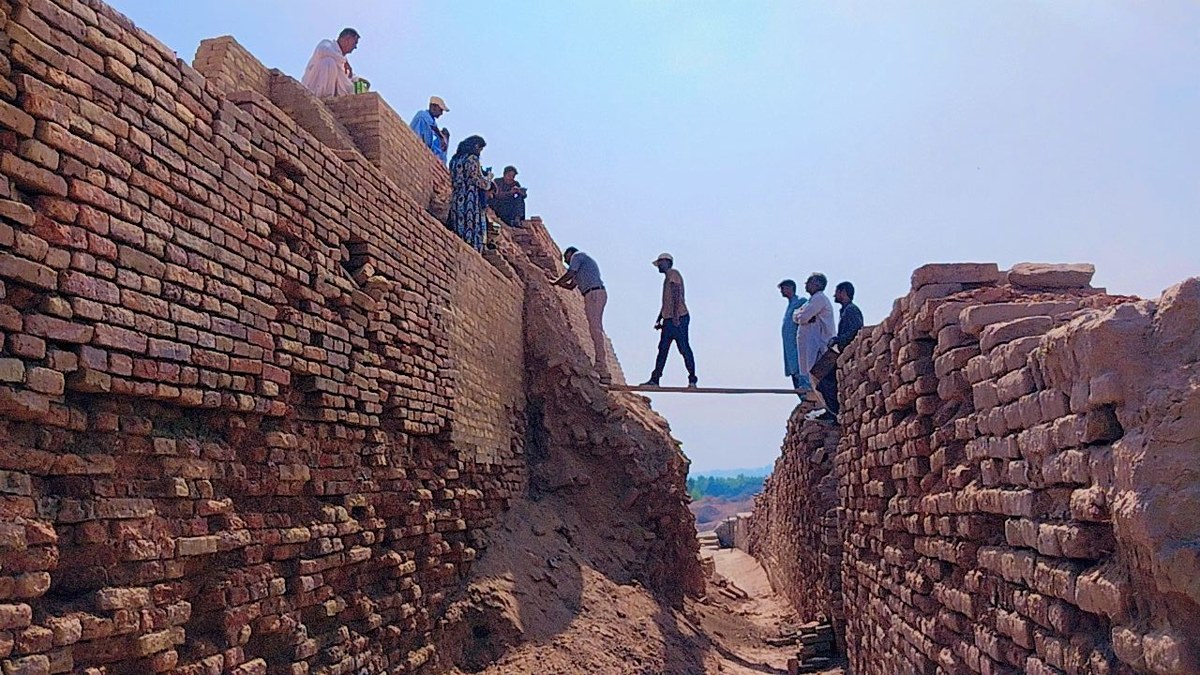


Employees of the Sindh government work at the historic site of Mohenjo Daro in Larkana, Pakistan on November 17, 2023. (Photo courtesy: Supplied/Shaikh Javed Ali Sindhi)

“These coins belong to the same Kushan period, dating between 2nd century AD and 5th century AD, and were discovered in the vicinity of Divinity Street near the Stupa,” he explained.

The unearthing of these ancient coins marks a significant discovery after nearly a century, according to the research scholar.

“Once cleaned, these coins will offer valuable insights to researchers studying the Kushan period and their religious practices,” he added.
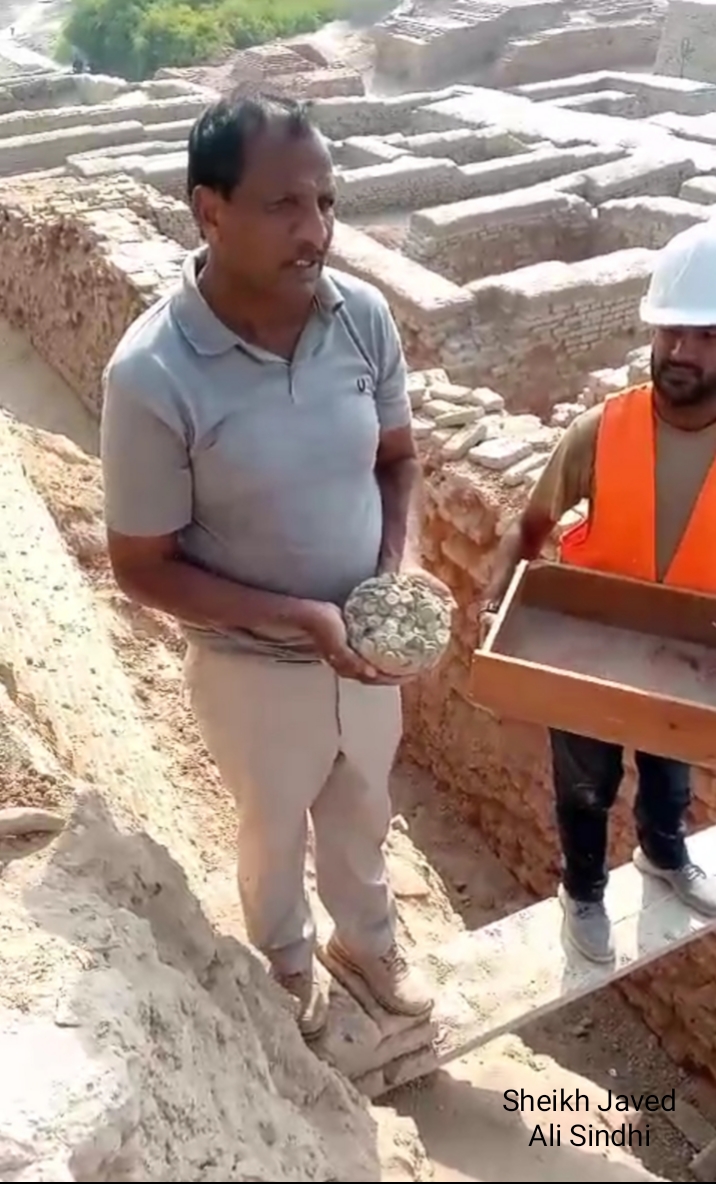


This photo shows coins dating back to the Kushan era of the Indus Valley civilization discovered at the historic site of Mohenjo Daro in Larkana, Pakistan on November 17, 2023. (Photo courtesy: Supplied/Shaikh Javed Ali Sindhi)
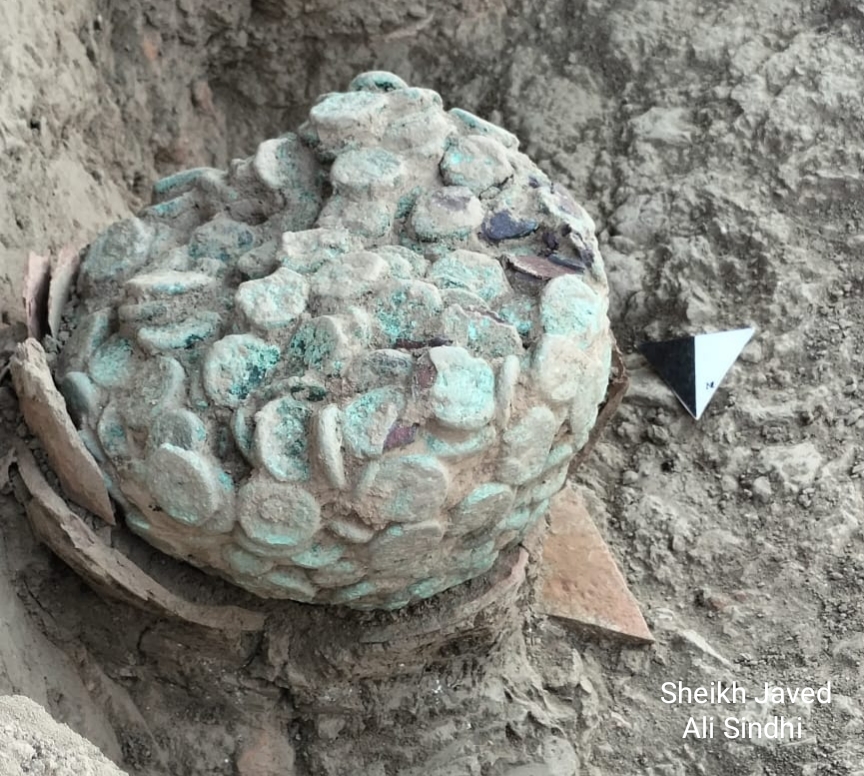


This photo shows coins dating back to the Kushan era of the Indus Valley civilization discovered at the historic site of Mohenjo Daro in Larkana, Pakistan on November 17, 2023. (Photo courtesy: Supplied/Shaikh Javed Ali Sindhi)



Pakistan accuses India of manipulating Chenab flows, seeks clarification under Indus Waters Treaty

Updated 8 sec ago
Follow

Pakistan accuses India of manipulating Chenab flows, seeks clarification under Indus Waters Treaty

  • Foreign office spokesperson says sudden variations in river flows threaten agriculture, food security and livelihoods downstream
  • He also condemns a hijab-removal incident in India, calling it part of a broader pattern of religious intolerance and Islamophobia

ISLAMABAD: Pakistan said on Thursday it had observed abrupt variations in the flow of the River Chenab during the ongoing month, accusing India of manipulating river flows at a critical point in the agricultural cycle and saying it had written to New Delhi seeking clarification.

Local media reported quoted Pakistani officials as saying India released about 58,000 cusecs of water at Head Marala on Dec. 7–8 before sharply reducing flows to roughly 870–1,000 cusecs through Dec. 17, far below the 10-year historical average of 4,000–10,000 cusecs for this period.

Pakistan’s Foreign Office spokesman Tahir Andrabi told a weekly media briefing in Islamabad India had failed to share prior information or operational data on the Chenab flows, a practice he said New Delhi had previously followed under the 1960 Indus Waters Treaty. New Delhi said earlier this year it had put the treaty “in abeyance” following a gun attack in Indian-administered Kashmir that it blamed on Pakistan, a charge Islamabad denied, calling instead for an impartial and transparent international investigation.

Pakistan also described India’s unilateral suspension of the treaty as a violation of international law and an “act of war.”

“Pakistan would like to reiterate that the Indus Waters Treaty is a binding international agreement, which has been an instrument of peace and security and stability in the region,” Andrabi said. “Its breach or violation, on one hand, threatens the inviolability of international treaties in compliance with international law, and on the other hand, it poses serious threats to regional peace, principles of good neighborliness, and norms governing interstate relations.”

Andrabi said Pakistan viewed the sudden variations in the Chenab’s flow with “extreme concern and seriousness,” saying the country’s Indus Waters Commissioner had written to his Indian counterpart seeking clarification in line with procedures outlined in the treaty.

“Any manipulation of river flow by India, especially at a critical time of our agricultural cycle, directly threatens the lives and livelihoods, as well as food and economic security of our citizens,” he continued. “We call upon India to respond to the queries raised by Pakistan.”

He said Pakistan had fulfilled its obligations under the Indus Waters Treaty and urged the international community to take note of India’s “continued disregard” of a bilateral treaty and to counsel New Delhi to act responsibly under international law.

Andrabi maintained Pakistan remained committed to peaceful resolution of disputes with India but would not compromise on its water rights.

In the same briefing, he also condemned an incident in which the chief minister of the Indian state of Bihar was seen in a video forcibly removing the hijab of a Muslim woman during a public interaction, followed by remarks by a minister in Uttar Pradesh who mocked the episode, saying it reflected a broader pattern of religious intolerance and Islamophobia and warranted strong condemnation.