

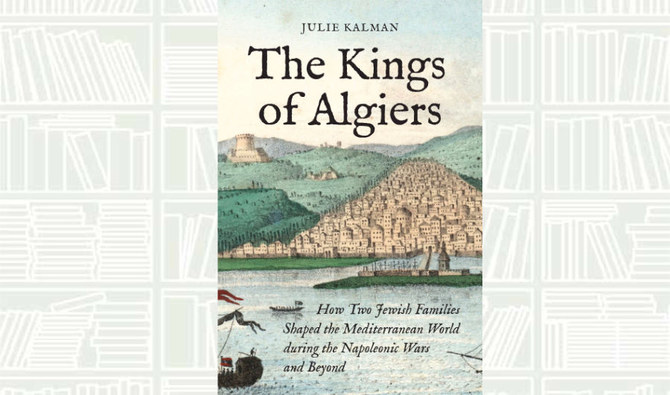
What We Are Reading Today: The Kings of Algiers

Photo/Supplied
Short Url
Updated 18 November 2023
Follow

What We Are Reading Today: The Kings of Algiers

Author: Julie Kalman

At the height of the Napoleonic Wars, the Bacri brothers and their nephew, Naphtali Busnach, were perhaps the most notorious Jews in the Mediterranean.
Based in the strategic port of Algiers, their interconnected families traded in raw goods and luxury items, brokered diplomatic relations with the Ottomans, and lent vital capital to warring nations.
For the French, British, and Americans, who competed fiercely for access to trade and influence in the region, there was no getting around the Bacris and the Busnachs. “The Kings of Algiers” traces the rise and fall of these two trading families over four tumultuous decades in the 19th century.
In this panoramic book, Julie Kalman restores their story — and Jewish history more broadly — to the histories of trade and high-stakes diplomacy in the Mediterranean during the Napoleonic Wars and their aftermath.
“The Kings of Algiers” brings vividly to life an age of competitive imperialism and nascent nationalism.


What We Are Reading Today: ‘Fixed’

Updated 22 December 2025
Follow

What We Are Reading Today: ‘Fixed’

Authors: John Y. Campbell and Tarun Tamadorai

We interact with the financial system every day, whether taking out or paying off loans, making insurance claims, or simply depositing money into our bank accounts. 

“Fixed” exposes how this system has been corrupted to serve the interests of financial services providers and their cleverest customers—at the expense of ordinary people.

John Campbell and Tarun Ramadorai diagnose the ills of today’s personal finance markets in the US and across the globe, looking at everything from short-term saving and borrowing to loans for education and housing, financial products for retirement, and insurance. 

They show how the system is “fixed” to benefit those who are wealthy and more educated while encouraging financial mistakes by those who are aren’t, making it difficult for regular consumers to make sound financial decisions and disadvantaging them in some of the most consequential economic transactions of their lives.