Sharjah Media City chairman highlights Shams’ role as catalyst for next-gen leaders

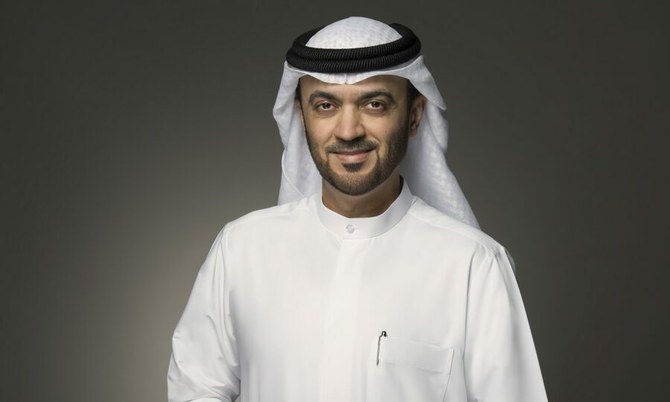
Khalid Omar Al-Midfa, chairman of Sharjah Media City, has told the Global Media Conference that the free zone authority is acting as a launch pad to encourage young entrepreneurs in the media and creativity business. (Shams/File)
Short Url
Updated 18 November 2023
Follow

Sharjah Media City chairman highlights Shams’ role as catalyst for next-gen leaders

  • Al-Midfa said that he looked forward to “opening new avenues of partnership with different media organizations in this field.”
  • “We do have a lot of initiatives in our work, and every year there is an update,” he told Arab News

ABU DHABI: Khalid Omar Al-Midfa, chairman of Sharjah Media City, or Shams, has told the Global Media Conference that the free zone authority is acting as a launch pad to encourage young entrepreneurs in the media and creativity business.
Al-Midfa said that he looked forward to “opening new avenues of partnership with different media organizations in this field.”
“We do have a lot of initiatives in our work, and every year there is an update,” he told Arab News.
“This is actually the whole purpose for us as being a launching pad for companies, for startups, for entrepreneurs to start their journey in the media and creativity business.”
Al-Midfa said that he hopes to expand Shams’ partnerships “not only within the Emirates, within the Gulf, but also on an international level.”
Shams was established in 2017 as a free zone authority and multi-use media city in Al-Messaned, Sharjah. Its primary objective is to bolster licensed companies by offering training courses and innovative solutions.
Al-Midfa said that although Shams operates independently, it seeks alignment with the UAE national digital media strategy.
He highlighted cultural initiatives to disseminate Sharjah’s message globally, while also empowering young entrepreneurs.
“This message (is) propagated via clever intellectuals working in the media sector and having the plans, having the knowledge, having the required infrastructure for them to talk to the world at large,” Al-Midfa said.
“This actually constitutes a small part of soft power. And we believe that by empowering these young entrepreneurs, these companies, we are propagating this message of Sharjah and of the whole of UAE.”


Study finds nearly half of UK news stories on Muslims show signs of bias

Updated 09 March 2026
Follow

Study finds nearly half of UK news stories on Muslims show signs of bias

  • Centre for Media Monitoring finds 20,000 out of 40,913 articles from 30 major news outlets contain bias and 70% link Muslims to negative behaviors or themes
  • Findings reveal ‘deeply concerning evidence of structural bias’ in portrayal of Muslims by UK press and point to ‘systemic problem’ within the media, says center’s director

LONDON: Nearly half of news articles published in the UK in 2025 that referenced Muslims or Islam contained some degree of bias, according to a report issued on Monday by the Centre for Media Monitoring. It also found that about 70 percent of stories linked Muslims to negative behaviors or themes.

The nonprofit organization, which tracks the ways in which Muslims and Islam are portrayed in the media, examined 40,913 articles from 30 major news outlets and found that about 20,000 showed some form of bias.

The study looked at “structural patterns” in coverage that “shape public narratives” about Muslims amid rising hostility toward the community.

“As the largest study of its kind ever conducted in the UK, this report presents deeply concerning evidence of structural bias in how Muslims are portrayed in the UK press,” said Rizwana Hamid, the director of the organization.

It found that 70 percent of the articles it reviewed highlighted negative aspects related to Muslims, though not all of the stories were biased in themselves. The wider patterns were also troubling: 44 percent of the coverage omitted key context, 17 percent relied on generalizations, and 13 percent included outright misrepresentation.

Taken together, the monitoring center said, the findings amounted to evidence of an “information integrity crisis” that distorts public understanding, and “a deeply concerning trend” in reporting on Muslims.

The research points to a “systemic problem within our media ecosystem,” Hamid said.

“When entire communities are repeatedly framed through lenses of suspicion or threat, it inevitably shapes public attitudes, political debate and the everyday lives of British Muslims,” she added.

News brands targeting right-wing audiences were more likely to produce biased coverage, the report found.

The Spectator magazine and GB News were identified as having the highest proportion of “very biased” articles, and as the “worst across all five bias categories”: negative framing, generalizations, misrepresentation, lack of context, and problematic headlines.

Other outlets highlighted for displaying high levels of biased content about Muslims included The Telegraph, The Jewish Chronicle, Daily Express, The Sun, Daily Mail and The Times.

In contrast, the BBC, other broadcasters and left-leaning outlets recorded the lowest rates of bias in the study.

The research comes as British Muslims report rising levels of discrimination. Official figures published in October revealed that religious hate crimes against Muslims rose by 19 percent in the year to March 2025 compared with the previous 12 months.