Progress on Saudi Aramco oil refinery project within two months — Pakistan energy minister

Pakistan's interim energy minister Muhammad Ali (center) attends the seventh edition of The Future Summit in Karachi on November 15, 2023. (Photo courtesy: X/@NutshellGroup)
Short Url
Updated 15 November 2023
Follow

Progress on Saudi Aramco oil refinery project within two months — Pakistan energy minister

  • Project was part of deals signed in 2019 during visit of Saudi crown prince to Pakistan but there has been little progress
  • Project contemplates building an integrated refinery in Pakistan that can process up to 450,000 barrels of crude oil per day

KARACHI: Pakistani Energy Minister Muhammad Ali said on Wednesday the South Asian nation was “actively engaged” with Saudi authorities on a multibillion-dollar Aramco oil refinery project and expected progress within two months.
Pakistan and Saudi Arabia signed several investment agreements worth $21 billion during a visit to Islamabad by Saudi Crown Prince Muhammad Bin Salman in February 2019. The Saudi investments included around $10 billion for an Aramco oil refinery and $1 billion for a petrochemical complex project that was meant to be built at the strategic Gwadar Port in the country’s southwestern Balochistan province.
However, almost four years later, there has been little progress on the project.
“Work on the Aramco oil refinery is going on and we are actively engaged with them, you will see progress on that in next one-two months,” the energy minister told Arab News on the sidelines of the 7th edition of The Future Summit in Karachi.
When asked why the project had been delayed, Ali said:
“It is a big project of $8-10 billion and everything from investment funding, its structuring, and policy framework has to be considered.”
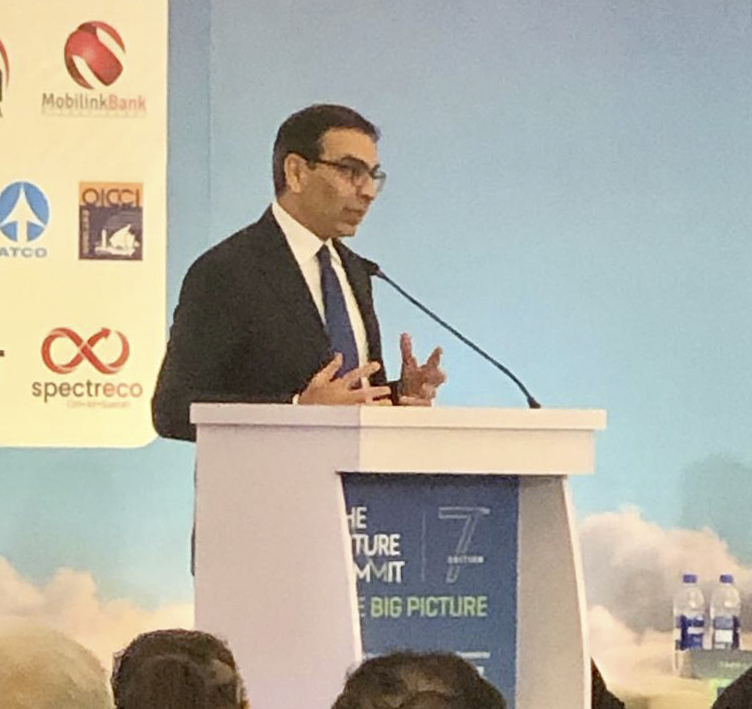


Pakistan's interim energy minister Muhammad Ali speaks during the seventh edition of The Future Summit in Karachi on November 15, 2023. (Photo courtesy: X/@NutshellGroup)

Responding to reports that the project would be built in Hub district in Balochistan, near Karachi, instead of Gwadar, Ali said the decision would be taken by Aramco.
The project contemplates building an integrated refinery in Pakistan that can process up to 450,000 barrels of crude oil per day.


Gunmen kill two cops in Pakistan’s restive northwest

Updated 47 min 37 sec ago
Follow

Gunmen kill two cops in Pakistan’s restive northwest

  • The policemen were killed in separate incidents in Tank and Lakki Marwat districts of Pakistan’s Khyber Pakhtunkhwa province
  • No group immediately claimed responsibility for killings, which come a day after police killed eight militants in Karak district

PESHAWAR: Unidentified gunmen on Monday shot dead two policemen in separate incidents in Pakistan’s northwestern Khyber Pakhtunkhwa (KP) province, police said, amid a surge in militancy in the province bordering Afghanistan.

In the first incident, gunmen abducted Sajjad Hussain, a police constable who was traveling home on leave, in KP’s Tank district and later shot him dead, according to district police spokesman Younus Khan.

“The martyred constable, Sajjad Hussain, was posted at the Nasran checkpoint,” Khan told Arab News. “He was intercepted, forced off his vehicle, and shot on Shah Alam–Nasran Road by militants.”

Another policeman, Assistant Sub-Inspector Mumtaz Ali, who was posted in Tank, was shot dead by gunmen in Pezu area of the nearby Lakki Marwat district, according to the Tank district police spokesman.

“The officer, who was posted in Tank, was on his way to his duty station when assailants intercepted his vehicle, forced him out, and opened fire, killing him on the spot,” Khan added.

No group immediately claimed responsibility for the killings, which come a day after police killed eight militants in KP’s Karak district.

Pakistan has struggled to contain a surge in militancy in KP in recent years. Militant groups such as the Pakistani Taliban, or the Tehreek-e-Taliban Pakistan (TTP), have frequently targeted convoys of security forces, police stations and check-posts besides kidnapping government officials in the region.

Islamabad has frequently accused Afghanistan of allowing its soil and India of backing militant groups, including the TTP, for attacks against Pakistan. Kabul and New Delhi have consistently denied this.