


PESHAWAR: Police said on Monday militants had fired rockets at three vehicles ferrying employees of a Pakistani conglomerate, killing two people and injuring 11 on the outskirts of the northwestern Dera Ismail Khan district.
This is the second attack in six days targeting Al-Haj Group, an emerging Pakistani conglomerate with an operational footprint spanning from oil and gas exploration to textiles, metals, automobile manufacturing and supply chain and procurement. In the last attack on the company last Tuesday, two policemen were killed and three were injured in a pre-dawn assault on the conglomerate’s offices in Dera Ismail Khan district. Police said the attack was carried out by “terrorists” but it was unclear why a private Pakistani company is being targeted by militants.
Al-Haj group did not respond to requests for comment.
A surge in militant attacks in Pakistan’s western provinces has cast a shadow on election preparations in the run-up to February’s national election, but until now the attacks had mostly targeted security forces.
Hidayat Khan, a district police official in Dera Ismail Khan, said militants fired rockets at three vehicles of the Al-Haj Group near Kot Falak village in Darazinda town on Monday morning. One of the three vehicles was hit, he said. The conglomerate’s facility is located at a distance of 12 kilometers from the mountainous area of Darazinda.
“Militants started firing rockets when three vehicles of the company were coming to fetch water near Kot Falak, a village near Darazinda,” Khan told Arab News. “One employee of the company died on the spot while another died of injuries at a hospital.”
Khan said 11 employees injured in the attack were being treated at different hospitals in Dera Ismail Khan. He said Darazinda is close to Kulachi, a rundown village in Dera Ismail Khan, where militants often stage attacks on police checkposts and police stations.
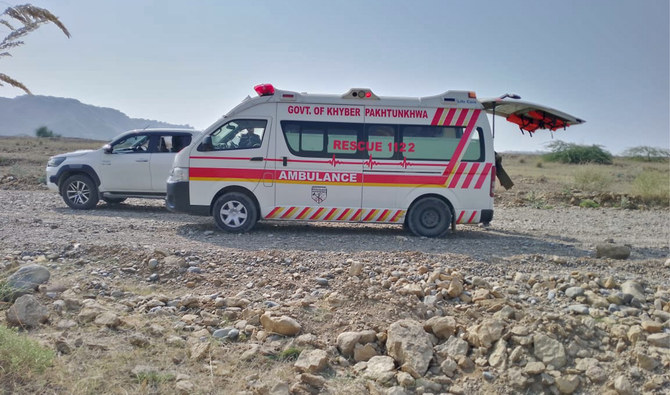
“Two of the injured, who were in critical condition, have been shifted to the District Headquarters Hospital for treatment,” said Aizaz Mehmood Dotani, a district spokesperson of the Rescue 1122 service. He said Faisal Khattak, the driver of the vehicle, was immediately killed.
This is the sixth attack to take place in Dera Ismail Khan in the last two weeks. On Nov. 5, heavily armed gunmen attacked police checkpoints in the district, injuring one policeman. On Nov. 3, seven people, including a security personnel, were killed while 23 others were injured in two separate attacks in the district.
Pakistani officials have frequently said militants targeting their country operate from neighboring Afghanistan. The Taliban administration rejects accusations it harbors militants.
Last week, in an unusually strongly-worded press conference, Pakistani Prime Minister Anwaar-ul-Haq Kakar demanded the Afghan Taliban hand over Pakistani militants belonging to the TTP group and dismantle their training centers and hideouts in Afghanistan.
Since the Taliban takeover of Kabul, “unfortunately there has been a 60 percent increase in terrorist attacks and a 500 percent rise in suicide attacks in Pakistan,” Kakar said, expressing regret over the lack of a “positive response” from the Taliban administration.


