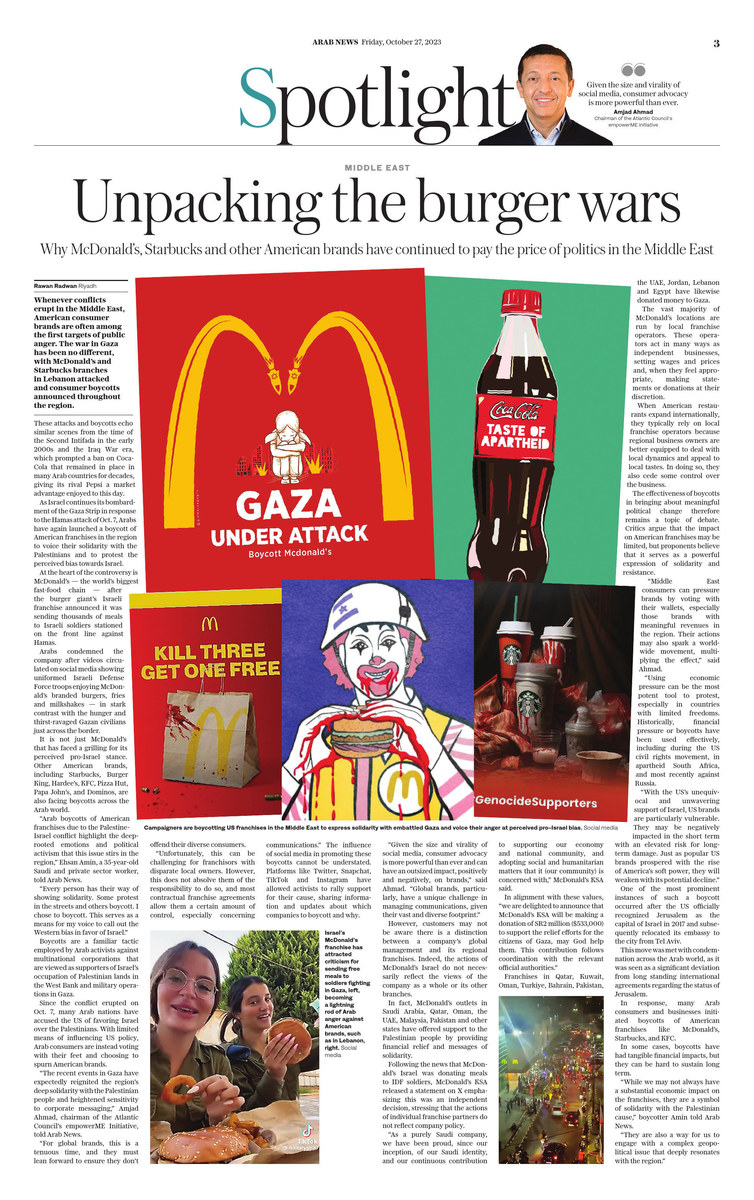
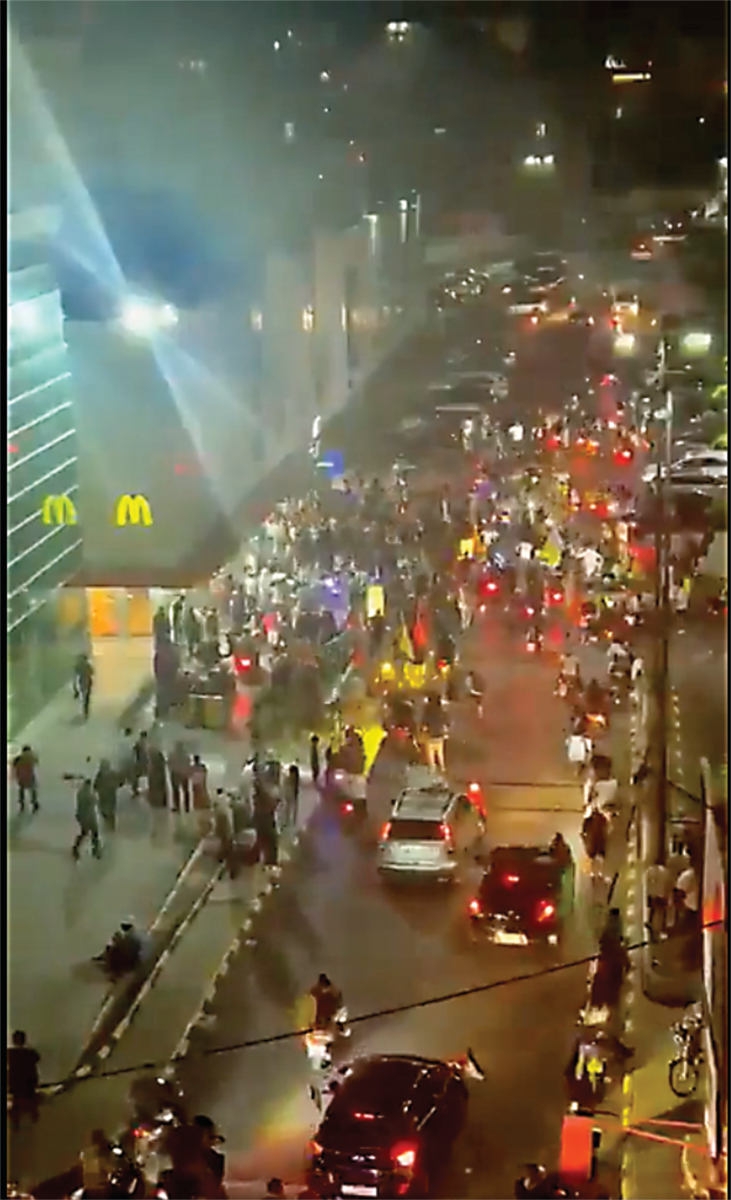
RIYADH: Whenever conflicts erupt in the Middle East, American consumer brands are often among the first targets of public anger. The war in Gaza has been no different, with McDonald’s and Starbucks branches in Lebanon attacked and consumer boycotts announced throughout the region.
These attacks and boycotts echo similar scenes from the time of the Second Intifada in the early 2000s and the Iraq War era, which prompted a ban on Coca-Cola that remained in place in many Arab countries for decades, giving its rival Pepsi a market advantage enjoyed to this day.
As Israel continues its bombardment of the Gaza Strip in retaliation for the Hamas attack of Oct. 7, Arabs have again launched a boycott of American franchises in the region to voice their solidarity with the Palestinians and to protest the perceived bias towards Israel.
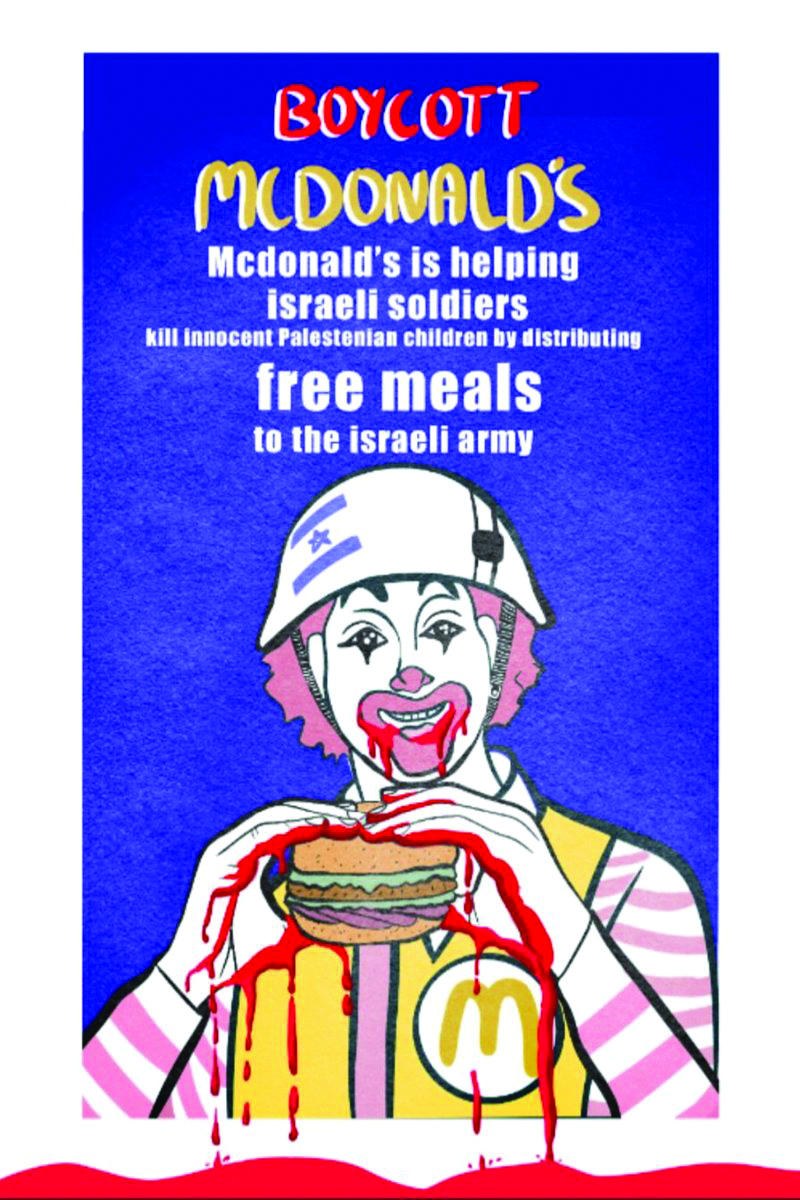
At the heart of the controversy is McDonald’s — the world’s biggest fast-food chain — after the burger giant’s Israeli franchise announced it was sending thousands of meals to Israeli soldiers stationed on the front line against Hamas.
Arabs condemned the company after videos circulated on social media showing uniformed Israeli Defense Force troops enjoying McDonald’s branded burgers, fries and milkshakes — in stark contrast with the hunger and thirst-ravaged Gazan civilians just across the border.
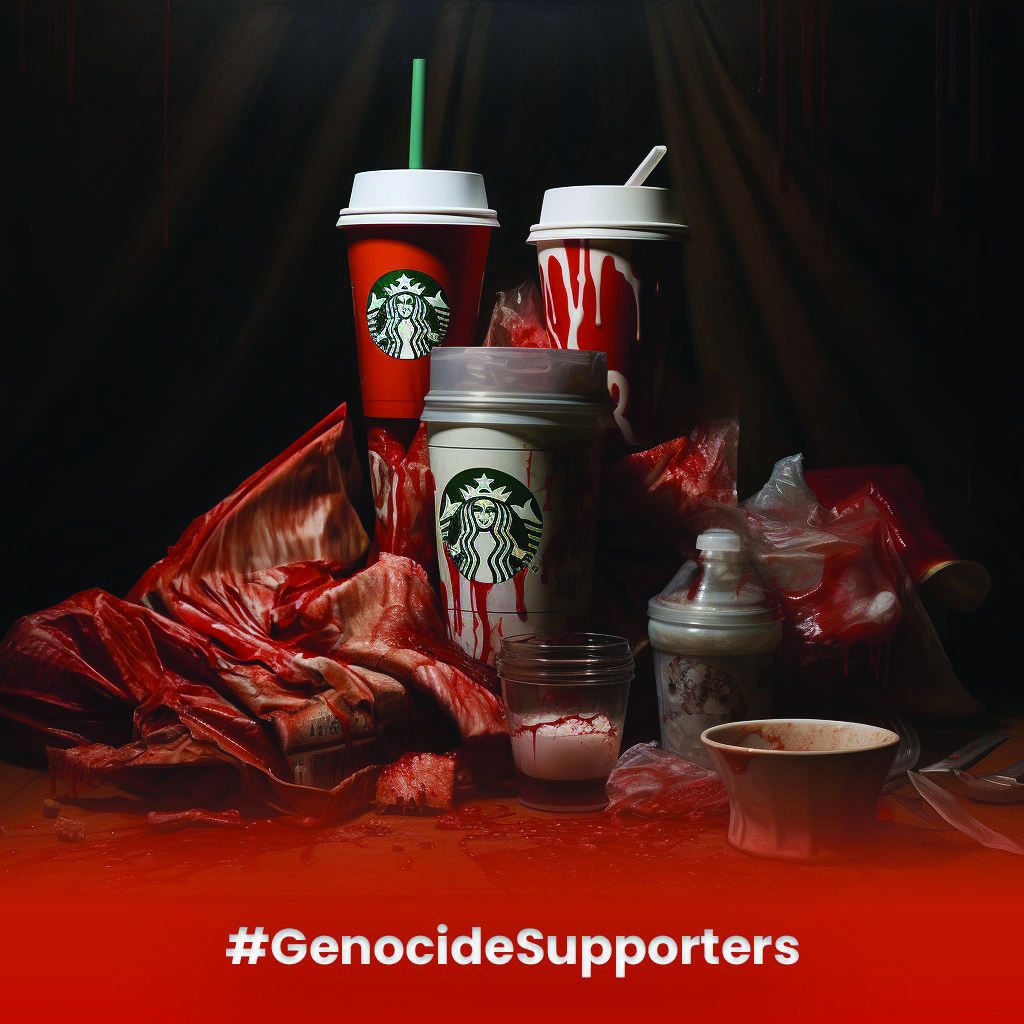
It is not just McDonald’s that has faced a grilling for its perceived pro-Israel stance. Other American brands, including Starbucks, Burger King, Hardee’s, KFC, Pizza Hut, Papa John’s, and Dominos, are also facing boycotts across the Arab world.
“Arab boycotts of American franchises due to the Palestine-Israel conflict highlight the deep-rooted emotions and political activism that this issue stirs in the region,” Ehsan Amin, a 35-year-old Saudi and private sector worker, told Arab News.
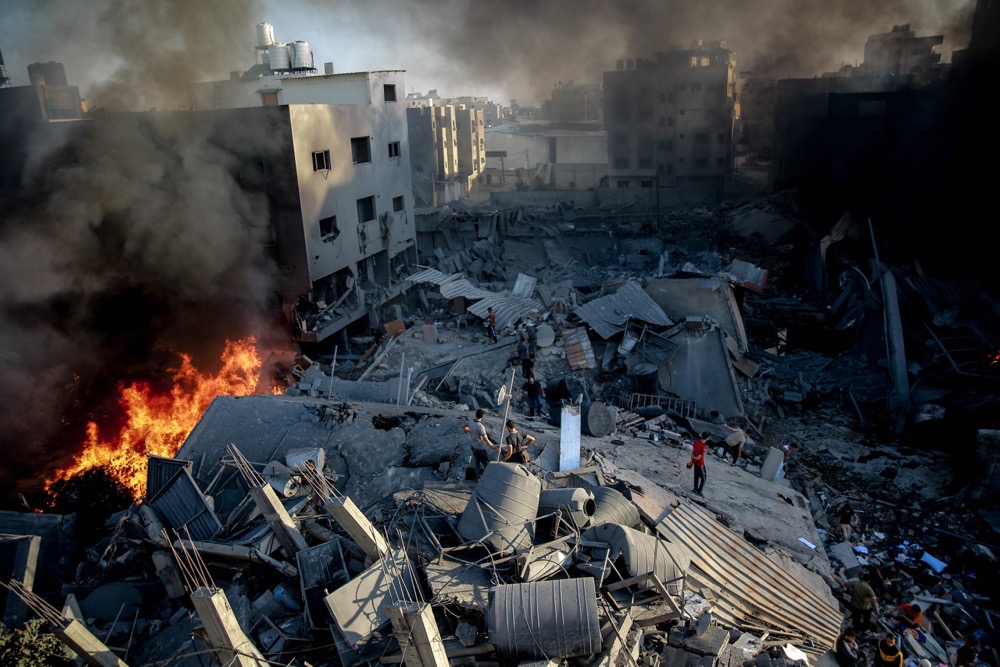
Smoke and fire rise from a levelled building as people gather amid the destruction in the aftermath of an Israeli strike on Gaza City on October 26, 2023. (AFP)
“Every person has their way of showing solidarity. Some protest in the streets and others boycott. I chose to boycott. This serves as a means for my voice to call out the Western bias in favor of Israel.”
Boycotts are a familiar tactic employed by Arab activists against multinational corporations that are viewed as supporters of Israel’s occupation of Palestinian lands in the West Bank and military operations in Gaza.

Since the conflict erupted on Oct. 7, many Arab nations have accused the US of favoring Israel over the Palestinians. With limited means of influencing US policy, Arab consumers are instead voting with their feet and choosing to spurn American brands.
“The recent events in Gaza have expectedly reignited the region’s deep solidarity with the Palestinian people and heightened sensitivity to corporate messaging,” Amjad Ahmad, chairman of the Atlantic Council’s empowerME Initiative, told Arab News.
“For global brands, this is a tenuous time, and they must lean forward to ensure they don’t offend their diverse consumers.
“Unfortunately, this can be challenging for franchisors with disparate local owners. However, this does not absolve them of the responsibility to do so, and most contractual franchise agreements allow them a certain amount of control, especially concerning communications.”
The influence of social media in promoting these boycotts cannot be understated. Platforms like Twitter, Snapchat, TikTok and Instagram have allowed activists to rally support for their cause, sharing information and updates about which companies to boycott and why.
“Given the size and virality of social media, consumer advocacy is more powerful than ever and can have an outsized impact, positively and negatively, on brands,” said Ahmad. “Global brands, particularly, have a unique challenge in managing communications, given their vast and diverse footprint.”
However, customers may not be aware there is a distinction between a company’s global management and its regional franchises. Indeed, the actions of McDonald’s Israel do not necessarily reflect the views of the company as a whole or its other branches.
In fact, McDonald’s outlets in Saudi Arabia, Qatar, Oman, the UAE, Malaysia, Pakistan and other states have offered support to the Palestinian people by providing financial relief and messages of solidarity.
Following the news that McDonald’s Israel was donating meals to IDF soldiers, McDonald’s KSA released a statement on X emphasizing this was an independent decision, stressing that the actions of individual franchise partners do not reflect company policy.
“As a purely Saudi company, we have been proud, since our inception, of our Saudi identity, and our continuous contribution to supporting our economy and national community, and adopting social and humanitarian matters that it (our community) is concerned with,” McDonald’s KSA said.
In alignment with these values, “we are delighted to announce that McDonald’s KSA will be making a donation of SR2 million ($533,000) to support the relief efforts for the citizens of Gaza, may God help them. This contribution follows coordination with the relevant official authorities.”
Franchises in Qatar, Kuwait, Oman, Turkiye, Bahrain, Pakistan, the UAE, Jordan, Lebanon and Egypt have likewise donated money to Gaza.

Gazan health authorities said at least 6,500 people have been killed since Oct. 7, 2023. (AFP)
The vast majority of McDonald’s locations are run by local franchise operators. These operators act in many ways as independent businesses, setting wages and prices and, when they feel appropriate, making statements or donations at their discretion.
When American restaurants expand internationally, they typically rely on local franchise operators because regional business owners are better equipped to deal with local dynamics and appeal to local tastes. In doing so, they also cede some control over the business.
The effectiveness of boycotts in bringing about meaningful political change therefore remains a topic of debate. Critics argue that the impact on American franchises may be limited, but proponents believe that it serves as a powerful expression of solidarity and resistance.
“Middle East consumers can pressure brands by voting with their wallets, especially those brands with meaningful revenues in the region. Their actions may also spark a worldwide movement, multiplying the effect,” said Ahmad.
“Using economic pressure can be the most potent tool to protest, especially in countries with limited freedoms. Historically, financial pressure or boycotts have been used effectively, including during the US civil rights movement, in apartheid South Africa, and most recently against Russia.
“With the US’s unequivocal and unwavering support of Israel, US brands are particularly vulnerable. They may be negatively impacted in the short term with an elevated risk for long-term damage. Just as popular US brands prospered with the rise of America’s soft power, they will weaken with its potential decline.”
One of the most prominent instances of such a boycott occurred after the US officially recognized Jerusalem as the capital of Israel in 2017 and subsequently relocated its embassy to the city from Tel Aviv.
This move was met with condemnation across the Arab world, as it was seen as a significant deviation from long standing international agreements regarding the status of Jerusalem.
In response, many Arab consumers and businesses initiated boycotts of American franchises like McDonald’s, Starbucks, and KFC.
In some cases, boycotts have had tangible financial impacts, but they can be hard to sustain long term.
“While we may not always have a substantial economic impact on the franchises, they are a symbol of solidarity with the Palestinian cause,” boycotter Amin told Arab News.
“They are also a way for us to engage with a complex geopolitical issue that deeply resonates with the region.”