The great secret of our time is that there are still uncharted frontiers to explore and new inventions to create.
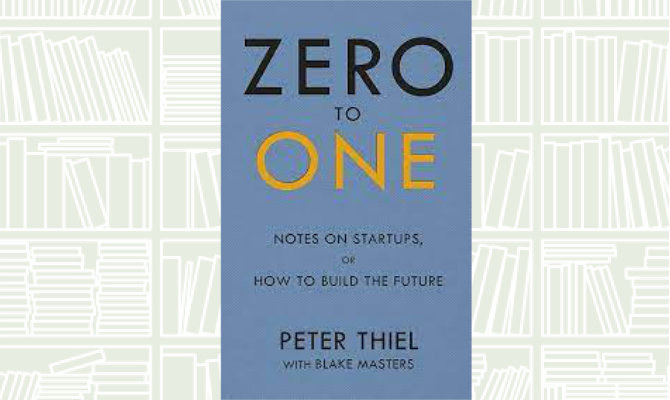
“In Zero to One,” legendary entrepreneur and investor Peter Thiel shows how we can find singular ways to create those new things, says a review published on goodreads.com.
Thiel begins with the contrarian premise that we live in an age of technological stagnation, even if we’re too distracted by shiny mobile devices to notice.
Information technology has improved rapidly, but there is no reason why progress should be limited to computers or Silicon Valley.

What We Are Reading Today: Zero to One by Peter Thiel
https://arab.news/bkcvs
What We Are Reading Today: Zero to One by Peter Thiel
Book Review: ‘A Long Walk from Gaza’ by Asmaa Alatawna
JEDDAH: Asmaa Alatawna’s “A Long Walk from Gaza,” translated from Arabic by Caline Nasrallah and Michelle Hartman, depicts a Gaza — with its people, streets, routines, and rhythms of life — that no longer exists.
In that sense, the novel is not purely the story of a young woman’s search for freedom. It is also a form of preservation, a historical record of a society that has been largely obliterated by Israeli occupation forces.
The novel was published in 2024 by Palestinian American publisher Interlink Books and tells a story that parallels the author’s own background of growing up in Gaza and moving to Toulouse.
The unnamed narrator’s tale takes on a complex and nonlinear structure and unfolds in reverse, moving backward through memories. It opens at a moment when she is inching toward a tentative sense of liberation and relief after arriving in Europe as a refugee.
It then gradually moves to her teenage years and early childhood marked by Israeli military occupation, the suffocating control of her father’s authority, and the rush of first love, rebellion and loss.
Nasrallah and Hartman’s translation is precise and sensitive, carrying the immediacy of the narrator’s inner world and textures of Palestinian life.
The narrative structure mimics the way memory can flow for someone living with trauma: Liberation is not clean or complete and exists in conversation with what came before.
What makes “A Long Walk from Gaza” so arresting is its commitment to a young woman’s voice and experiences, without apology.
The novel makes room for difficult conversations about patriarchy and misogyny in Palestinian society, without reducing them to defining traits. Instead, they are situated within the broader realities of colonization and military occupation, showing how cycles of violence can settle into families. This makes the protagonist’s efforts to break away and build a different life for herself both arduous and personal.
At one point, she notes, “What happened to me shouldn’t affect people’s perception of the Palestinian cause or obscure the suffering of the entire Palestinian people.”
Her disclaimer exposes the cruel calculus of optics, under which personal pain is sometimes weighed against political utility. It makes one wonder how many stories remain untold for this reason.
Alatawna does not romanticize suffering and also refuses to flatten Palestinian life into a single story. Moments of humor, friendship, and joy appear alongside violence and fear.
“A Long Walk from Gaza” was first published in Arabic in 2019, making it not only a powerful work of literature, but also an archive of memory. To read it now is to be reminded that storytelling can sometimes embody the refusal to be forgotten.


