Insulators in Farasan Islands Reserve to protect birds

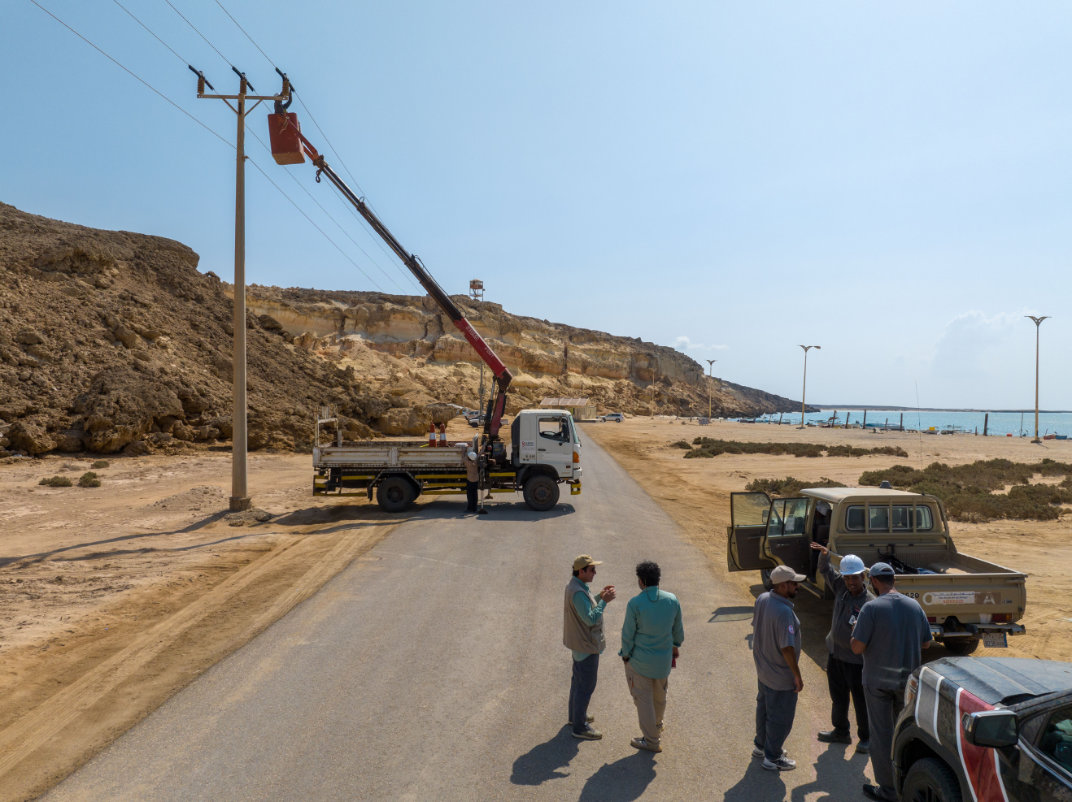
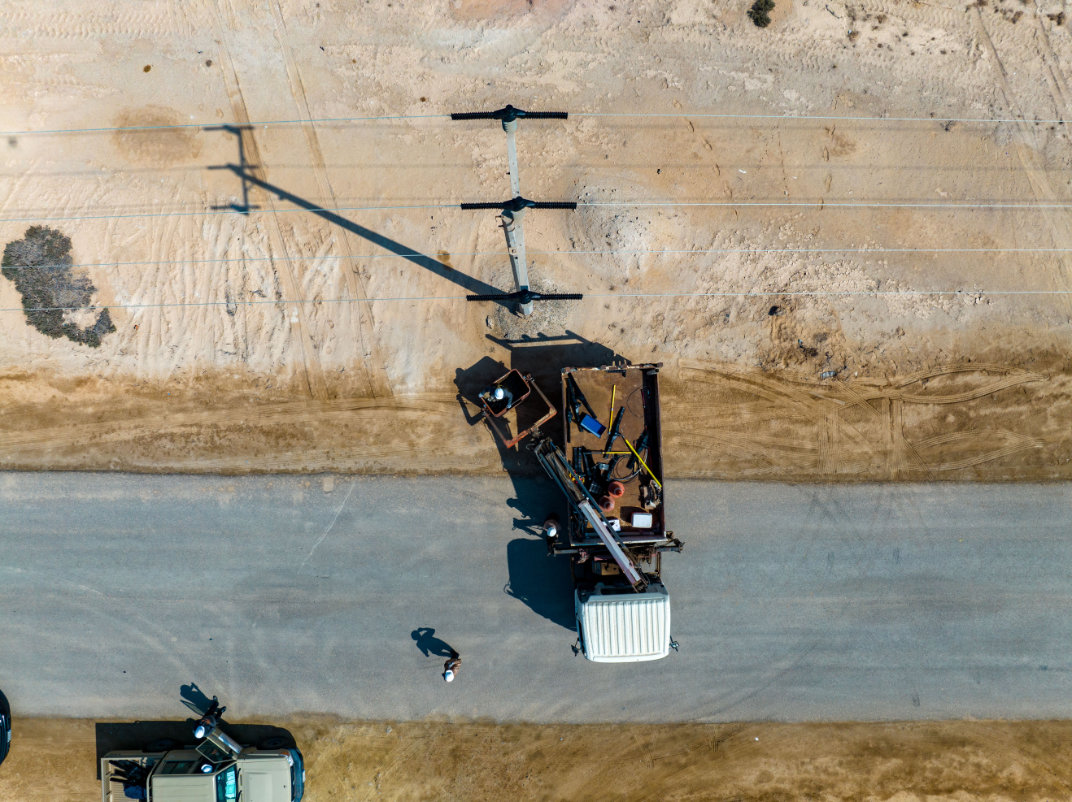
Workers install insulators on medium-voltage power lines in Farasan Islands to protect birds. (Supplied)
Short Url
Updated 23 October 2023
Follow

Insulators in Farasan Islands Reserve to protect birds

  • The project was carried out in partnership with BirdLife International and the Saudi Electricity Co.

MAKKAH: Saudi Arabia’s National Center for Wildlife announced that it has finalized the installation of insulators on medium-voltage power lines to protect birds from electrocution in the Farasan Islands Reserve.

This comes as part of a project implemented in cooperation with the Saudi Electricity Co. to install insulators in all spots that are hazardous for birds.

Dr. Abdullah Al-Salem, director of the birds department at the National Center for Wildlife, told Arab News that power lines are one of the main fatal threats to migratory, endangered and resident birds, as they negatively affect them and their habitats in their breeding, wintering and migration grounds.

He explained that 130 years ago, electrocution caused by medium-voltage power lines became one of the main threats to migratory and endangered birds all over the world.

He also pointed out that many bird species suffer great losses and are significantly decreasing in number due to electrocution. 
Owing to the Kingdom’s important location for migratory birds between Asia, Europe and Africa, the center is committed to protecting, developing and ensuring the sustainability of wildlife and biodiversity in terrestrial and marine environments. It has conducted studies and research on the risks of power lines in some areas that are important for birds, which play an important and crucial role in environmental balance and biodiversity.

Al-Salem added that the center has documented the death of many bird species due to electrocution, such as Aquila Nipalensis, Pandion Haliaetus and Pelecanis Rufescens.

He revealed that the center has started preparing the program and is adopting global best practices to reduce risks of bird electrocution, installing insulators on medium-voltage power lines in Ushaiqer and Al-Qunfudah.

The project was carried out in partnership with BirdLife International and the Saudi Electricity Co. 
“Utility poles are attractive locations for many birds in open regions with low tree density, where they look for their preys and watch out for hunting, in addition to poles close to garbage bins where food is available,” he said. “Medium-size and large birds face the risk of electrocution when they’re sitting or perching on utility poles or the connected cables.”

He explained: “Electrocution occurs when birds touch the conductors, as electricity travels through their bodies, causing severe and deadly injuries and burns that can set fire to the surrounding dry plants. Death can also occur after they fall from the pole to the ground and get crashed immediately after electrocution.”

Al-Salem stated that 682 studies were conducted to assess the risks facing raptors and birds migrating across the Eastern Mediterranean trajectory from breeding grounds in Europe to wintering grounds in the Middle East and Africa, which extends across 13 countries, as part of the “Egyptian Vulture New LIFE” project funded by the EU.

They include 52 studies carried out inside the Kingdom, and aim to determine the threats facing birds, limit hazards, and implement appropriate measures to protect birds, as 1 million predatory birds migrate through this trajectory annually, including 12 endangered species.


Ethiopian Cultural Days brings aroma of coffee, flavorful food to Alsuwaidi Park

Updated 3 sec ago
Follow

Ethiopian Cultural Days brings aroma of coffee, flavorful food to Alsuwaidi Park

  • The Global Harmony Cultural Series is open to visitors every day from 4:00 p.m. until midnight

RIYADH: Ethiopian Ambassador to Saudi Arabia Muktar Kedir Abdu attended the opening of Ethiopian Cultural Days at Alsuwaidi Park in Riyadh on Thursday.

The Ministry of Media and the General Entertainment Authority organized Ethiopian Cultural Days as part of the Global Harmony Cultural Series, which has focused on several other countries so far, including Yemen, Indonesia, Syria, and Uganda.

The event witnessed the presence of the Ethiopian ambassador to Saudi Arabia, Muktar Kedir Abdu. (AN photo Huda Bashatah)

The Global Harmony Cultural Series is open to visitors every day from 4:00 p.m. until midnight.

During Ethiopian Cultural Days, guests will see Ethiopian dance groups showcasing diverse folk dances from various regions of Ethiopia.

The Global Harmony Cultural Series opens its doors for visitors every day from 4:00 PM until midnight, welcoming visitors from all nationalities and age groups to enjoy food, culture, live performances, and more. (AN photo Huda Bashatah)

“What caught my attention the most was the DJ. My friends and I come almost every day for the DJ,” Turki Mesmeh, a frequent visitor to Global Harmony, told Arab News. “They brought their cultures to us, all the way to the Alsuwaidi neighborhood.”

Ethiopia has an enormously rich history. According to National Geographic, the ancient African kingdom of Aksum was based in what is now northern Ethiopia and parts of Eritrea. It emerged as a powerful and wealthy civilization from the 1st to the 10th century CE, controlling the trade routes between the Roman Empire, India, and the Arabian Peninsula. Ethiopia was also among the first countries in Africa to adopt Christianity.

The Global Harmony Cultural Series opens its doors for visitors every day from 4:00 PM until midnight, welcoming visitors from all nationalities and age groups to enjoy food, culture, live performances, and more. (AN photo Huda Bashatah)

Guests to Ethiopian Cultural Days will also discover a range of Ethiopian cuisine.

“The most important dishes are tibs and kitfo. Tibs is meat, fried with tomatoes and other ingredients,” Welday Meles, owner of the Ethiopian restaurant Lucy, told Arab News. 

The Global Harmony Cultural Series opens its doors for visitors every day from 4:00 PM until midnight, welcoming visitors from all nationalities and age groups to enjoy food, culture, live performances, and more. (AN photo Huda Bashatah)

Kitfo is raw minced beef mixed with chili and clarified butter, and is similar to steak tartare.

Another popular dish is beyaynetu, a dish — or series of small dishes — made from a wide variety of ingredients and served with injera — Ethiopia’s famous spongy flatbread made from fermented teff flour.

It is widely known that Ethiopia is the origin of coffee, the beverage that dominates global consumption, and this goes back to an ancient story about a goat herder named Kaldi, who noticed his goats becoming unusually energetic after eating red berries from a particular tree. These red berries were coffee beans. (AN photo Huda Bashatah)

And no celebration of Ethiopia would be complete without coffee. Not only because the coffee plant originated there — legend has it that a goat herder named Kaldi discovered coffee when he noticed that his animals became unusually energetic after eating red berries from a particular tree — but also because the country has preserved its traditional rituals, diverse varieties, and deep cultural connection to coffee, remaining one of its most significant global producers.

Rahika Mohammed, a participant at the event, explained that, in Ethiopia, coffee is commonly served with “popcorn and mastic incense,” adding that “the cup must be full when served.”