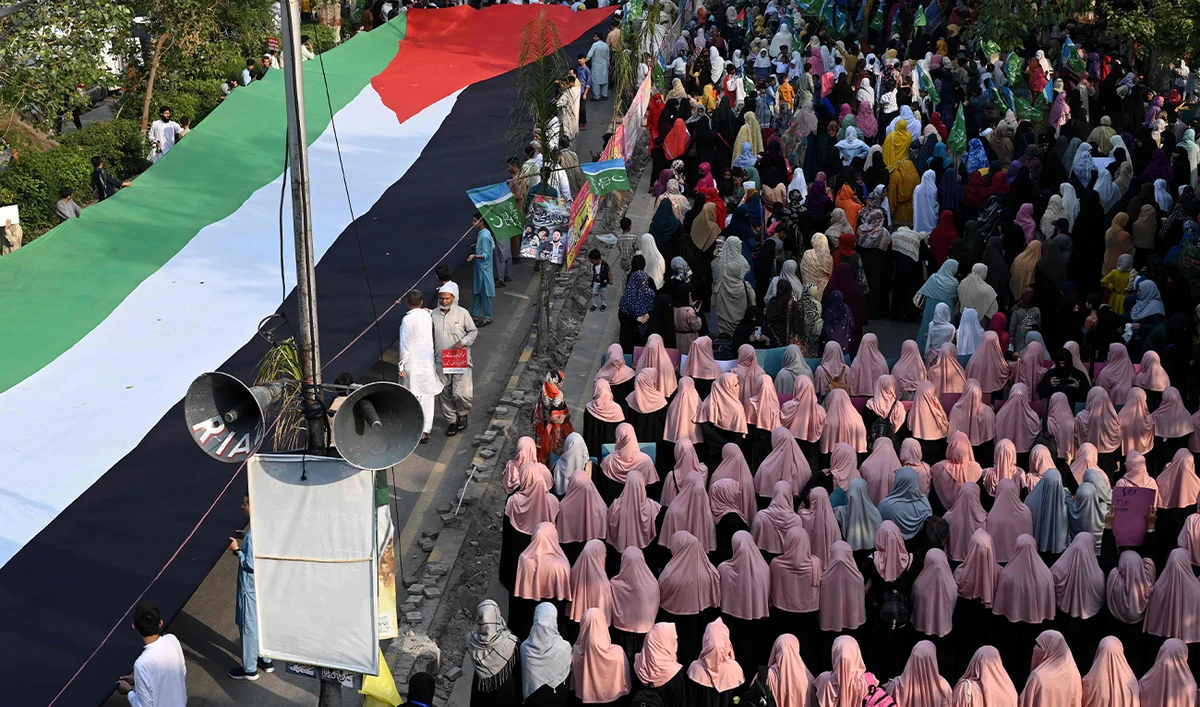
Thousands protest in Pakistan following Friday prayers, decrying Israel’s continuing airstrikes on Gaza

Supporters of Pakistan's Islamist political party Jamaat-e-Islami take part in a rally to show solidarity with Palestinians, in Lahore on October 13, 2023. (AFP)
Short Url
Updated 13 October 2023
Follow

Thousands protest in Pakistan following Friday prayers, decrying Israel’s continuing airstrikes on Gaza

  • Protesters criticize the US for ignoring the use of phosphorus bombs by Israel on Palestinian residential areas
  • Gaza is home to 2.3 million Palestinians who have been living under a land, air and sea blockade since 2006

ISLAMABAD: Thousands of people in Pakistan protested against Israel’s aerial attacks on Gaza’s residential neighborhoods in response to Hamas’s surprise weekend offensive after attending Friday prayer congregations in different cities.

Hamas launched a deadly attack last Saturday, reportedly killing hundreds and citing the deteriorating living conditions under Israeli occupation as the motive.

In response, Israel mobilized its forces to besiege the Palestinian territory and deployed warplanes to target people and public infrastructure.

Pakistani political and religious parties staged dozens of demonstrations in different urban centers while reacting to these developments wherein they criticized Israel and its international supporters, including the United States.

A senior leader of Jamaat-e-Islami (JI) party paid tribute to Hamas while addressing a rally in Karachi in the afternoon.

“We salute the freedom fighters of Hamas who are few in number but are standing before Israel and its occupying forces,” Hafiz Naeemur Rahman said. “We cannot go to Palestine and fight, but we can protest on the streets against Zionist aggression and Jewish agents.”



Supporters of the religious group Tehreek-e-Labbaik Pakistan, take part in a rally against Israeli airstrikes on Gaza and to show solidarity with the Palestinians, in Karachi, Pakistan, October 13, 2023. (AP)

He said the Pakistani government and its army chief should also make “a clear statement about Israel.”

“The ruling classes of the country are afraid to step forward and help Palestinians,” the JI leader continued. “For 75 years, Palestinian Muslims have been resisting Israel. The people of Gaza are under siege for 18 years and are targeted by Israel.”

He criticized US President Joe Biden for ignoring phosphorus bombs that were being dropped by Israel on Palestinian children while asking the residents of Karachi to participate in a solidarity march organized by his party on October 15.
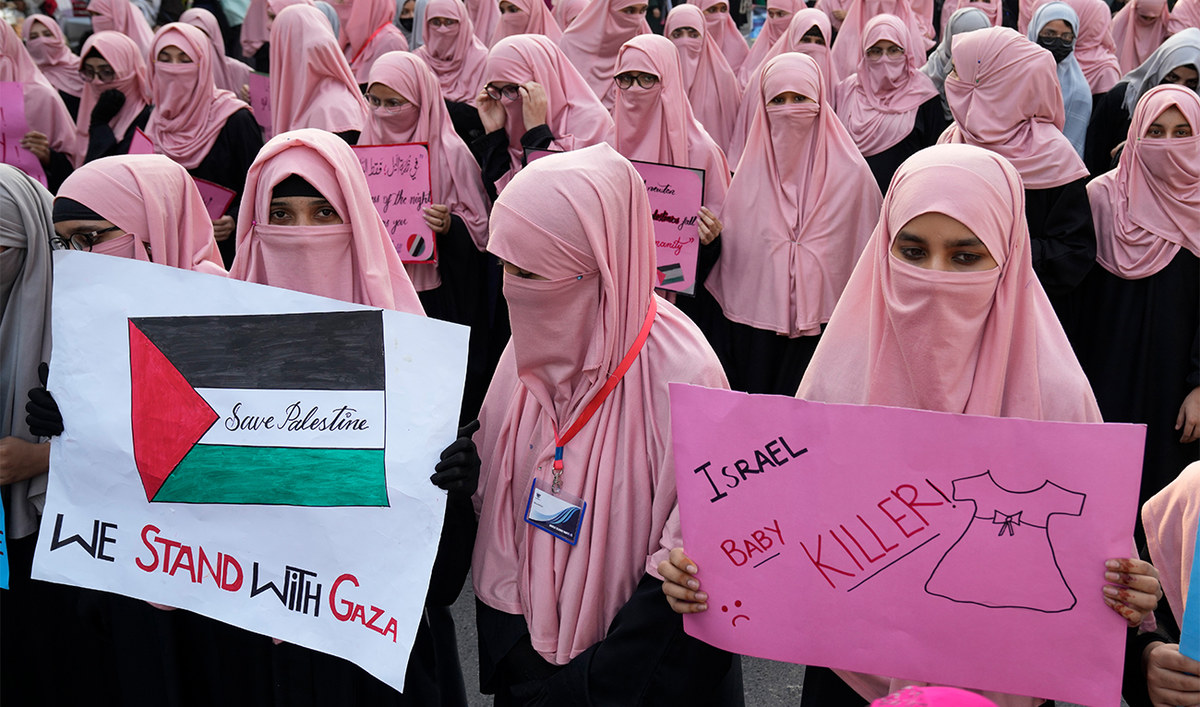


Supporters of the religious party Jamaat-e-Islami take part in a rally against Israeli airstrikes on Gaza and to show solidarity with the Palestinians, in Lahore, Pakistan, on October 13, 2023. (AP)

Similar rallies were also arranged in other parts of the country including Lahore in Punjab, Peshawar in Khyber Pakhtunkhwa and Quetta in Balochistan province.

Former prime minister Imran Khan’s Pakistan Tehreek-e-Insaf (PTI) party said its supporters poured into the streets of Lahore to raise their voice against Israel but were arrested by the police.

The Pakistan government has condemned the “indiscriminate and disproportionate use of force by Israeli authorities” since the beginning of the conflict which is continuing to escalate.

The United Nations asked the Israeli army earlier today to rescind its order for the immediate relocation of 1.1 million people from north to south Gaza amid relentless aerial bombardment.

Gaza is a cramped and impoverished territory where 2.3 million residents live and which has been under a land, air and sea blockade since 2006.

Israel has now cut off water, electricity and food supplies, leaving the enclave in a total state of siege.
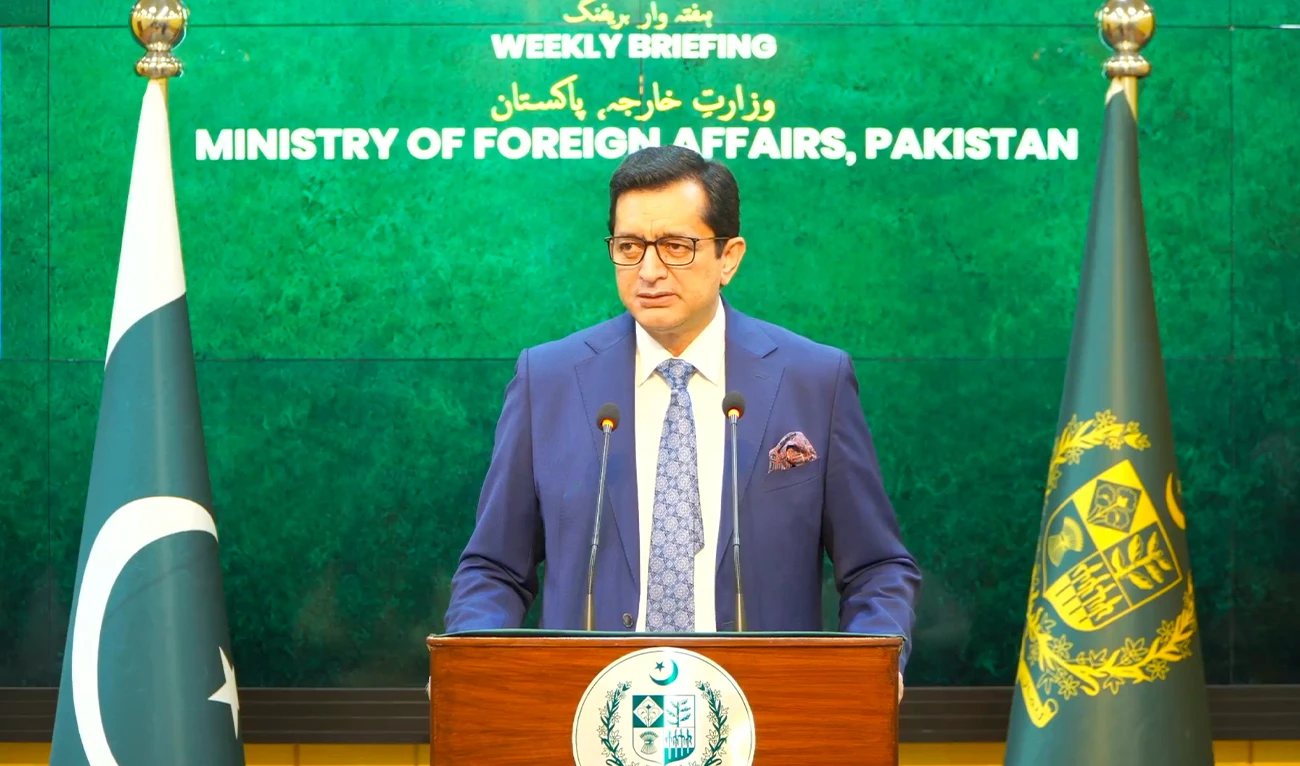

Pakistan PM orders accelerated privatization of power sector to tackle losses

Updated 15 December 2025
Follow

Pakistan PM orders accelerated privatization of power sector to tackle losses

  • Tenders to be issued for privatization of three major electricity distribution firms, PMO says
  • Sharif says Pakistan to develop battery energy storage through public-private partnerships

ISLAMABAD: Pakistan’s prime minister on Monday directed the government to speed up privatization of state-owned power companies and improve electricity infrastructure nationwide, as authorities try to address deep-rooted losses and inefficiencies in the energy sector that have weighed on the economy and public finances.

Pakistan’s electricity system has long struggled with financial distress caused by a combination of factors including theft of power, inefficient collection of bills, high costs of generating electricity and a large burden of unpaid obligations known as “circular debt.” In the first quarter of the current financial year, government-owned distribution companies recorded losses of about Rs171 billion ($611 million) due to poor bill recovery and operational inefficiencies, official documents show. Circular debt in the broader power sector stood at around Rs1.66 trillion ($5.9 billion) in mid-2025, a sharp decline from past peaks but still a major fiscal drain. 

Efforts to contain these losses have been a focus of Pakistan’s economic reform program with the International Monetary Fund, which has urged structural changes in the energy sector as part of financing conditions. Previous government initiatives have included signing a $4.5 billion financing facility with local banks to ease power sector debt and reducing retail electricity tariffs to support economic recovery. 

“Electricity sector privatization and market-based competition is the sustainable solution to the country’s energy problems,” Prime Minister Shehbaz Sharif said at a meeting reviewing the roadmap for power sector reforms, according to a statement from the prime minister’s office.

The meeting reviewed progress on privatization and infrastructure projects. Officials said tenders for modernizing one of Pakistan’s oldest operational hubs, Rohri Railway Station, will be issued soon and that the Ghazi Barotha to Faisalabad transmission line, designed to improve long-distance transmission of electricity, is in the initial approval stages. While not all power-sector decisions were detailed publicly, the government emphasized expanding private sector participation and completing priority projects to strengthen the electricity grid.

In another key development, the prime minister endorsed plans to begin work on a battery energy storage system with participation from private investors to help manage fluctuations in supply and demand, particularly as renewable energy sources such as solar and wind take a growing role in generation. Officials said the concept clearance for the storage system has been approved and feasibility studies are underway.

Government briefing documents also outlined steps toward shifting some electricity plants from imported coal to locally mined Thar coal, where a railway line expansion is underway to support transport of fuel, potentially lowering costs and import dependence in the long term.

State authorities also pledged to address safety by converting unmanned railway crossings to staffed ones and to strengthen food safety inspections at stations, underscoring broader infrastructure and service improvements connected to energy and transport priorities.