


JEDDAH: A landmark report released during the Middle East and North Africa Climate Week, which ran here from Oct. 8 to 12, highlights the challenges that Saudi Arabia might face in a world that is warmer by 3 degrees Celsius.
Titled “Climate Futures Report: Saudi Arabia in a 3-Degrees Warmer World,” the report highlights the stark reality that Saudi Arabia is witnessing climate change at an accelerated pace compared to other regions.
The 133-page study was generated by King Abdullah University of Science and Technology or KAUST, AEON Collective, and King Abdullah Petroleum Studies and Research Center.
It noted that while the global average temperature is potentially on track to rise by nearly 3 C by the end of this century, relative to the pre-industrial period of 1850 to 1900, the MENA region, including Saudi Arabia, could experience that change much sooner.
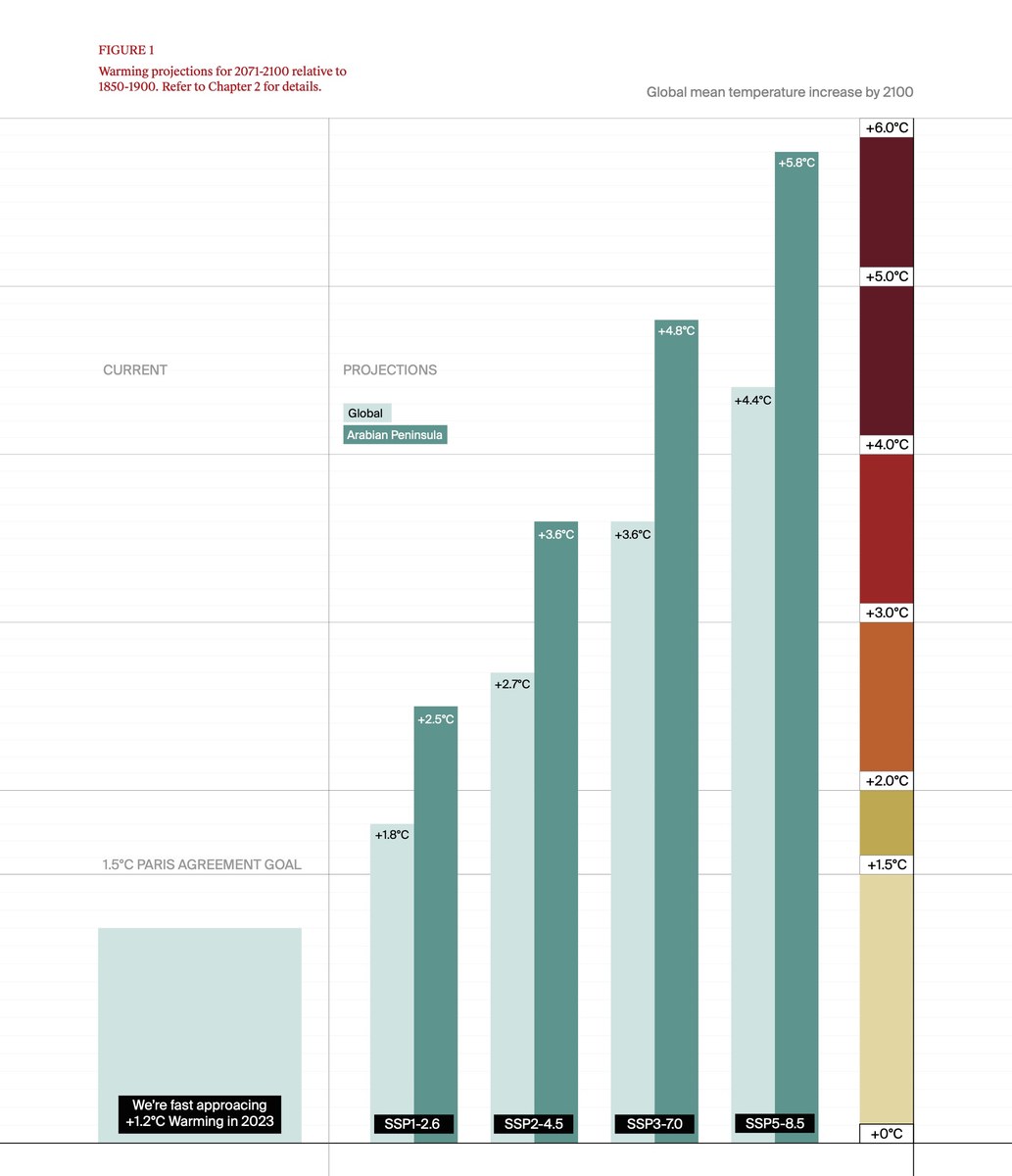
Infographic from the "Climate Futures Report: Saudi Arabia in a 3-Degrees Warmer World"
The exact outcome depends on the specific socio-economic and emissions scenarios, emphasizing the important relationship between policy choices, socio-economic growth, and climate change.
Under the most extreme scenario, temperatures in the Arabian Peninsula could rise by 5.6 C by the end of the century, the report stated.
Matthew McCabe, a professor at KAUST who acted as the coordinating editor, highlighted the need for this assessment.
“The climate futures report fills a major gap, offering a comprehensive overview of the interlinked and cascading consequences that climate change will have on different sectors in Saudi society, including the degradation of natural ecosystems, the increasing stress on urban environments, and the direct impacts on human health,” he said.
Princess Mashael AlShalan from the AEON Collective, and one of the report’s authors, added: “Climate change doesn’t only challenge our environment, it affects every facet of our lives, our health, food, water, as well as our economy. Our actions today will decide whether we can weather these challenges or face irreversible damages.”
The report offers a comprehensive analysis of the ramifications of climate change on Saudi Arabia’s diverse habitats. Marine systems face significant stress, with phenomena like coral bleaching becoming more prevalent.
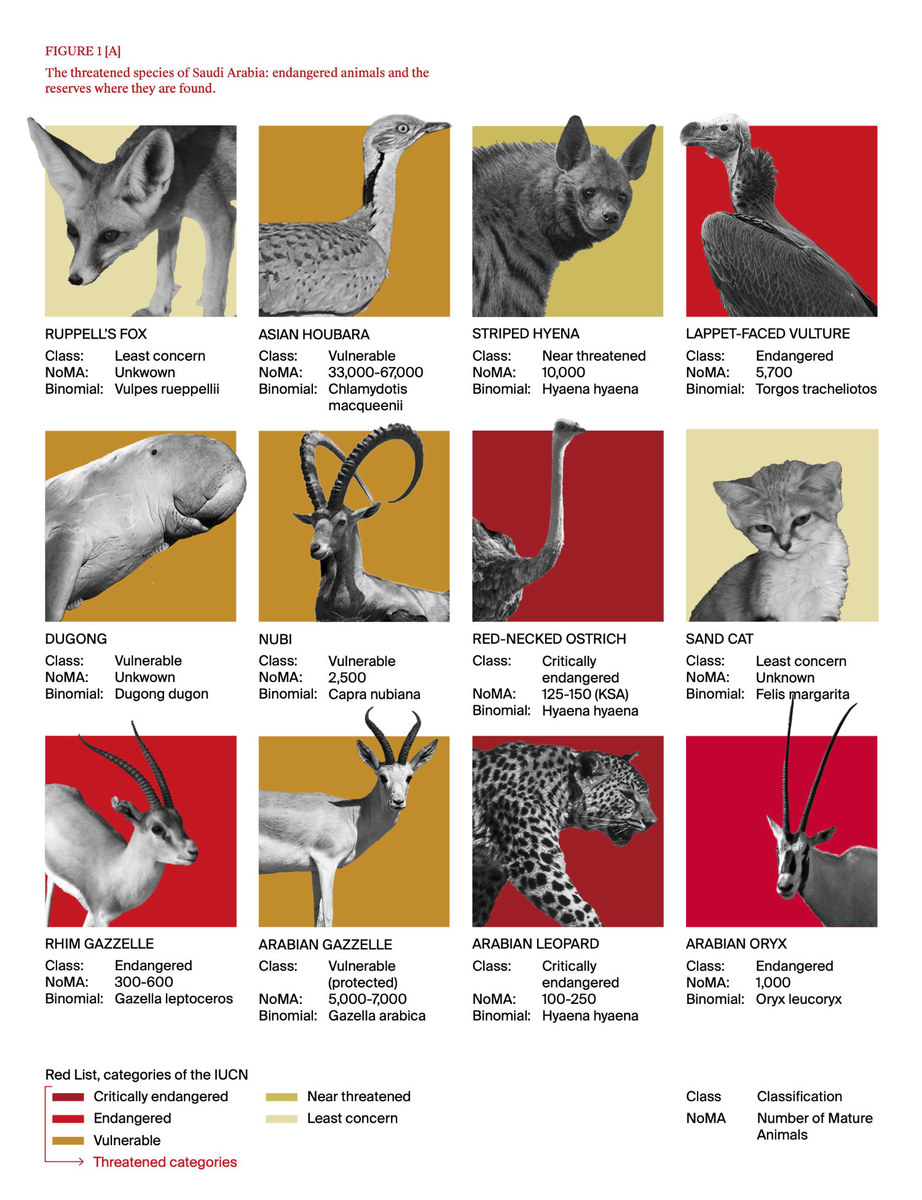
Infographic from the "Climate Futures Report: Saudi Arabia in a 3-Degrees Warmer World"
Deserts might expand further, driven by irregular rainfall, increasing temperatures, and overgrazing, posing threats to native vegetation and wildlife.
The impacts on human health will also become more pronounced, with deteriorating air quality exacerbating respiratory issues, and growing concern that climate change might lead to more favorable conditions for vector-borne diseases such as malaria and dengue.
However, the report stresses that many of the negative consequences of climate change can still be averted.
Recent years have witnessed Saudi Arabia’s willingness to pursue transformational change, with the protection, preservation, and restoration of natural capital a primary focus.
Given its vast solar potential, commitment to economic diversification under Saudi Vision 2030, and its strategic importance in the global energy market, the Kingdom is uniquely positioned to become a global leader in climate-change mitigation and adaptation, the report stated.
(With SPA)


