

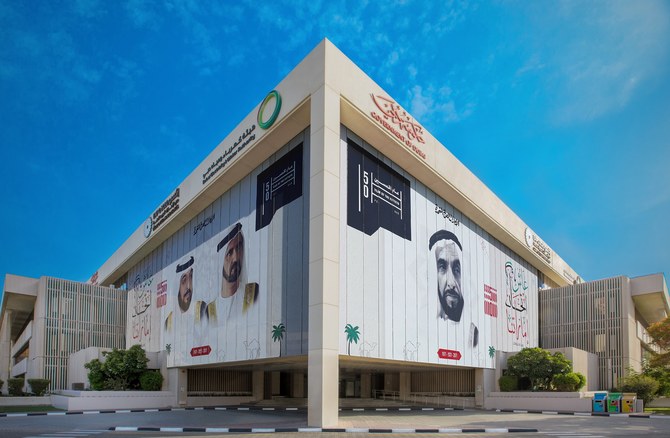
DEWA inks 30-year deal with ACWA Power for desalination plant  

In August, DEWA announced ACWA Power as the preferred bidder for the first phase of the project, with a 3.35 billion dirham ($914 million) investment.  Photo/Supplied
Short Url
Updated 04 October 2023
Follow

DEWA inks 30-year deal with ACWA Power for desalination plant  

RIYADH: In a bid to further boost its desalination capacity, the Dubai Electricity and Water Authority has inked a 30-year water purchase agreement with Saudi Arabia’s ACWA Power for developing the first phase of the seawater reverse osmosis plant at Hassyan.  

The completion of this initial phase is expected to boost DEWA’s water desalination capacity to 670 million imperial gallons per day by 2027, up from the current 490 MIGD, as stated in a press release.  

In August, DEWA announced ACWA Power as the preferred bidder for the first phase of the project, with a 3.35 billion dirham ($914 million) investment. 

Considered the world’s largest project of its kind, the Hassyan IWP is DEWA’s first endeavor under the independent water producer model, spanning an area of 252,300 sq. meters. It is part of DEWA's initiative to raise its water desalination capacity to 730 MIGD by 2030. 

Mohammad Abunayyan, founder and chairman of ACWA Power, said: “The Hassyan IWP will be the largest plant of its kind in the world, and we have set a new record for the lowest levelized water tariff. The plant will be highly efficient, desalinating water through reverse osmosis powered by solar energy.”   

He added: “With this project, we are reaffirming our commitment with our partners toward achieving the Dubai Clean Energy Strategy 2050.”   

Saeed Mohammed Al-Tayer, managing director and CEO of DEWA, said that this agreement with ACWA Power will help carry out desalination in Dubai in a sustainable manner, thus contributing to Dubai Clean Energy Strategy 2050 and the Dubai Net Zero Carbon Emissions Strategy 2050.   

“We are building water production plants based on seawater reverse osmosis technology, which require less energy than multi-stage flash distillation plants, making it a more sustainable choice for water desalination. By 2030, DEWA aims to produce 100 percent of desalinated water by a mix of clean energy and waste heat,” added Al-Tayer.   

In August, DEWA selected state-owned renewable energy firm Masdar to construct and manage the 1,800-megawatt sixth phase of the Mohammed bin Rashid Al Maktoum Solar Park, as part of its clean energy promotion efforts.  

With an estimated cost of up to 5.51 billion dirhams, the solar park will be developed under the independent power producer model. 

A report released in August by UK-based Global Water Intelligence revealed that ACWA Power is the world’s largest water developer outside of China.  

ACWA Power leads the list of top global water developers with 6.8 million cubic meters per day of gross capacity and 3.2 million cubic meters per day of net capacity.


Islamic banks’ market share in Turkiye rises to 9.2%: Fitch Ratings

Updated 9 sec ago
Follow

Islamic banks’ market share in Turkiye rises to 9.2%: Fitch Ratings

RIYADH: Islamic banks in Turkiye lifted their asset market share to 9.2 percent in 2025 from 8.1 percent a year earlier, as financing and deposits outpaced the broader banking sector, a new analysis showed. 

In its latest report, Fitch Ratings said financing and deposit market shares rose to 7.9 percent and 10.4 percent, respectively, by the end of 2025, compared with 7.3 percent and 9.4 percent in 2024.

The agency noted that new digital Islamic banks are emerging in the country, with investment from Gulf Cooperation Council countries expected to continue. 

Turkiye’s strong ties with Islamic countries across the Balkans, Africa and the Middle East support the development of its Islamic banking sector, attracting investors and contributing to the industry’s growth.

In its latest report, Fitch stated: “Three recently established private Islamic banks (two digital) grew rapidly in the first nine months of 2025. Investment in digital participation banking from the Gulf Cooperation Council countries underscores the potential for further investment from the region.” 

It added: “Planned establishment of new participation banks, and rapid growth of recently established banks – albeit from small bases – means that the segment landscape may be reshaped in 2026.” 

Dubai Islamic Bank PJSC’s investment in digital bank TOM underscores the potential for further GCC investment. 

Turkish regulators have approved the establishment of Halk Katilim Bankasi A.S. and Adil Katilim Bankasi A.S. (digital), while BIM Birlesik Magazalar A.S.’s application is pending. 

Fitch added that state-owned participation banks may merge or pursue initial public offerings, potentially reshaping the banking landscape. 

The report predicts Islamic banks’ market share will rise further in 2026, supported by strong internal capital generation and growth appetite. However, the non-performing financing ratio may increase moderately due to high inflows. 

“The segment’s non-performing financings ratio deteriorated to 2 percent at end-2025 compared to 1.2 percent in 2024 but remained below the sector average of 2.5 percent,” said Fitch. 

It added: “We expect pressure to persist given still-high financing rates, high but declining inflation, and the sensitivity of unsecured retail (lower share than conventional banks) and SME segments to economic cycles. We forecast a moderate increase in the segment NPF ratio in 2026.”