PESHAWAR: An array of shops selling dry fruits can be seen on Ashraf Road in the Walled City area of Pakistan’s northwestern Peshawar city. A few years ago, the dry fruits market here housed many more shops and saw much hustle and bustle. It’s a different scene altogether now.
Pakistan’s inflation was clocked in at 31.4 percent for the month of September, driven largely by the government’s move to hike fuel and energy prices. As the country reels from an economic meltdown, the masses continue to suffer.
And so does the business of dry fruits in Peshawar.
According to Peshawar’s Dry Fruits Association, 350 shops selling dry fruits out of 500 in the Walled City area closed during the last two years.
“The reason [for shops closing] is high inflation and the government has imposed strictness on the Torkham border and Wana [border with Afghanistan],” Muhammad Yousuf, president of Peshawar’s Dry Fruits Association, told Arab News.
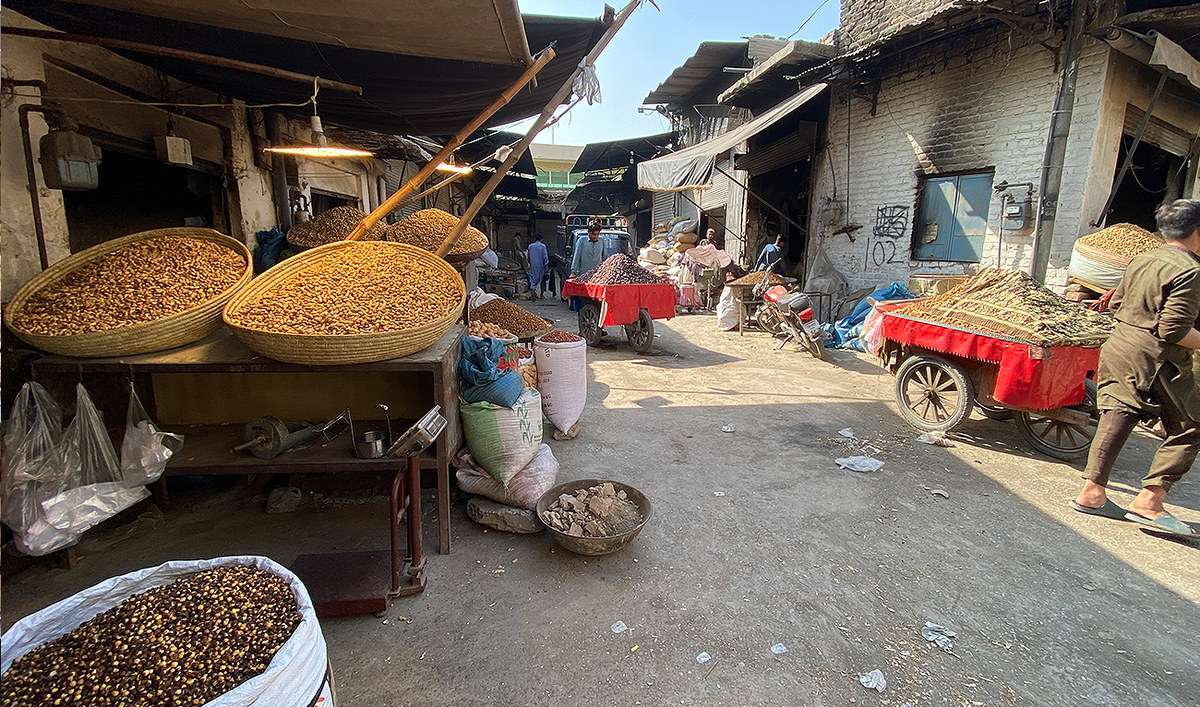
In this photo, taken on October 2, 2023, vendors work at the central dry fruit market on Ashraf Road in Peshawar. (AN Photo)
Of Pakistan’s total dry fruits imports, 70 percent come from Afghanistan while the rest arrive from other countries, Yousuf said. However, business between the two countries suffered last month after the closure of the Torkham border for nine days following clashes between their border forces.
Pakistani authorities are now more vigilant, especially at Torkham, which is the main bordering crossing point between the two countries and sees heavy movement of people and goods on a daily basis.
“Due to strictness by the government on the border and higher customs tax, this business (of dry fruit) has almost ended,” Yousuf said.
“There used to be 500 wholesale dealers in Peshawar, now only 150 have remained.”
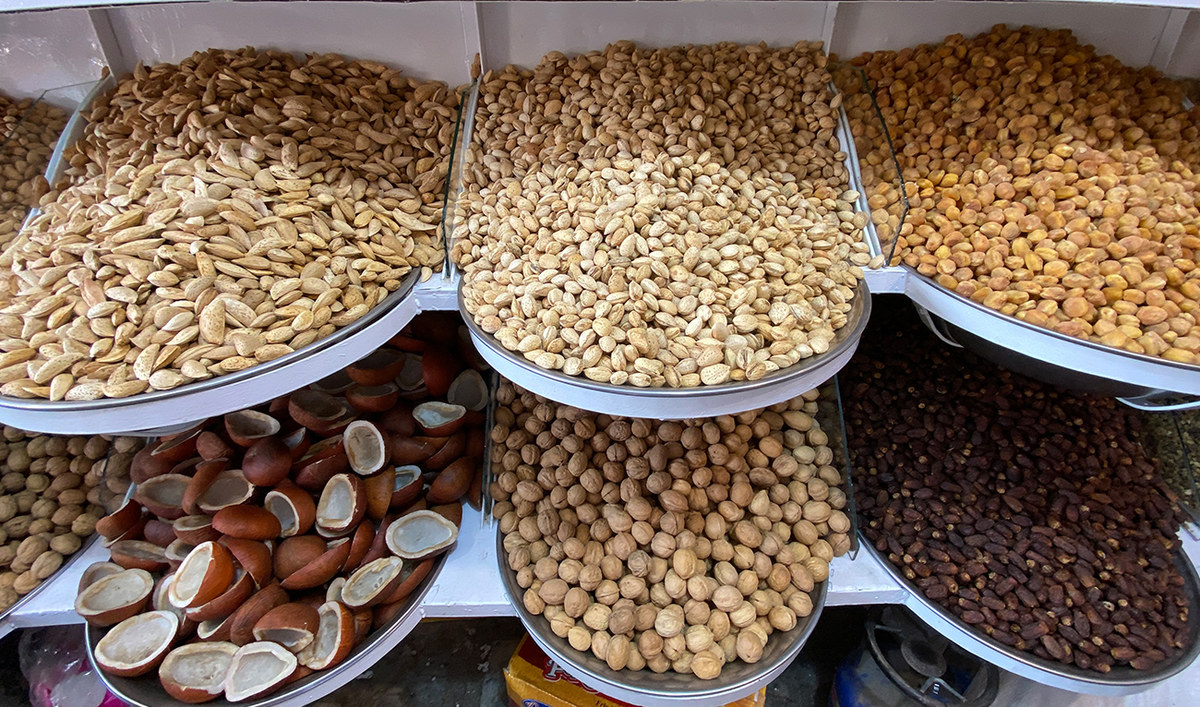
Dry fruits are displayed at the Ashraf Road Dry Fruit Market in Peshawar on October 2, 2023. (AN Photo)
In March, Pakistan hiked sales tax on 33 items, including fruits and dry fruits.
“In 2015-2016, there was a tax of Rs6 to12 ($0.02-0.04) per kilogram, now it ranges from Rs400 to 600 ($1.39-2.09) per kilogram since the past 2 years,” Yousuf said.
Muhammad Arshad, a wholesale dealer of dry fruits at the market, had entertained only four buyers throughout the day.
“Our business has been greatly affected,” Arshad told Arab News. “If I tell you, it has been affected by double or even more (in the past 2 years).”
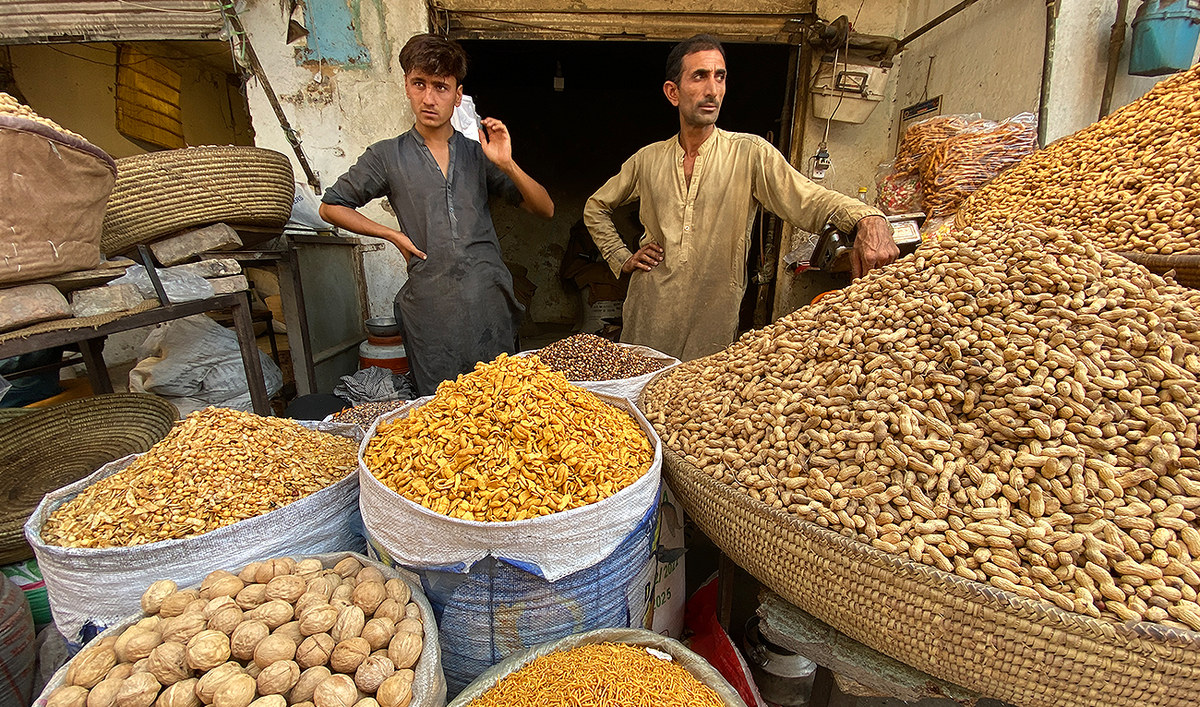
Roadside vendors selling dry fruits wait for customers at a market in Peshawar on October 2, 2023. (AN Photo)
Arshad said pistachios now selling for Rs3,200 ($11.5) per kilogram were selling for Rs1,200 ($4.8) per kilogram two years earlier.
“We would sell cashews for Rs1,400 ($4.88), now they cost Rs3,000 ($10.46) per kilogram,” he said. “Likewise, almonds [are being sold] for Rs2,000 ($6.97) per kilogram from Rs1,000 ($3.49) per kilogram.
“Prices have more than doubled.”
Arshad, who has been in the business of dry fruits for the past eight years, is extremely disappointed with the situation. “I want to get a visa and leave Pakistan,” he said.
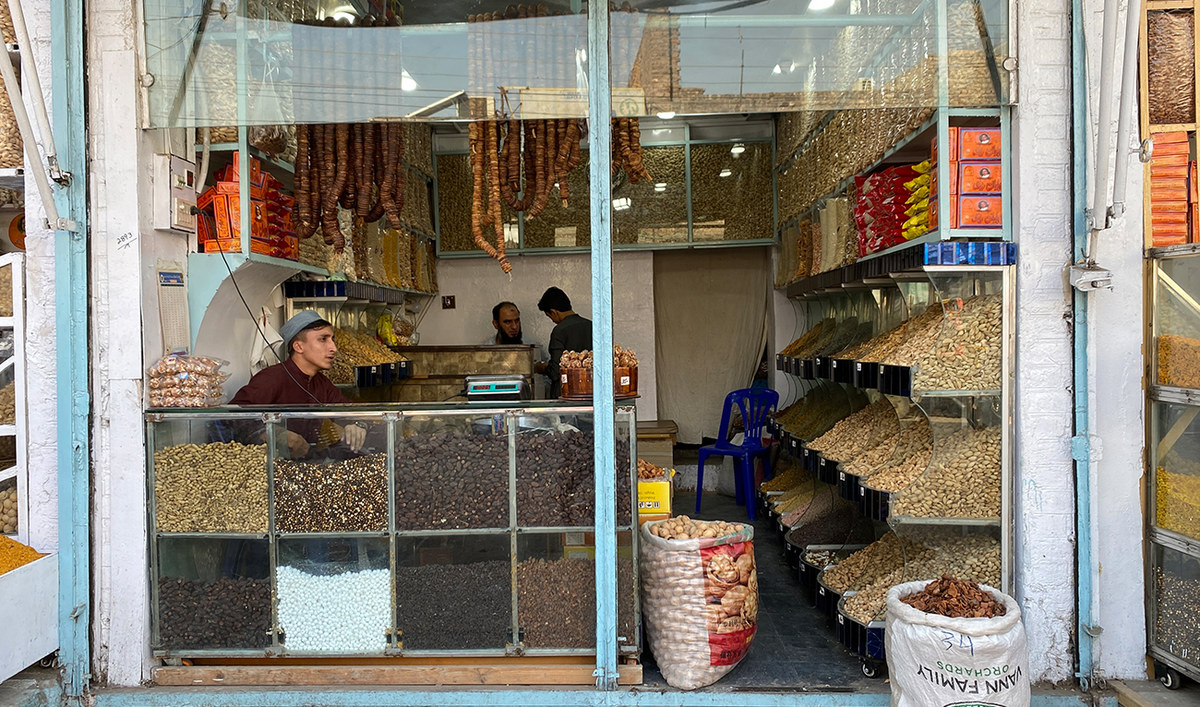
A vendor, Tufail Ahmed, selling dry fruits and nuts waits for customers at his shop in Peshawar on October 2, 2023. (AN Photo)
Ishfaq Ali, a salesman who sells dry fruits in the neighboring Charsadda district after buying them from the Ashraf Road market, lamented that shopkeepers don’t buy dry fruits at the prices he wants to sell to them, adding that the situation was better a year ago.
“We buy and sell after lots of arguments and begging,” Ali told Arab News.
“We want inflation to come down so we can make ends meet and provide bread and butter for our children.”
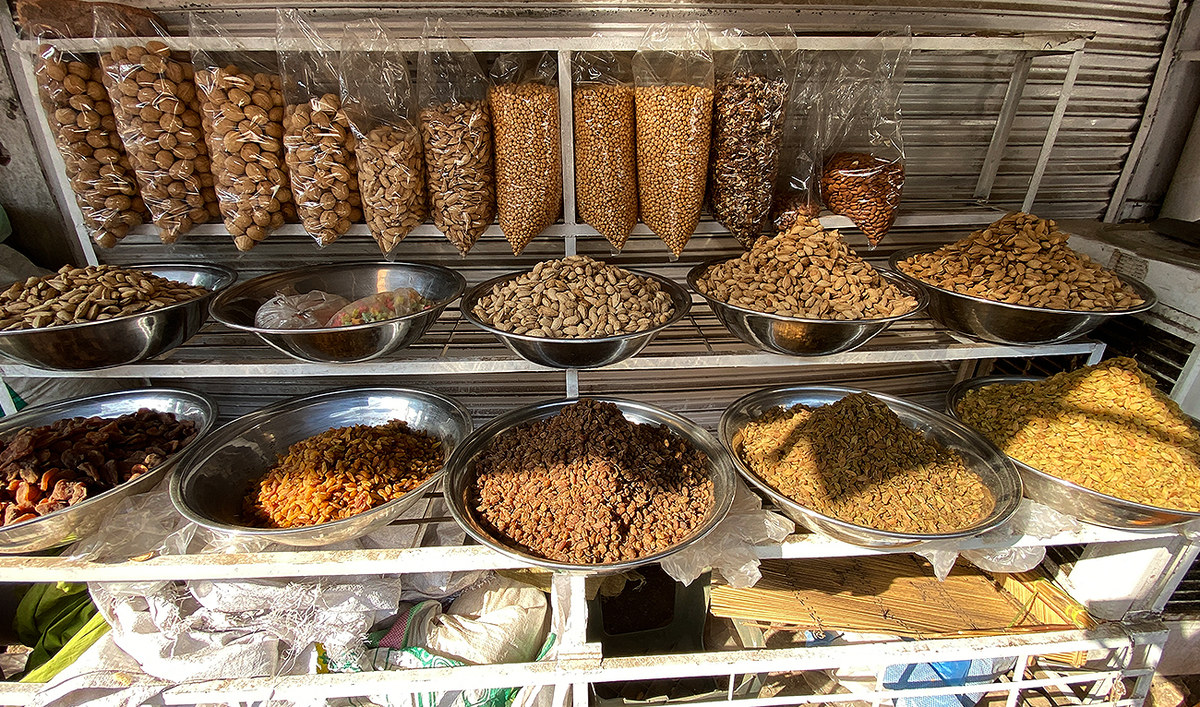
Dry fruits are displayed at the Ashraf Road Dry Fruit Market in Peshawar on October 2, 2023. (AN Photo)