France hijab ban ‘against Olympic spirit’ — Islamic sports body 

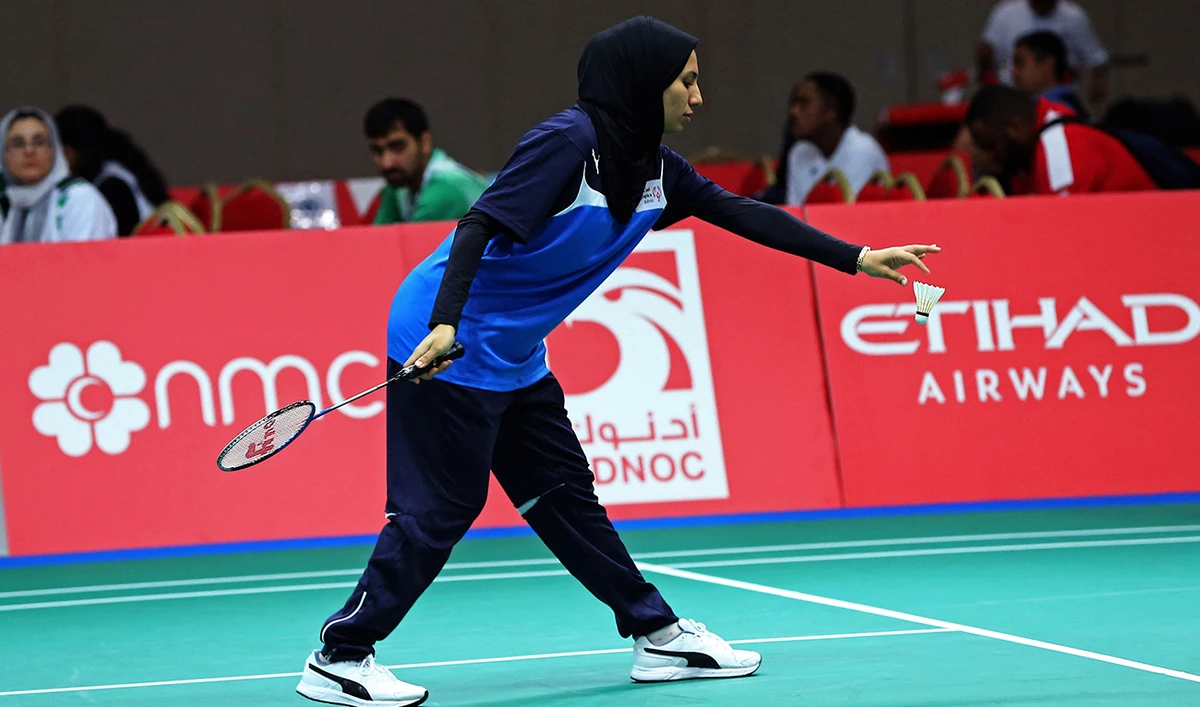
An athlete competes in a badminton match during the 9th Middle East and North Africa (MENA) Special Olympics in Abu Dhabi, UAE on March 19, 2018. (AFP/File)
Short Url
Updated 02 October 2023
Follow

France hijab ban ‘against Olympic spirit’ — Islamic sports body 

  • ISSF said in its statement on Monday French ban could prevent some French Muslim athletes from competing
  • French sports minister said last month French government was opposed to any display of religious symbols during sports

A group of sports federations from Muslim-majority countries said on Monday that France’s move to bar its Olympic athletes from wearing the hijab would “send a message of exclusion.” 

The 57-member Islamic Solidarity Sports Federation (ISSF), based in the Saudi capital Riyadh, voiced “profound concern” over the French decision, which was taken in line with the country’s strict rules on secularism. 

French Sports Minister Amelie Oudea-Castera said last month the French government was opposed to any display of religious symbols during sporting events. 

“What does that mean? That means a ban on any type of proselytising. That means absolute neutrality in public services,” she told France 3 television. 

“The France team will not wear the headscarf.” 

The ISSF said in its statement on Monday that the hijab was “an aspect of many Muslim women’s identity and should be respected,” adding that the French ban could prevent some French Muslim athletes from competing. 

“The Olympics have historically celebrated diversity, unity and athletic excellence,” the statement said. 

“By implementing a hijab ban for their athletes, a host would send a message of exclusion, intolerance and discrimination that goes against the Olympic spirit.” 

The statement urged French authorities “to reconsider this ban” and called for “meaningful engagement with the Muslim sports community in France.” 

The ISSF was founded in 1985 to serve members of the Organization of Islamic Cooperation, based in the Saudi city of Jeddah, “in all aspects of sports activities,” according to its website. 

It has organized five editions of the Islamic Solidarity Games, most recently last year in Turkiye. 

The UN human rights office has not addressed France’s hijab ban for its athletes directly, but a spokeswoman said last week that “no-one should impose on a woman what she needs to wear or not wear.” 

Venezuela aims to boost oil output but sanctions stand in the way, VP says

Updated 4 sec ago
Follow

Venezuela aims to boost oil output but sanctions stand in the way, VP says

  • Sanchez called the recent capture of Nicolas Maduro a “dark day” for the country

DUBAI: Venezuela’s Vice President for Economy Calixto Ortega Sanchez said on Wednesday that his country needed vast foreign investment and sanctions relief to tap its huge oil reserves and restart its ailing economy.

“We know that the reference for Venezuela is that (it is) the country with the biggest oil reserves, and we want to stop being known for this, and we want to be known as one of the countries with the highest production levels,” Sanchez said.

Responding to questions by American journalist Tucker Carlson, Sanchez called the recent capture of Nicolas Maduro a “dark day” for the country but said Venezuela was working to reestablish a relationship with the US, which he described as a “natural partner” for the country.

“The Venezuelan people and authorities have shown that they are ready to peacefully move forward and to build opportunities,” he said during a session at the World Government Summit.

Sanchez, who headed Venezuela’s central bank, said the most pertinent issue facing his country is continued US sanctions.

Despite failing to result in regime change, the sanctions had effectively stifled the economy from growing, he added.

He said the Venezuelan government was now working to reform its laws to allow foreign investment and hoped the US would ease sanctions to aid their work.

“The first decisions that interim President Rodriguez took was to go to the National Assembly and ask for reform to the hydrocarbon law … this law will allow international investors to go to Venezuela with favorable conditions, with legal assurance of their investments,” he added.

“The economy is ready for investment. The economy is ready for the private sector; it is ready to build up a better future for the Venezuelan people.”

Sanchez played down inferences by Carlson that his government had been taken over, insisting that the regime still held authority in the country. He said the country had set up two funds to receive money from oil production that would fund better welfare and social conditions for Venezuelans.

“Allow us to have access to our own assets … we don’t have access to our own money,” he added.

“If you allow us to function like a regular country, Venezuela will show extraordinary improvement and growth.”