ISLAMABAD: Pakistan’s top investment body on Tuesday said it had finalized plans to resolve key issues related to the country’s economic sectors of agriculture, information technology, minerals and energy.
Pakistan in June set up the SIFC — a civil-military hybrid forum — to fast-track decision-making and promote investment from foreign nations, particularly from Gulf Cooperation Council (GCC) nations. The council has pinpointed five key sectors for attracting investment: agriculture, mining, information technology, defense production, and energy.
The South Asian country established the council as it grapples with a serious economic crisis that has seen its currency weaken against the US dollar over the past one year amid staggering inflation. Pakistan is also facing an acute balance of payments crisis amid increasing foreign debt.
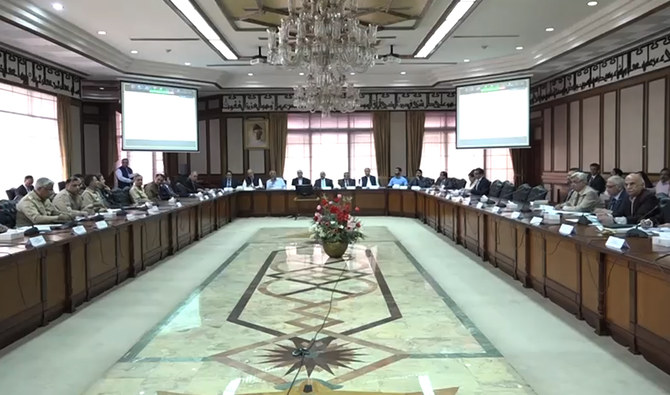
The SIFC’s executive committee held its fifth meeting on Tuesday to review measures for improving the investment environment in the country, a statement from the body said.
“After healthy debate, the Committee formulated workable options, by drawing consensus among stakeholders, to resolve key impediments to investment environment in the country,” the SIFC said. “The plans were also finalized to resolve issues related to four key sectors (Agri, IT, Minerals and Energy) besides, adding new projects to the forum.”
Last week, Pakistan’s Caretaker Prime Minister Anwaar-ul-Haq Kakar, during his visit to New York to attend the UN General Assembly, met business and thought leaders and stakeholders to pitch the forum to them and made the case for improved business climate in Pakistan together with its potential for foreign direct investment in a range of sectors.
Earlier this month, Kakar confirmed Saudi Arabia and the United Arab Emirates (UAE) would invest $25 billion each in cash-strapped Pakistan within the next five years as part of projects under the SIFC.
Saudi Arabia has also explored investment opportunities in Pakistan’s mining sector and contributed $500 million to modernize Pakistan’s agricultural sector through the Land Information and Management System Center of Excellence (LIMS-CoE). This continued financial backing from Gulf allies is crucial for Pakistan’s economic stability.


![]()

Pakistan moves to remove investment impediments in agriculture, IT, mining and energy sectors
Short Url
https://arab.news/4jwcs
Pakistan moves to remove investment impediments in agriculture, IT, mining and energy sectors
- Pakistan in June set up Special Investment Facilitation Council, a civil-military forum, to attract foreign funding
- SIFC’s executive committee meets to review measures to improve Pakistan’s investment environment
Latest updates




© 2026 SAUDI RESEARCH & PUBLISHING COMPANY, All Rights Reserved And subject to Terms of Use Agreement.