

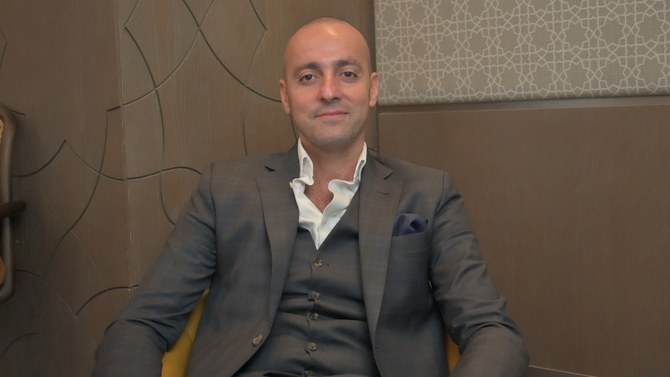

ABU DHABI: Saudi Arabia has become an investment magnet with its travel and tourism sector growing at an exponential rate attracting key industry players from all around the world.
Due to the attractive investment environment in the Kingdom, Radisson Hotels is placing the best of its regional portfolio in the Kingdom, a top executive told Arab News during an interview on the sidelines of the Future Hospitality Summit in Abu Dhabi.
“Reflecting on our journey in Saudi Arabia, we began in 2010 with five properties nationwide. Now, we not only have 10 establishments in Riyadh but 45 throughout Saudi Arabia. This growth is a testament to our dedication and passion in the region,” said Elie Milky, Radisson Hotel’s vice president of development.
Radisson aims to operate 100 hotels in the Kingdom by 2030, which will account for over half of the company’s regional presence, he told Arab News.
“We now have the best of our regional portfolio in Saudi Arabia,” Milky said.
Milky highlighted the strategic importance of the newly opened Radisson Blu hotel in Riyadh, owned by the Riyadh Chamber of Commerce.
The collaboration with the chamber made Radisson Blu’s launch pivotal. This property boasts over 200 rooms and is directly linked with the Riyadh International Conference and Exhibition Center, Milky noted.
“Today, we are set to announce the signing of more than 10 hotels across the Middle East. This encompasses the unveiling of over 1,000 rooms in the past year and plans to introduce 2,000 more in the coming 12 months, primarily in Saudi Arabia,” Milky revealed.
Highlighting Saudi Arabia’s potential, Milky credited the country’s robust governmental reforms and its stature as the region’s dominant economy for propelling the hospitality sector forward.
Aiming to fortify its presence, the company plans to enhance its workforce in the Kingdom, targeting 20,000 employees by 2030, a significant leap from the current 7,000.
On expanding to Saudi Arabia’s secondary cities, Milky emphasized the company’s goal to recruit local talent, capitalizing on the vast skill set these communities offer.
On the issue of sustainability, Milky remarked on the industry’s evolution, pointing out that while development costs remain high, operational costs will become more economical.


