

Indonesia’s alms agency hopes to increase collaboration with KSrelief  

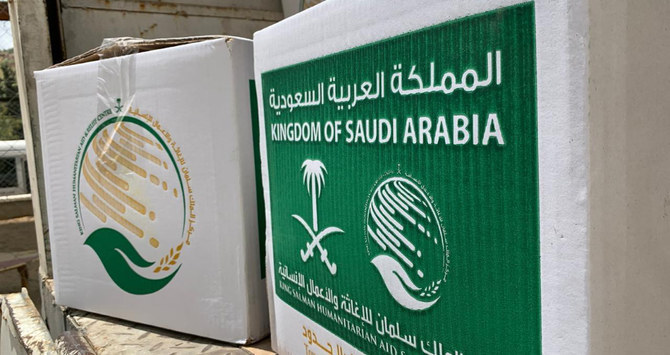
KSrelief partnered with BAZNAS in 2022 to support Indonesians in need with food aid. (File/KSrelief)
Short Url
Updated 25 September 2023
Follow

Indonesia’s alms agency hopes to increase collaboration with KSrelief  

  • KSrelief has been supporting vulnerable Indonesians with various programs 
  • Nearly 10 percent of the Indonesian population lives below poverty line  

JAKARTA: Indonesia’s National Alms Agency is hoping for more collaboration in education and humanitarian programs with the King Salman Humanitarian Aid and Relief Center to promote the welfare of Indonesians, the organization’s top official said on Monday.  

BAZNAS, a government agency responsible for zakat and other Islamic social funds in Indonesia, has experience in working with various international aid agencies, including the UN agency for Palestinian refugees UNRWA and UNICEF.  

KSrelief partnered with BAZNAS in 2022 to support Indonesians in need with food aid. This year, the Saudi aid agency also distributed food assistance in 22 Indonesian districts and cities during Ramadan. 

Saidah Sakwan, who heads the distribution and utilization department in BAZNAS, told Arab News that Saudi cooperation is always welcome.  

“BAZNAS is hoping that this cooperation will continue and develop further on other programs for the sake of promoting the welfare of Muslims and other people in the world,” she said. 

With nearly 10 percent of the Indonesian population, or about 26 million people, living below the national poverty line, support from aid agencies is often crucial.  

“The aid distributed by KSrelief means a lot for them to fulfill their daily needs,” Sakwan said, adding that BAZNAS is in talks with KSrelief for an education program for tens of thousands of Indonesian orphans.  

She was part of a high-level BAZNAS delegation visiting KSrelief headquarters in Riyadh in May to discuss ways to advance collaboration.  

“In the future, BAZNAS hopes to continue synergizing with KSrelief to increase cooperation for the public through education and humanitarian programs, as well as poverty alleviation,” Sakwan said.   

“Relations between Saudi Arabia and Indonesia continue to develop. Should this continue positively, it will bring many benefits for the public.”  


Flash floods triggered by heavy rains in Afghanistan kill at least 17 people

Updated 9 sec ago
Follow

Flash floods triggered by heavy rains in Afghanistan kill at least 17 people

  • Afghanistan, like neighboring Pakistan and India, is highly vulnerable to extreme weather events, particularly flash floods following seasonal rains
  • Decades of conflict, poor infrastructure, deforestation, and the intensifying effects of climate change have amplified the impact of such disasters

KABUL: The season’s first heavy rains and snowfall ended a prolonged dry spell but triggered flash floods in several areas of Afghanistan, killing at least 17 people and injuring 11 others, a spokesman for Afghanistan’s national disaster management authority said Thursday.

The dead included five members of a family in a property where the roof collapsed on Thursday in Kabkan, a district in Herat province, according to Mohammad Yousaf Saeedi, spokesman for the Herat governor. Two of the victims were children.

Most of the casualties have occurred since Monday in districts hit by flooding, and the severe weather also disrupted daily life across central, northern, southern, and western regions, according to Mohammad Yousaf Hammad, a spokesman for Afghanistan’s National Disaster Management Authority.

Hammad said the floods also damaged infrastructure in the affected districts, killed livestock, and affected 1,800 families, worsening conditions in already vulnerable urban and rural communities.

Hammad said the agency has sent assessment teams to the worst-affected areas, with surveys ongoing to determine further needs.

Afghanistan, like neighboring Pakistan and India, is highly vulnerable to extreme weather events, particularly flash floods following seasonal rains.

Decades of conflict, poor infrastructure, deforestation, and the intensifying effects of climate change have amplified the impact of such disasters, especially in remote areas where many homes are made of mud and offer limited protection against sudden deluges.

The United Nations and other aid agencies this week warned that Afghanistan is expected to remain one of the world’s largest humanitarian crises in 2026. The UN and its humanitarian partners launched a $1.7 billion appeal on Tuesday to assist nearly 18 million people in urgent need in the country.