

Middle East to bolster global hospitality space with $1.9tn worth of projects

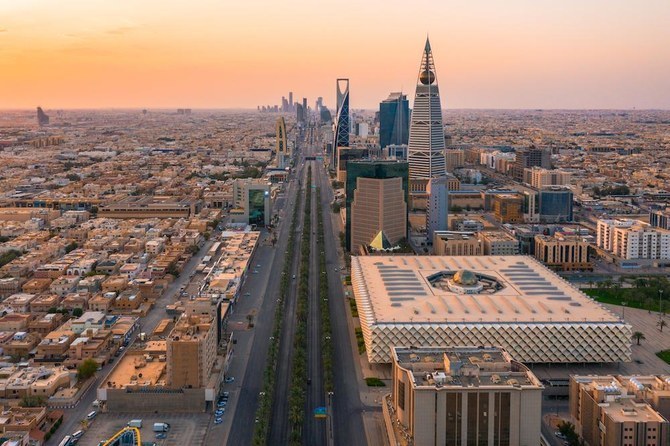
Saudi Arabia, the UAE, and Egypt are at the forefront of this change, representing 90 percent, or $1.7 trillion, of the total investment, according to research by real estate consultants Knight Frank. Shutterstock
Short Url
Updated 24 September 2023
Follow

Middle East to bolster global hospitality space with $1.9tn worth of projects

RIYADH: Hospitality and residential projects worth $1.9 trillion are fueling a transformation of the Middle East, according to a report released ahead of a major industry conference.

Saudi Arabia, the UAE, and Egypt are at the forefront of this change, representing 90 percent, or $1.7 trillion, of the total investment, according to research by real estate consultants Knight Frank.

These findings were shared in anticipation of the Future Hospitality Summit, scheduled to be held in Abu Dhabi from Sept. 25 to 27.

The report stated that the Kingdom leads the regional investment chart with projects worth $1.2 trillion. The UAE and Egypt followed suit, with $300 billion and $200 billion earmarked, respectively.  

These ventures underline the Arab world’s goal of attracting 160 million tourists annually by 2030.

“The Middle East’s travel and tourism sector witnessed tremendous growth with a 46.9 percent increase in its contribution to the gross domestic product in 2023, which is the highest of any region in the world,” Turab Saleem, partner and head of hospitality, tourism and leisure for the Middle East and North Africa at Knight Frank, said.

He added: “This growth is being driven by a 14.5 percent increase in the number of jobs supported by the sector and a more than $107 billion increase in its overall contribution to the gross domestic product. Moreover, the sector has also created 0.9 million new jobs.”

Global commercial real estate experts Colliers also provide insights into the current landscape, revealing numerous advanced-stage hospitality-related negotiations. Several high-profile properties are poised for acquisition in the ensuing months.

James Wrenn, executive director and head of Capital Markets, MENA, at Colliers, said: “There’s a strong appetite for the hospitality asset class — particularly in Dubai and Ras Al Khaimah — from regional and international investors, buoyed by strong operating performance last year and the continued enhancement of the UAE as a top-tier international tourism destination.”

Additionally, Hala Choufany, president of global hospitality consulting firm HVS, expressed her hope for the industry’s growth in the region.

“The number of quality hotel rooms in the region grew fivefold from about 100,000 in 2010 to 540,000 in 2022, with occupied room nights growing from 27 million to 135 million. An additional 180,000 keys are expected to enter the region over the next five years, which is forecast to increase occupied room nights to 184 million by 2028,” Choufany said.

She added: “Today, the Middle East is expected to achieve higher growth compared to other regions, presenting attractive financial returns and providing long-term investment opportunities.”

The upcoming FHS in Abu Dhabi promises insights from over 100 industry leaders that will delve deep into the opportunities present in the region’s tourism sector, and is being held under the theme “Focus on Investment.”


Acwa signs key terms to develop 5GW of renewable energy capacity in Turkiye

Updated 23 February 2026
Follow

Acwa signs key terms to develop 5GW of renewable energy capacity in Turkiye

JEDDAH: Saudi utility giant Acwa has signed key investment agreements with Turkiye’s Ministry of Energy and Natural Resources to develop up to 5 gigawatts of renewable energy capacity, starting with 2GW of solar power across two plants in Sivas and Taseli.

Under the investment agreement, Acwa will develop, finance, and construct, as well as commission and operate both facilities, according to a press release.

The program builds on the company’s first investment in Turkiye, the 927-megawatt Kirikkale Independent Power Plant, valued at $930 million, which offsets approximately 1.8 million tonnes of carbon dioxide annually, the statement added.

A separate power purchase agreement has been concluded with Elektrik Uretim Anonim Sirketi for the sale of electricity generated by each facility.

Turkiye aims to boost solar and wind capacity to 120GW by 2035, supported by around $80 billion in investment, while recent projects have already helped prevent 12.5 million tonnes of CO2 emissions and reduced reliance on imported natural gas.

Turkiye’s energy sector has undergone a rapid transformation in recent years, with renewable power emerging as a central pillar of its strategy.

Raad Al-Saady, vice chairman and managing director of ACWA, said: “The signing of the IA (implementation agreement) and PPA key terms marks a pivotal moment in Acwa’s partnership with Turkiye, reflecting the country’s strong potential as a clean energy leader and manufacturing powerhouse.”

He added: “Building on our long-standing presence, including the 927MW Kirikkale Power Plant commissioned in 2017, this step elevates our partnership to a new level,” Al-Saady said.

In its statement, Acwa said the 5GW renewable energy program will deliver electricity at fixed prices, enhancing predictability for grid planning and supporting long-term industrial investment.

By replacing imported fossil fuels with domestically generated clean energy, the initiative is expected to reduce Turkiye’s exposure to global energy market volatility, strengthening energy security and lowering long-term power costs.

The company added that the economic impact will extend beyond the anticipated investment of up to $5 billion in foreign direct investment, with thousands of jobs expected during the construction phase and hundreds of high-skilled roles created during operations.

The energy firm concluded that its existing progress in Turkiye reflects a strong appreciation for Turkish engineering, construction, and manufacturing capacity, adding that localization has been a strategic priority, and it has already achieved 100 percent local employment at its developments in the country.