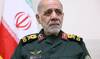
NEW YORK: “Substantive” reforms to the international financial system and global economic governance are necessary to bridge the gap between rich and poor countries, Tunisia’s foreign minister told the UN General Assembly on Saturday.
Nabil Ammar warned that the world is “experiencing a very delicate page in its history,” defined by growing crises and challenges, “wars and conflicts getting worse and geopolitical divisions being evident.”
He said: “Is this really the world to which we aspire after almost eight decades since the creation of the UN? This is an image that’s very distant from the goals and values that this organization is based on.”
Ammar called for universal acknowledgment that the international financial system has failed in its objectives.
Only then can the system, “which has increased the gap between advanced countries and developing countries,” be rebuilt, he said.
“The international monetary system has failed; the system which was created following the Second World War to provide a safety net for the world, to guarantee lasting financing for development and for the least-developed countries. This system, quite to the contrary, has disappointed and has abandoned these countries.”
Indebtedness among developing countries is worsening, he warned, with growing poverty and hunger fueling an “unprecedented increase in refugees and migrants.”
Tunisia has taken on an outsized burden in that regard because of its geographical position as a gateway to Europe, and due to the effects of conflict and climate change in Africa, Ammar added.
“We reiterate the need to adopt a global approach to tackle this issue of illegal migration, by focusing on its root causes rather than simply its consequences.”
He added: “We once again would like to reiterate the need for all parties to assume their responsibility — origin countries, transit countries and destination countries, as well as regional and international organizations.”
As part of the effort to address the root causes of mass migration, Ammar welcomed a decision by UN Secretary-General Antonio Guterres to launch a response group for energy and food crises.
Ammar relayed an appeal by Tunisian President Kais Saied to establish a global emergency grain stockpile to safeguard against supply chain issues.
Ammar said confronting climate change is an “absolute priority” for Tunisia, adding: “What the world is experiencing today — the impact of climate change, deterioration of ecosystems, worsening of natural disasters — all of this forces all of us to confront these challenges urgently.”
He said: “Tunisia hasn’t been an exception to what the world has experienced and continues to experience in terms of challenges — economic challenges, social challenges and living conditions.
“And we, in spite of these difficulties, intend to overcome them, strengthen resilience and sustainability in cooperation with our friends and partners, while respecting the principles and the guiding principles of our national policies and national destiny.”
Ammar said Tunisia will continue “tirelessly” with reform, strengthening good governance and combating corruption in order to “strengthen and fine-tune our democracy.”
The country will also continue empowering women and young people to “strengthen their participation in public life and in decision-making,” he added.
Ammar called for “a new global order” and a new vision that promotes balance and equality between states, and which “takes into account the root causes of instability.”
The Palestinian question is part of that effort, he added, condemning the “silence of the international community” on Israel’s “disregard of international law.”
A just solution, overseen by the UN and based on the June 1967 borders, is necessary to achieve peace for Palestinians, Ammar said.
In Tunisia’s “immediate neighborhood,” he said his country is “providing all possible assistance” to Libya in order to achieve a political agreement there. Tunisia rejects any military solution or foreign incursions into Libya, Ammar added.
He ended his address by telling the UNGA: “We’re at a crossroads, given the scale of the risks and challenges that are unprecedented.”
The choices each country makes “should be based on long-term vision and our engagement to humanity,” he said.