ISLAMABAD: Gallup Pakistan said in a report published this week visa applications from Pakistan for the United States increased by 248 percent percent between 2021 and 2022, likely owed to the lifting of travel restrictions related to the coronavirus pandemic.
The analysis draws data from the United States Department of State and covers a substantial timeframe, starting from 1998 and extending up to 2022. A primary focus of the analysis was to assess the overall volume of visa applications from Pakistanis for the United States, including a detailed examination of the numerical figures, highlighting both high and low points over the years.
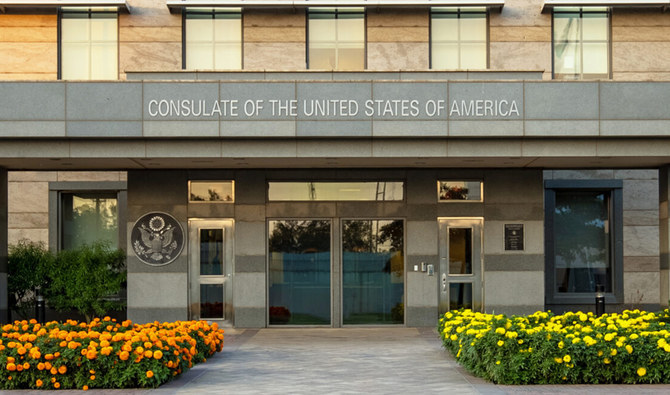
The United States consulate in Karachi said this week it had expedited the US visa application process for Pakistanis and was working to reduce wait times amid “unprecedented” demand.
“Applications increased in the past decade compared to the previous one, with a notable 248 percent surge in 2022,” Gallup said in its report.
“The overwhelming increase in applications in 2022 could be attributable, among other things, to those who could not travel in the 2019-2021 period due to Covid19. The average applications decreased from 65,385 in 2015-2015 to 37,913 in 2019-2021. Once the pandemic restrictions were lifted, it would be plausible to assume that those who were intending to go to the US for business or education purposes over the past three years, applied for visas at their earliest.”
Looking at data 1998 onwards, the highest applications were received in the years 2000 (88,791), after which they saw a steep decline until the 2010s. The second highest point in application frequency was reached in 2016 (76,637), followed closely by 2022 (72,082). The average over the past 20 years, represented by the trendline, remained 47,566 applications.
“The steep decline in 2020 and 2021 may be attributed to the travel restrictions and lockdowns that were imposed due to Covid-19,” the Gallup report said. “Other than this period, Pakistan’s visa applications to the US were lowest in 2003 (24,092), followed by 2004 (24,934).”
Among different visa types, in immigrant visas, K-visa applications spiked between 2003 and 2010 while E-visa applications remained consistently low.
In non-Immigrant Visas, B-1/B-2 visas had the most applications, with a dip in 2021 followed by a rebound to 58,152 in 2022. F1 visa applications showed a rising trend, reaching 3,540 in 2022. H-visa applications fluctuated over the years, with the highest in 2001 (5,555) and the lowest in 2020 (704). A-category visa applications increased from 2008 to 2020, surpassing H-visa applications during this period.
The US consulate in Karachi said on Tuesday the demand for US visas was the highest it had ever been in the South Asian country and it was “working hard” to bring down visa appointment wait times.
“We have expedited thousands of non-immigrant visa appointments. More than ten thousand Pakistani visa applicants originally scheduled for 2024 at the US Consulate General in Karachi are receiving notice that their appointments have been rescheduled in 2023, some as early as next week,” the consulate said in a statement.
“To create added flexibility for Pakistani travelers, visa applicants can rebook appointments at either the Consulate General in Karachi or US Embassy in Islamabad.”
Starting September 25, the US consulate said, it would also start accepting new interview waiver applications for some applicants who had previously been issued US visas.
“These steps demonstrate how deeply the United States values the relationship between our two countries,” it added.


248% surge in US visa applications from Pakistan between 2021-2022 — Gallup
https://arab.news/23whf
248% surge in US visa applications from Pakistan between 2021-2022 — Gallup

- ‘Overwhelming increase’ in 2022 could be attributable to lifting of coronavirus travel restrictions
- US consulate said this week it had expedited visa application process amid ‘unprecedented’ demand

Pakistan says responding to Afghan ‘offensive operations’ after border fire as tensions escalate
- Afghan Taliban spokesperson says “large-scale offensive operations” launched against Pakistani military bases
- Pakistan says Afghan forces opened “unprovoked” fire across multiple sectors along shared border
ISLAMABAD: Afghanistan’s Taliban authorities said on Thursday they had launched “large-scale offensive operations” against Pakistani military bases and installations, prompting Pakistan to say its forces were responding to what it described as unprovoked fire along the shared border.
The escalation follows Islamabad’s weekend airstrikes targeting what it said were Tehreek-e-Taliban Pakistan (TTP) and Daesh militant camps inside Afghanistan in response to a wave of recent bombings and attacks in Pakistan. Islamabad said the strikes killed over 100 militants, while Kabul said dozens of civilians were killed and condemned the attacks as a violation of its sovereignty.
In a post on social media platform X, Afghan government spokesperson Zabihullah Mujahid said Afghanistan had launched “large-scale offensive operations” in response to repeated violations by the Pakistani military.
Pakistan’s Ministry of Information said Afghan forces had initiated hostilities along multiple points of the frontier.
“Afghan Taliban regime unprovoked action along the Pakistan–Afghanistan border given an immediate, and effective response,” the ministry said in a statement.
The statement said Pakistani forces were targeting Taliban positions in the Chitral, Khyber, Mohmand, Kurram and Bajaur sectors, claiming heavy Afghan casualties and the destruction of multiple posts and equipment. It added that Pakistan would take all necessary measures to safeguard its territorial integrity and the security of its citizens.
Separately, security officials said Pakistani forces had carried out counterattacks in several border sectors.
“Pakistan’s security forces are giving a befitting reply to the unprovoked Afghan aggression with full force,” a security official said, declining to be named.
“The Pakistani security forces’ counter-attack destroyed Taliban’s hideouts and the Khawarij fled,” they added, referring to TTP militants.
The claims from both sides could not be independently verified.
Cross-border violence has intensified in recent weeks, with Pakistan blaming a surge in suicide bombings and militant attacks on militants it says are based in Afghanistan. Kabul denies providing safe havens to anti-Pakistan militant groups.
The clashes mark the third major escalation between the neighbors in less than a year. Similar Pakistani strikes last year triggered weeklong clashes before Qatar, Türkiye and other regional actors mediated a ceasefire in October.
The 2,600-kilometer (1,600-mile) frontier, a key trade and transit corridor linking Pakistan to landlocked Afghanistan and onward to Central Asia, has faced repeated closures amid tensions, disrupting commerce and humanitarian movement. Trade between the two nations has remained closed since October 2025.