

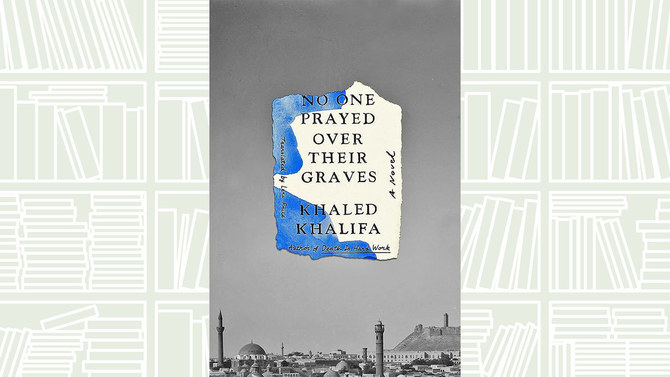
Review: ‘No One Prayed Over Their Graves’ by Khaled Khalifa is a complex epic

The book is by Khaled Khalifa. (Supplied)
Short Url
Updated 21 September 2023
Follow

Review: ‘No One Prayed Over Their Graves’ by Khaled Khalifa is a complex epic

CHICAGO: This epic work from award-winning Syrian novelist Khaled Khalifa, translated into English by Leri Price, spans several decades — from the late 19th century to the 1950s — and explores both friendship and tragedy. 

In 1907, a flood wipes out the village of Hosh Hanna near Aleppo, Syria. The lives of those who survive forever change, especially those of close friends Hanna Gregoros (a Christian) and Zakariya Bayazid (a Muslim whose family took Hanna in as a boy when he fled a massacre). Both young men — until this moment — have lived as if they were invincible. They are now forced to spend the rest of their lives reflecting on a past that has been swept away in one morning.  
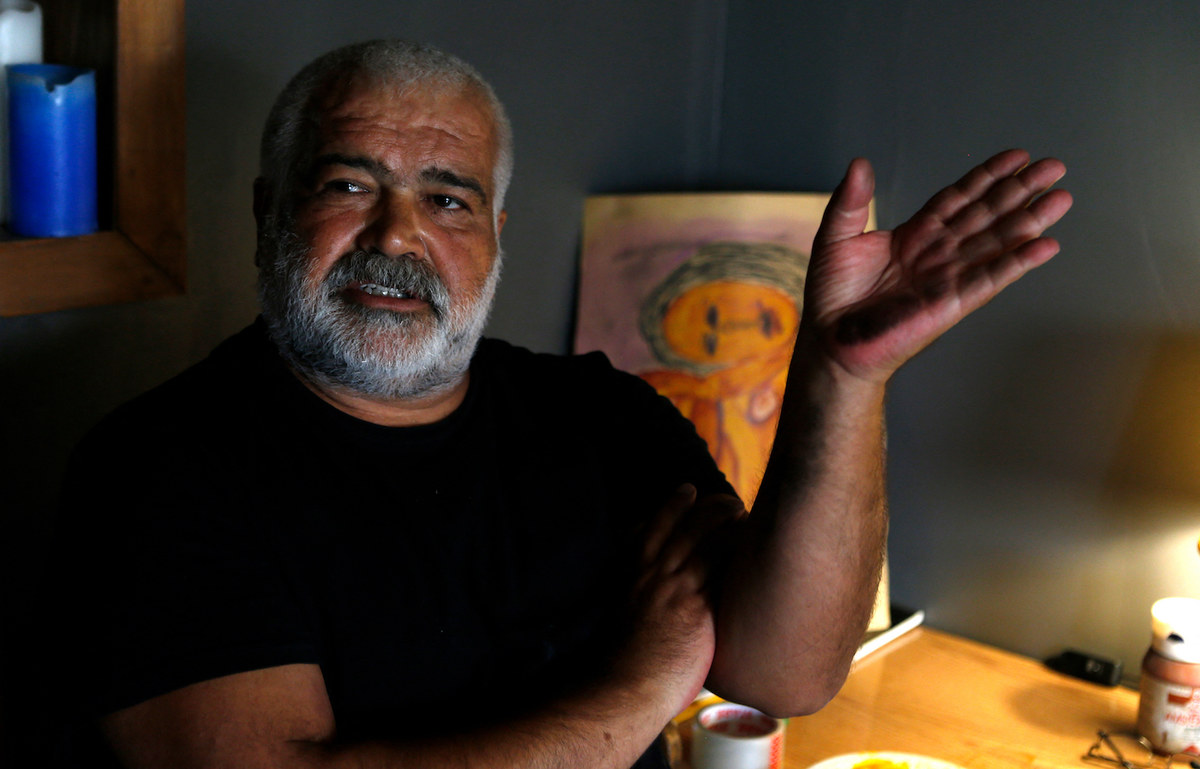


Khaled Khalifa is a Syrian novelist. (Supplied)

We are introduced to Hanna and Zakariya at their lowest point: the flood has destroyed their homes, taken their families, and everything of their past, including the generation-long ties they have always relied on. Once wealthy — with land, horses, and a close-knit community of family and friends — Hanna and Zakariya took for granted an Aleppo that was religiously tolerant and thriving. United in their love for each other and their homes, the residents of Hosh Hanna had always helped one another. But the familiar routes are no longer familiar, and life dwindles for the two survivors.  

The narrative shifts timelines regularly, giving us a clear portrait of Hanna and Zakariya’s carefree past and a present beset by challenges, which they attempt to navigate while surviving on memories. They recollect joyous moments, but also lament the times when they were only interested in themselves and their own desires, ignoring all the good things that were in front of them. The flood opens their eyes to their shortcomings, their losses, and to the love they never fully appreciated before it was too late. The lives of Khalifa’s characters are riddled with loss and coping mechanisms.  

The novel delves into the complex layers of Aleppo’s history through stories that are born of revenge, friendship, oppression, love and loyalty. The pair’s relationship, and their adoration for their land, their neighbors and their villages cannot be erased by a flood, by war or by extremism. A similar love for his country comes through in Khalifa’s writing. 


Elie Saab, Zuhair Murad show new couture collections in Paris

Updated 29 January 2026
Follow

Elie Saab, Zuhair Murad show new couture collections in Paris

  • Saab’s collection uses light as central theme
  • Exploration of structure, movement by Murad

DUBAI: Lebanese designers Elie Saab and Zuhair Murad presented their Spring/Summer 2026 haute couture collections in Paris earlier this week.

Look 1 by Elie Saab. (Supplied)

Saab’s collection referenced light as a central theme, expressed through elongated silhouettes and layered embellishment, according to a statement from the brand.

Look 2 by Elie Saab. (Supplied)

The runway featured gowns built on sheer bases, with metallic embroidery, sequins and crystal beadwork creating layered textures across champagne, gold, bronze and soft ivory tones.

Look 3 by Elie Saab. (Supplied)

Column dresses, deep necklines and floor-length gowns dominated the collection, while draped panels, embroidered capes and sheer overlays added movement.

Look 4 by Elie Saab. (Supplied)

Several looks incorporated fringed detailing and geometric patterns, with crystal embellishments catching the light as models walked.


A post shared by ELIE SAAB (@eliesaabworld)

Accessories were kept minimal, allowing the focus to remain on craftsmanship and surface technique.

Meanwhile, Murad’s collection also placed craftsmanship at the center of the show.

Look 1 by Zuhair Murad. (Supplied)

According to the house, the collection explored structure and movement, using corsetry to define the body and draping to create fluidity.

Look 2 by Zuhair Murad. (Supplied)

The runway featured fitted gowns and sculpted eveningwear built around structured bodices, many finished with dense embroidery, crystals and metallic thread.

Look 3 by Zuhair Murad. (Supplied)

A palette of champagne, pale blue, sage green, ivory and gold ran throughout the show, with strapless silhouettes, off-the-shoulder gowns and column dresses appearing alongside sheer panels, thigh-high slits and flowing trains.

Look 4 by Zuhair Murad. (Supplied)

Shorter dresses with crystal-encrusted bodices were shown alongside floor-length gowns, with sheer layers and extended trains.