Climate change impeding fight against AIDS, TB and malaria 

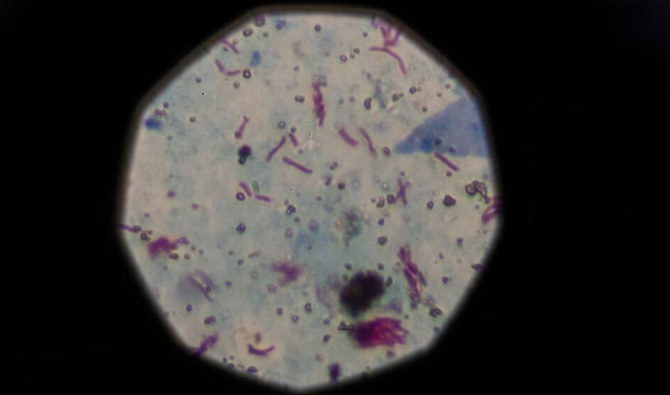
A sample that tested positive for tuberculosis is seen from a microscope in Buenos Aires, Argentina, March 29, 2019. (REUTERS/File)
Short Url
Updated 18 September 2023
Follow

Climate change impeding fight against AIDS, TB and malaria 

  • Malaria spreading to highland parts of Africa previously too cold for mosquito carrying the disease-causing parasite
  • Extreme weather events are overwhelming health services, causing upsurges in infection and interrupting treatment

LONDON: Climate change and conflict are hitting efforts to tackle three of the world’s deadliest infectious diseases, the head of the Global Fund to Fight AIDS, Tuberculosis and Malaria has warned. 

International initiatives to fight the diseases have largely recovered after being badly affected by the COVID-19 pandemic, according to the Fund’s 2023 results report released on Monday. 

But the increasing challenges of climate change and conflict mean the world is likely to miss the target of putting an end to AIDS, TB and malaria by 2030 without “extraordinary steps”, said Peter Sands, executive director of the Global Fund. 

For example, malaria is spreading to highland parts of Africa that were previously too cold for the mosquito carrying the disease-causing parasite. 

Extreme weather events like floods are overwhelming health services, displacing communities, causing upsurges in infection and interrupting treatment in many different places, the report said. In countries including Sudan, Ukraine, Afghanistan and Myanmar, simply reaching vulnerable communities has also been immensely challenging due to insecurity, it added. 

There are positives, Sands said. For example, in 2022, 6.7 million people were treated for TB in the countries where the Global Fund invests, 1.4 million more people than in the previous year. The Fund also helped provide 24.5 million people with antiretroviral therapy for HIV, and distributed 220 million mosquito nets. 

Sands added that innovative prevention and diagnostic tools also provided hope. 

This week, there is a high-level meeting on TB at the UN General Assembly, and advocates hope for more of a focus on the disease. 

The Global Fund has faced criticism from some TB experts for not allocating more of its budget to the disease, as it is the biggest killer of the three diseases the fund focuses on. 

“There’s no doubt that the world needs to devote more resources toward fighting TB... but it is not as simple as comparing annual deaths from each disease,” said Sands. For example, he said, many countries with the highest burden of TB are middle-income countries that have more capacity to fund health services domestically. 


Gunmen kill at least 30 villagers and abduct others during raid in northern Nigeria

Updated 3 sec ago
Follow

Gunmen kill at least 30 villagers and abduct others during raid in northern Nigeria

  • The gunmen had been lurking around nearby communities for about a week before the attack
  • They stormed the Kasuwan-Daji village in the Borgu local government area and opened fire on residents

MINNA: At least 30 villagers have been killed and several others are missing after gunmen raided a village in northern Nigeria’s Niger state, police said Sunday, the latest in a cycle of deadly violence in the conflict-hit region.
The gunmen stormed the Kasuwan-Daji village in the Borgu local government area on Saturday evening and opened fire on residents. They also razed down the local market and several houses, state police spokesman Wasiu Abiodun said in a statement.
At least two residents put the death toll at 37 and said it could be much higher as some people remained missing as of Sunday. Locals also said the security forces are yet to arrive in the area, contradicting a police claim that they have deployed officers to search for those kidnapped.
Rev. Fr. Stephen Kabirat, a spokesman for the Catholic Church of Kontagora Diocese where the attack happened, told local media that the gunmen killed more than 40 people and abducted several others, including children.
Nigeria’s President Bola Tinubu condemned the attack and said he has directed security officials to hunt down the gunmen and rescue the hostages.
“These terrorists have tested the resolve of our country and its people,” Tinubu said in a statement. “They must face the full consequences of their criminal actions. No matter who they are or what their intent is, they must be hunted down. In addition, those who aid, abet, or enable them will also be brought to justice.”
The gunmen had been lurking around nearby communities for about a week before the attack, according to one resident who asked not to be named for fear of his safety. Now survivors are too afraid to go recover the bodies.
“The bodies are there (in Kasuwan-Daji village). If we don’t see any security, how can we go there?” the resident said, adding that the attack lasted for up to three hours.
Such attacks are common in Nigeria, Africa’s most populous country, where dozens of rogue gangs seeking control often target remote communities with limited security and government presence.
The attack on Kasuwan-Daji village happened near the Papiri community, where more than 300 schoolchildren and their teachers were kidnapped from a Catholic school in November.
The attackers who raided Kasuwan-Daji arrived from the National Park Forest along Kabe district, according to the police, pointing to a usual trend where abandoned expansive forest reserves act as hideouts for armed gangs.