RIYADH: Officials behind an international initiative to protect coral reefs have invited new proposals for innovative preservation projects to be implemented under an $18 million round of funding.
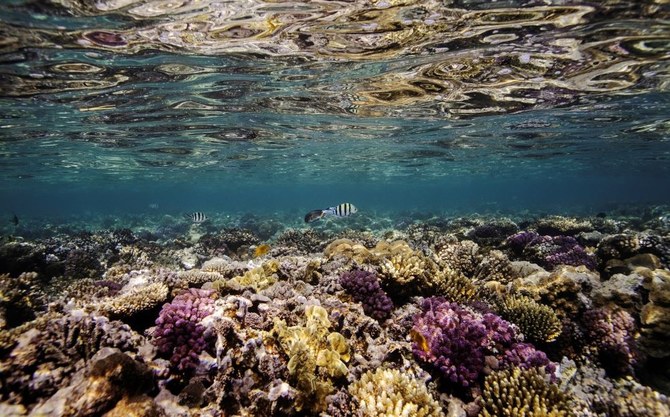
The Coral Accelerator Program 2023, launched as part of the G20 Coral Research and Development Accelerator Platform, aims to support ground-breaking ideas to help save corals and reefs threatened by climate change and other environmental factors.
The deadline for proposal submissions is Nov. 10, and successful projects are expected to be rolled out in late 2024 in countries including Mexico, Malaysia, Indonesia, Colombia, the Dominican Republic, Maldives, Fiji, Solomon Islands, Honduras, and the Philippines.
The Cordap platform was launched in 2020 by G20 nations to step up global research and development of coral reef restoration and conservation.
Saudi Arabia has already demonstrated its strong commitment to the preservation and protection of coral reefs around the world, pledging $98 million over the next 10 years to support research and development initiatives.
In April, a royal decree approved the creation of the Cordap Foundation that was officially launched in August. The nonprofit organization will serve as the financial arm of the Cordap.
Headquartered at King Abdullah University of Science and Technology, in Thuwal, it became the first international operating foundation incorporated by the Kingdom, paving the way for other similar bodies to back Saudi efforts to address global challenges.
Two-thirds of the world’s coral reefs have already been lost due to human activity. According to the Intergovernmental Panel on Climate Change, between 70 and 90 percent of the remaining coral reefs could disappear in the next 10 to 15 years if no action is taken.
One in four marine species depend on coral reefs, while they also provide food, income, and coastal protection for 1 billion people. The global economic value of coral reefs has been estimated at around $10 trillion annually through ecosystem services and goods.
The Coral Accelerator Program, launched in 2022, received 89 proposals from around the globe and 14 projects have now been awarded, worth a total of $18 million.
Of last year’s 489 applicants, 51 percent of the lead proposals were from women, and 60 percent of the winners were from low- and middle-income countries, with funding spread across more than 20 nations.
The program is based on the core principles of ensuring that local communities benefit from accessible solutions, promoting global inclusivity, and encouraging the use of open-source solutions under free public licensing.
Carlos Duarte, executive director of Cordap and a KAUST professor, said: “Corals are the rainforests of the ocean, yet they are at risk of functional extinction in the next decade without urgent action.
“For the first time, an entire ecosystem that supports millions of species and people may be lost at the hands of humans.”
He noted that the Coral Accelerator Program 2023 would award projects that had the potential to significantly advance science and technology in high-need coral research areas, including coral aquaculture, cold-water corals, means to preserve and conserve existing corals and limit their early life mortality, as well as approaches that contributed to research and development capacity building.


![]()

$18m ideas program launched to protect world’s coral reefs
Short Url
https://arab.news/yfxcf
$18m ideas program launched to protect world’s coral reefs
- Global initiative aims to save coral reefs from extinction, combat climate change impacts
- Saudi Arabia has pledged $98 million over the next 10 years to support coral reef research and development initiatives


Latest updates


Recommended


© 2026 SAUDI RESEARCH & PUBLISHING COMPANY, All Rights Reserved And subject to Terms of Use Agreement.