HELSINKI: Latvia is growing worried over the increasing number of migrants attempting to cross over into the Baltic nation through the border with Belarus and has called up the military to assist border guards.
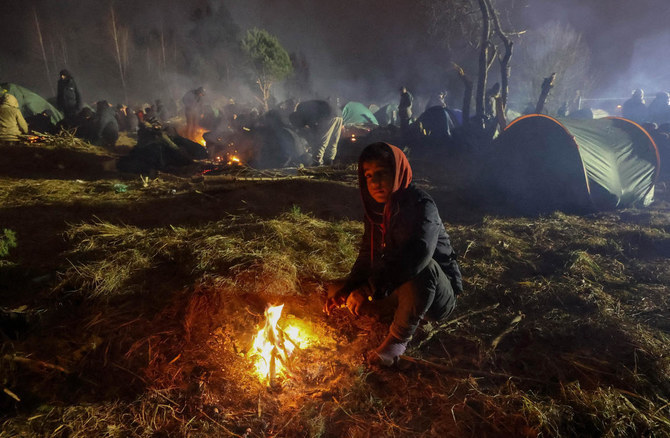
Latvia’s State Border Guard said on Tuesday that 103 people had been stopped in the previous 24 hours for trying to illegally cross the Latvia-Belarus border that runs a total of 173 kilometers (108 miles). A total of seven persons were allowed in Latvia, a European Union and NATO nation of 1.8 million, for humanitarian reasons.
Most migrants are from Africa and the Middle East, particularly Afghanistan and Syria.
The number of people turned away at the Belarus border has exceeded 100 on several days since the end of August — a substantially higher daily figure than earlier in the year, officials said. Nearly 900 migrants were stopped from crossing over last week alone. This year’s cumulative figure is almost 7,800, up from 5.826 in full year 2022.
Guntis Pujats, head of the border guard, told Latvian television on Tuesday that the large number of illegal border crossing attempts was fueled what he called a state-sponsored international people smuggling operation by Belarus’ authoritarian President Aleksander Lukashenko.
Pujats said that, from time to time, Lukashenko targets either Latvia, Lithuania or Poland, which all share borders with Belarus, to test their abilities to deal with “hybrid attacks” from Minsk including pushing migrants to border areas.
In 2021, thousands of migrants, many from Syria, Afghanistan and Iraq, flocked to Belarus’ border with Poland, where they were stranded for weeks. The EU accused Lukashenko, of aiding illegal border crossings in retaliation for sanctions imposed after an election the West described as a sham. Lukashenko denied encouraging migration to Europe.
Due to the recent surge in illegal migration, Pujats said Latvia’s border guard was proposing to close the Silene crossing point on the border with Belarus that is also the EU’s external border.
Defense Minister Inara Murniece told the Latvian broadcaster that the government had decided to reschedule a local military exercise and instead ask the Latvian army to send soldiers to assist border guards at the eastern border with Belarus.
In addition, Latvia, Lithuania and Poland — all NATO members — have signaled that if the situation continues to deteriorate, they reserve the right to completely close their borders with Belarus.
Lithuania said it would send 20 border guards to Latvia, its northern neighbor, to tackle the increasing flows of migrants from Belarus.
“We see that Latvia is facing a serious challenge right now,” Lithuanian Interior Minister Agne Bilotaite told reporters on Tuesday. “The traffic and the attempts to enter have increased significantly. Considering that Latvia has not yet secured its state border with a physical barrier and surveillance systems ... it is difficult for them to manage this process.”
In early August, the interior ministers Poland and the Baltic states, including also Estonia, warned that the nations were prepared to seal off their borders with Russia’s ally Belarus in the event of any military incidents or a massive migrant push by Minsk.
The Polish government said at the time it was planning to deploy an additional 2,000 troops to its border with Belarus, twice the number the country’s Border Guard agency had requested, as fears of illegal migration rise.


![]()

Latvia grows worried over a surge of migrants attempting to cross from Belarus
Short Url
https://arab.news/gb6d5
Latvia grows worried over a surge of migrants attempting to cross from Belarus
- Latvia’s State Border Guard said on Tuesday that 103 people had been stopped in the previous 24 hours for trying to illegally cross the Latvia-Belarus border
- Most migrants are from Africa and the Middle East, particularly Afghanistan and Syria


Latest updates


© 2026 SAUDI RESEARCH & PUBLISHING COMPANY, All Rights Reserved And subject to Terms of Use Agreement.