

Pakistan forms reform committee to review complaints against private Hajj companies

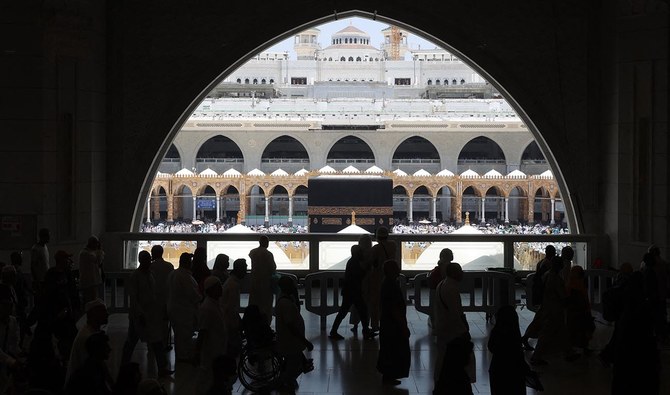
Muslim pilgrims gather around the Kaaba, Islam's holiest shrine, at the Grand Mosque in the holy city of Mecca on June 30, 2023 during the annual Hajj pilgrimage. (Photo courtesy: AFP/File)
Short Url
Updated 11 September 2023
Follow

Pakistan forms reform committee to review complaints against private Hajj companies

  • Pakistan has been assigned quota of 179,210 pilgrims for Hajj 2024
  • Private tour operators given 60 percent quota, government will cater to 40 percent

ISLAMABAD: Pakistani Caretaker Prime Minister Anwaar-ul-Haq Kakar presided over a meeting on advance preparations for Hajj 2024 on Monday and ordered the formation of a reform committee to look into complaints against private Hajj companies.

Last week, Pakistan’s religious affairs ministry had asked private Hajj operators to provide suggestions to improve operations and implement new Saudi instructions regarding a reduction in the number of pilgrims for each company.

Pakistan has been assigned a quota of 179,210 pilgrims for next year’s Hajj and the country is currently pondering an early start of the Hajj process. Private tour operators have been granted 60 percent of the pilgrim’s quota, while 40 percent will travel under the government scheme.

“Prime Minister’s directs submitting a report on complaints regarding private Hajj companies and to form a reform committee for this system,” the PM’s Office said in a statement. 

“By closely monitoring private companies, it should be ensured that pilgrims passing through them do not face any kind of difficulties ... there should be no compromise on the arrangements made for the pilgrims,” the statement quoted the PM as saying.

Kakar also ordered the religious affairs ministry to submit a comprehensive report on the complaints by pilgrims regarding arrangements for Hajj 2023 and asked it to collaborate with the IT ministry to launch “a mobile application and website for facilities of pilgrims and registration of complaints.”

This year, Saudi Arabia reinstated Pakistan’s pre-pandemic Hajj quota of 179,210 pilgrims and scrapped the upper age limit of 65. About 80,000 Pakistani pilgrims performed the pilgrimage under the government scheme while the rest used private tour operators.


Pakistan cuts fuel prices at year-end amid push for economic reform

Updated 4 sec ago
Follow

Pakistan cuts fuel prices at year-end amid push for economic reform

  • Petrol price has been cut by Rs 10.28, diesel by Rs 8.57 per liter from Jan. 1
  • Relief comes as inflation eases but household purchasing power remains weak

KARACHI: Pakistan cut prices of petrol and high-speed diesel at the turn of the year, with a government notification on Wednesday announcing relief of up to Rs 10.28 per liter as Islamabad presses ahead with economic reforms following recent macroeconomic stabilization.

The price cuts come as inflation has eased in recent months after a prolonged slowdown, though households continue to complain of limited purchasing power following years of high prices, currency weakness and sluggish growth.

“The Government has revised the prices of the petroleum products based on recommendations of OGRA,” the Ministry of Energy said in a notification, referring to the Oil and Gas Regulatory Authority.

Under the revised rates, the price of high-speed diesel was cut by Rs 8.57 per liter to Rs 257.08, while petrol prices were reduced by Rs 10.28 per liter to Rs 253.17, effective from Jan. 1 for the next fortnight.

Fuel prices in Pakistan are reviewed every two weeks and are influenced by global oil market trends, currency movements and changes in domestic taxation. The pricing mechanism passes changes in import costs on to consumers, helping sustain the country’s fuel supply chain.

Petrol is primarily used for private transport, motorcycles, rickshaws and small vehicles, while diesel powers heavy transport used to move goods across the South Asian country.

While Pakistan has seen signs of macroeconomic stabilization, including a slowdown in inflation, many consumers say their purchasing power remains strained after years of economic stress.

Last year, the country was hit by devastating monsoon floods once again that damaged farmlands in the eastern province of Punjab — Pakistan’s breadbasket — pushing up food prices nationwide.